Cycling in the French Alps: The 10 Best Climbs and Rides
The ten best climbs and rides in the French Alps, from Alpe d'Huez and the Galibier to the Lake Annecy greenway, with length, gradient and opening dates.
Quick links
Don't want to read all this?
We've planned 800+ cycling trips. Send your dates, fitness and group size — we'll map the route and book every night.


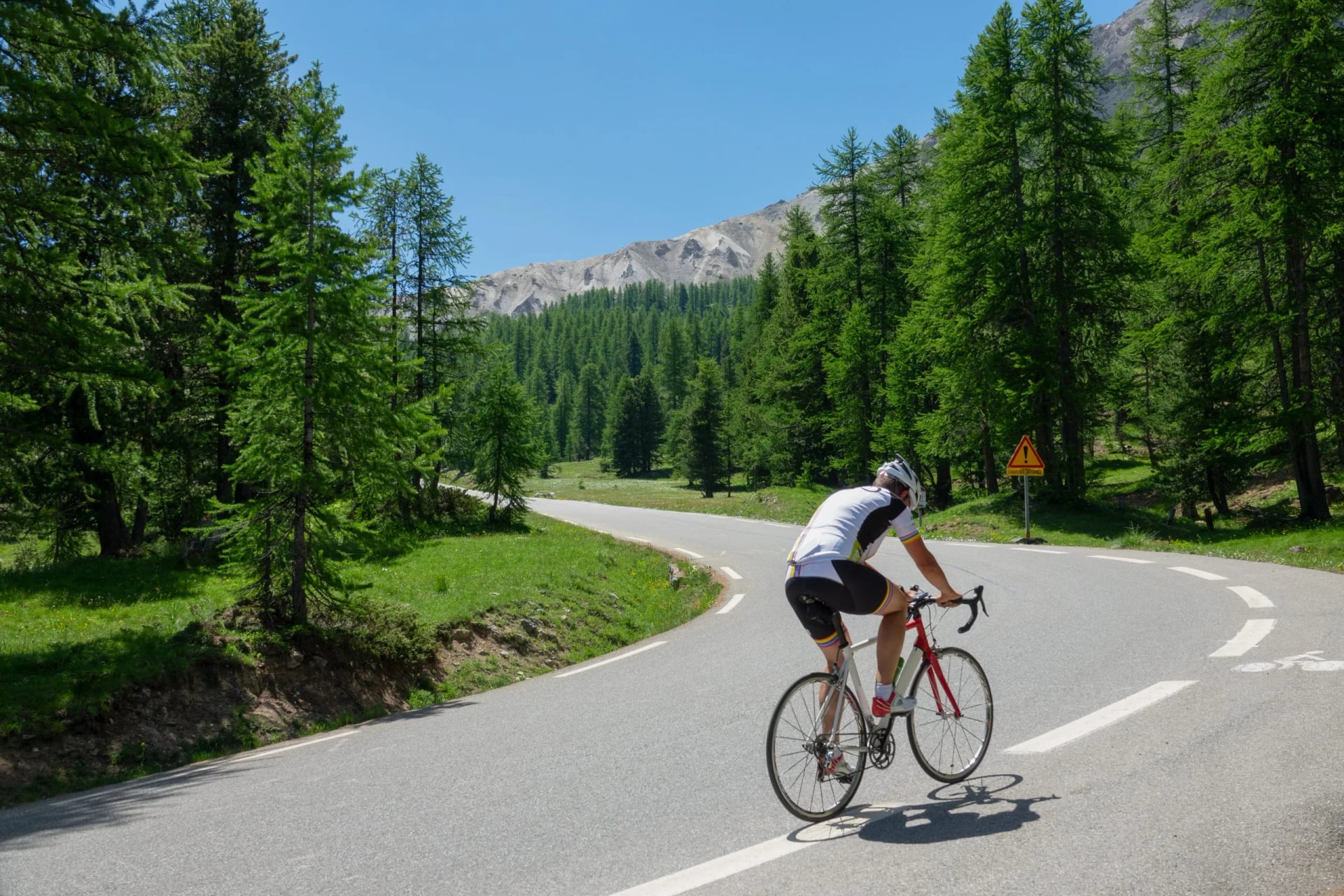
Cycling in the French Alps means riding the roads you have watched in the Tour de France, hairpin by hairpin, past riders' names painted on the tarmac and cows grazing beside the road. At each col a sign gives the altitude, and the descent drops you into another valley.
The passes are high and the season is short. The Col de l'Iseran reaches 2,764 m, the highest road pass in the Alps, and most high cols open in early June and close at the end of October. Below them, the Lake Annecy greenway climbs only 20 m in 33 km.
The ten best climbs and rides run from Alpe d'Huez and the Galibier to the lakes of Annecy and Bourget. For other regions, see our guide to cycling in France.
The 10 Best Cycling Climbs and Routes in the French Alps
Eight of the ten are Tour de France climbs, from the 606 m of the Col des Aravis to more than 2,000 m on the Iseran, and two are lake and river rides with far less climbing.
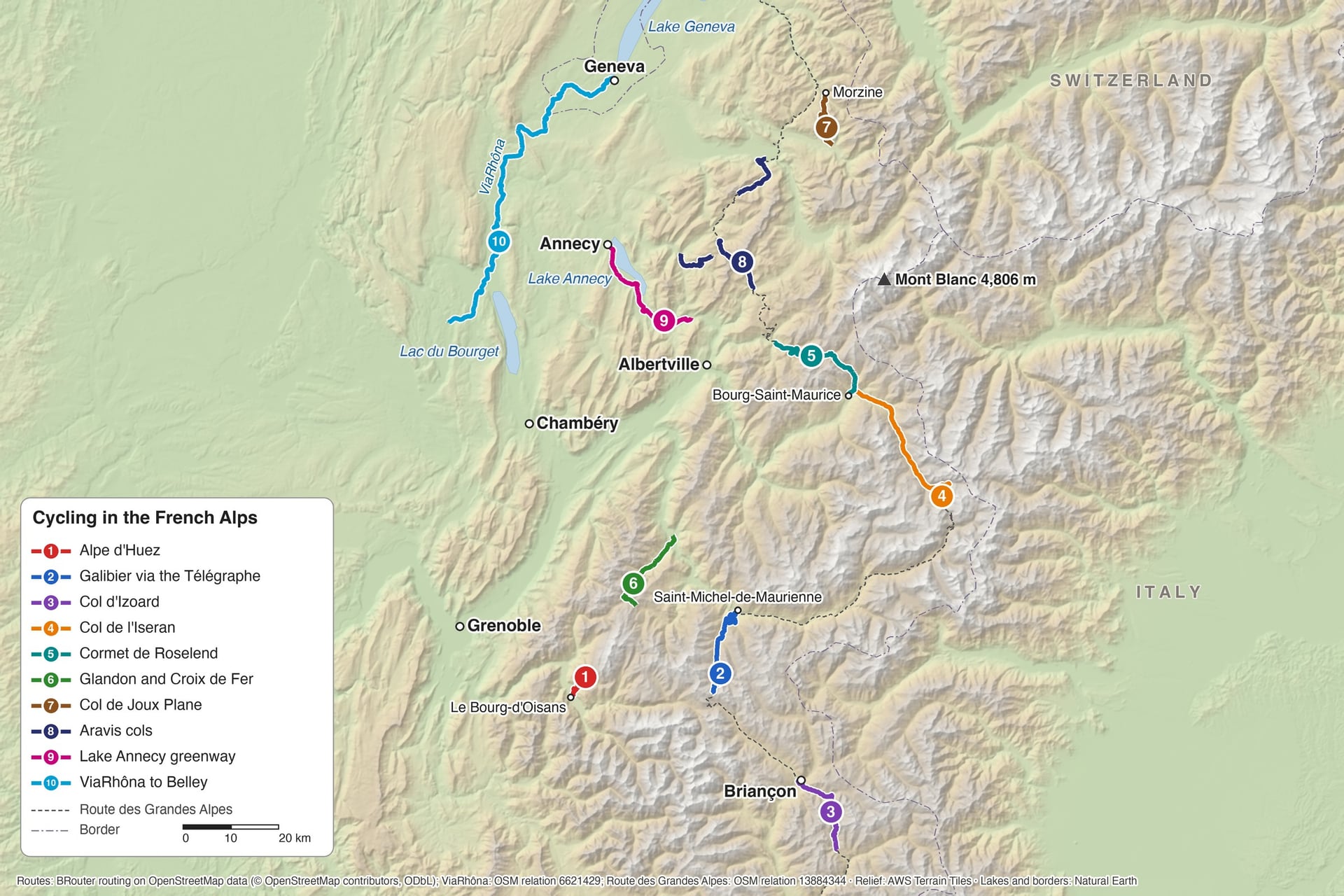
The dashed line on the map is the Route des Grandes Alpes, from Lake Geneva to Nice. It links six cols in the list: the Colombière, the Aravis, the Cormet de Roselend, the Iseran, the Galibier and the Izoard.
1. Alpe d'Huez and Its 21 Bends
Start: Le Bourg-d'Oisans, at 720 m
Length: 14 km
Climb: 1,120 m at an average of 7.9%, with ramps of 14%
Highest point: 1,860 m at the resort
Open: all year, as the main road to the ski resort
Best for: the most famous climb in France, ridden by about 1,000 riders on an average summer day
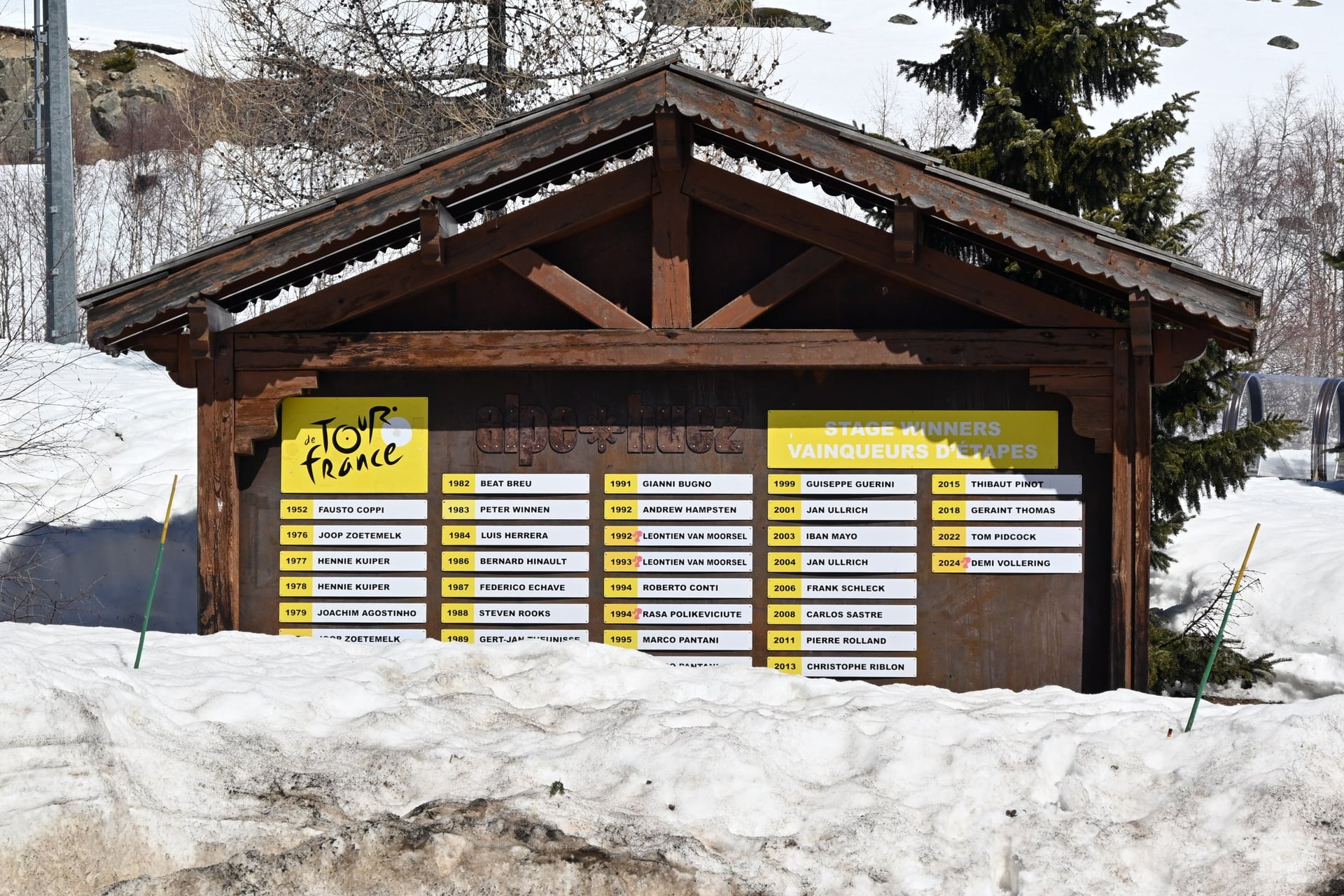
Alpe d'Huez hosted the Tour's first summit finish in 1952, won by Fausto Coppi, and its 21 numbered bends carry the names of stage winners. The Oisans tourist office counts the bends down from 21 at the foot, and the steepest ramps come in the first 4 km.
From the foot the road climbs hard to bend 21 at 806 m and bend 17 at 965 m, then eases through La Garde. Tadej Pogačar set the record of 35 minutes 26 seconds in the 2026 Tour, and the Col de Sarenne, at 1,999 m, is the quiet way down from the top.
2. Col du Galibier via the Col du Télégraphe
Start: Saint-Michel-de-Maurienne, or Valloire at 1,403 m
Length: 34.9 km from Saint-Michel over the Télégraphe; 18.2 km from Valloire
Climb: 1,239 m from Valloire at an average of 7%, with 9.5% over the last kilometre
Highest point: 2,642 m at the col
Open: summit road from early June to the end of October; 5 June in 2026
Best for: a long, high day with two cols back to back
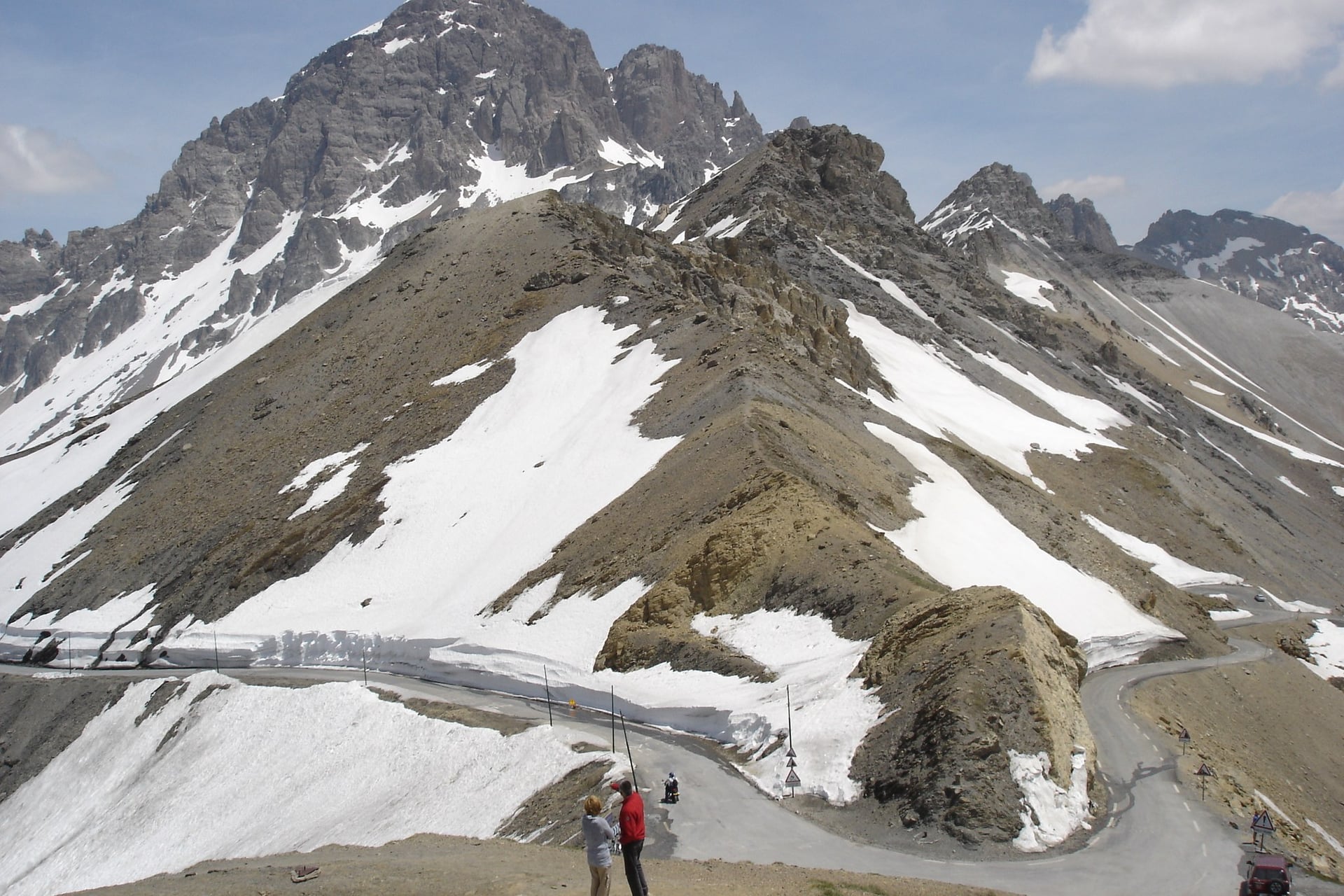
The Tour's founder, Henri Desgrange, first sent riders over the Galibier in 1911, via the Col du Télégraphe (1,566 m) and Valloire. Above Valloire the road runs almost straight to Plan Lachat, where the hard part of the climb begins: 7.8 km at 8.5% through bare, rocky ground.
Cyclists may not use the summit tunnel, so the Galibier road goes over the top at 9.5% for its final kilometre. There is no café at the col and no water point after Valloire on this side, so fill two bottles in the village.
3. Col d'Izoard and the Casse Déserte
Start: Briançon, at 1,209 m
Length: 19.2 km on the north side; 30.8 km from Guillestre on the south side
Climb: 1,170 m from Briançon at an average of 6.5%, with ramps of 9%
Highest point: 2,360 m
Open: from the end of May to the end of October
Best for: a base week in Briançon, with the Galibier via the Col du Lautaret as a second day
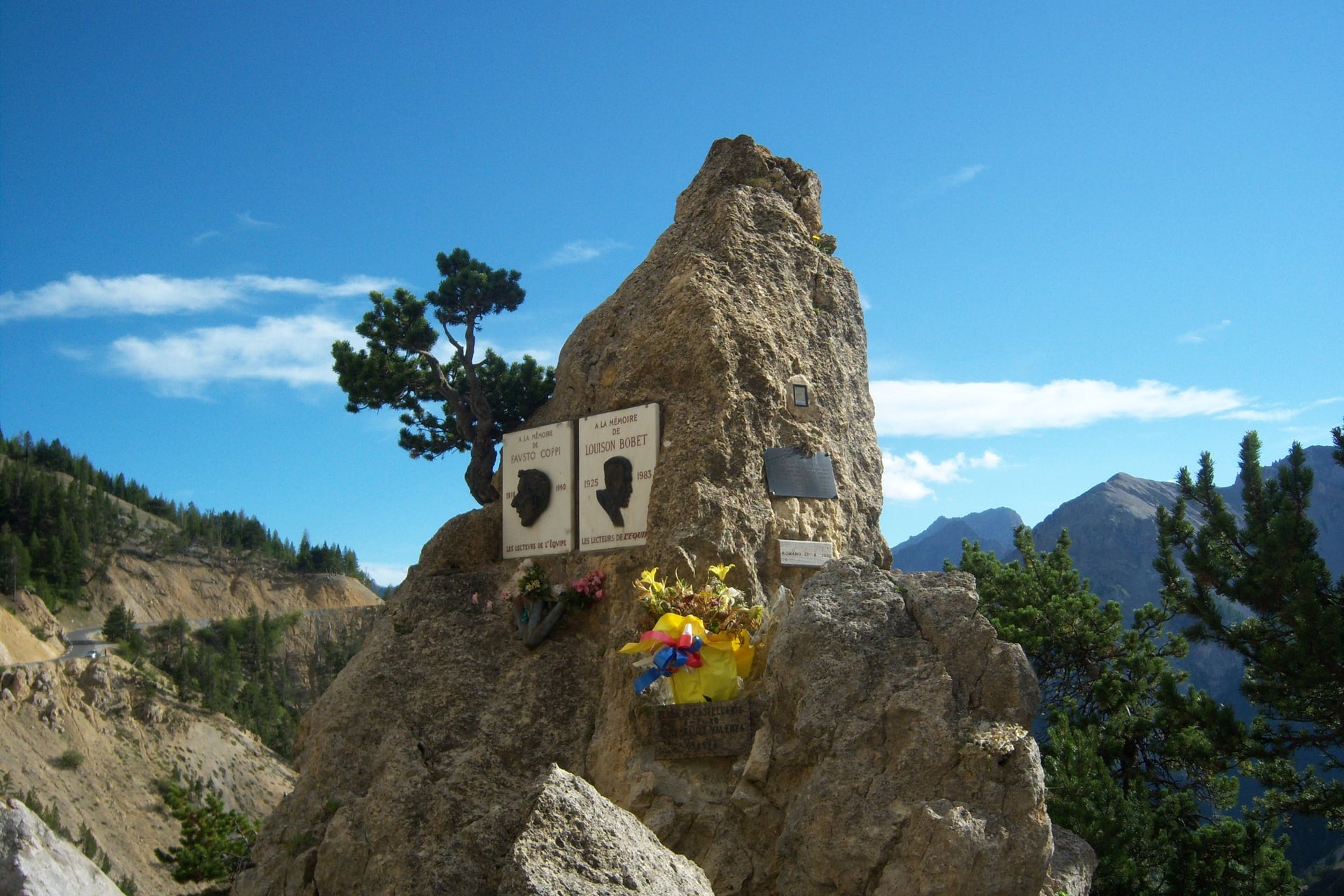
Mountain troops built the Izoard road from 1893 to 1897, as a summit stele of 1934 records. From Briançon the first 9 km to Cervières are gentle, and the hard half starts in the village: about 750 m in 10 km at 7.5%, through larches to the Refuge Napoléon at 2,265 m.
Over the top, the south side drops into the Casse Déserte, bare scree and rock towers that look like no other place in the Alps. A stele to Fausto Coppi and Louison Bobet stands there, 2 km below the col, and the road goes on to Guillestre, 30.8 km below the summit.
4. Col de l'Iseran and the Route des Grandes Alpes
Start: Bourg-Saint-Maurice, at 815 m, or Val-d'Isère, at 1,850 m
Length: 47.5 km from Bourg-Saint-Maurice; 16 km from Val-d'Isère
Climb: over 2,000 m from Bourg-Saint-Maurice at 4%; 929 m from Val-d'Isère at 5.8%, with ramps of 8%
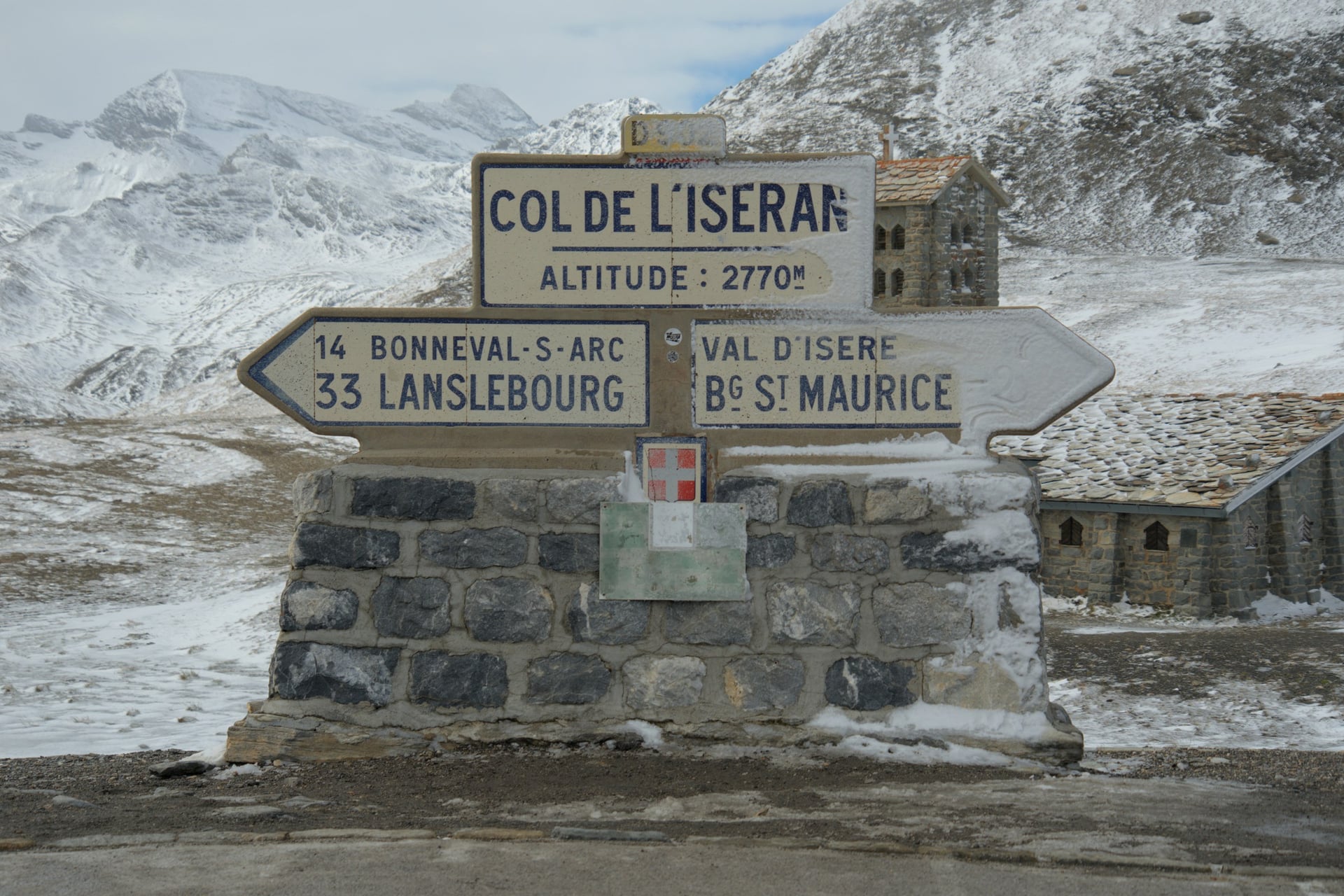
Highest point: 2,764 m, though the summit sign says 2,770 m
Open: from early June to late October
Best for: the highest road pass in the Alps, and the high point of the Route des Grandes Alpes
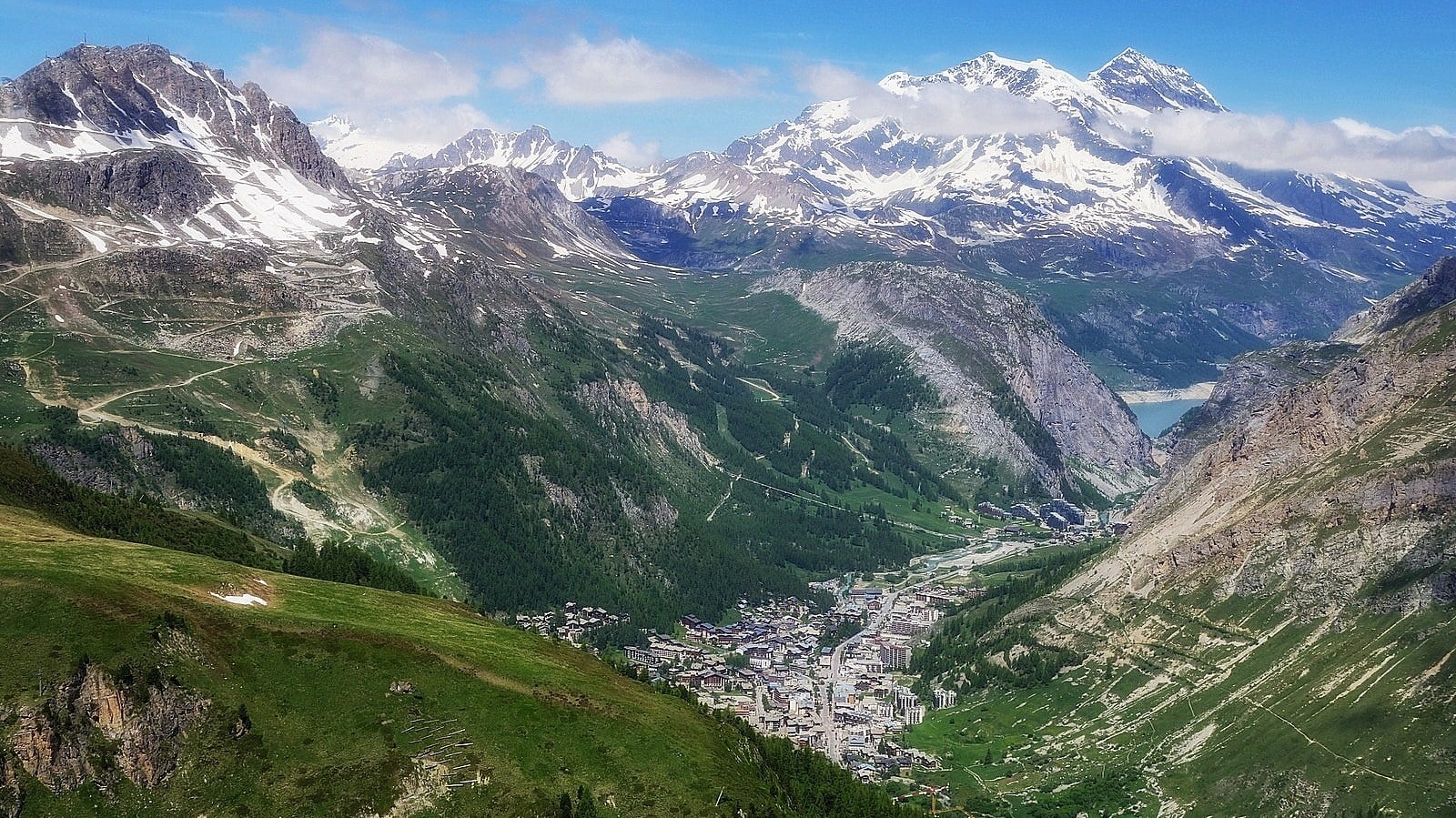
From Bourg-Saint-Maurice the climb follows the Isère past the Tignes dam, then through a string of tunnels beside Lac du Chevril to Val-d'Isère. The Iseran guide warns that the tunnels and avalanche galleries need good lights, and that above Val-d'Isère you ride for almost 13 km above 2,000 m.
The Iseran is the high point of the Route des Grandes Alpes by bike, signed for 720 km from Thonon-les-Bains to Nice in 27 stages, with 15 railway stations along the way. Snow is never far away: in July 1996 the Tour peloton crossed the pass by car because of snow and ice.
5. Cormet de Roselend
Start: Beaufort-sur-Doron, at 738 m, or Bourg-Saint-Maurice on the south side
Length: 20.3 km from Beaufort; 19.3 km from Bourg-Saint-Maurice
Climb: 1,230 m from Beaufort at an average of 6%, with ramps of 9.5%
Highest point: 1,968 m
Open: from early June to late October; the lower loop over the Col du Pré opens in early May
Best for: a quieter pass with a lake halfway up, on the way to the Iseran
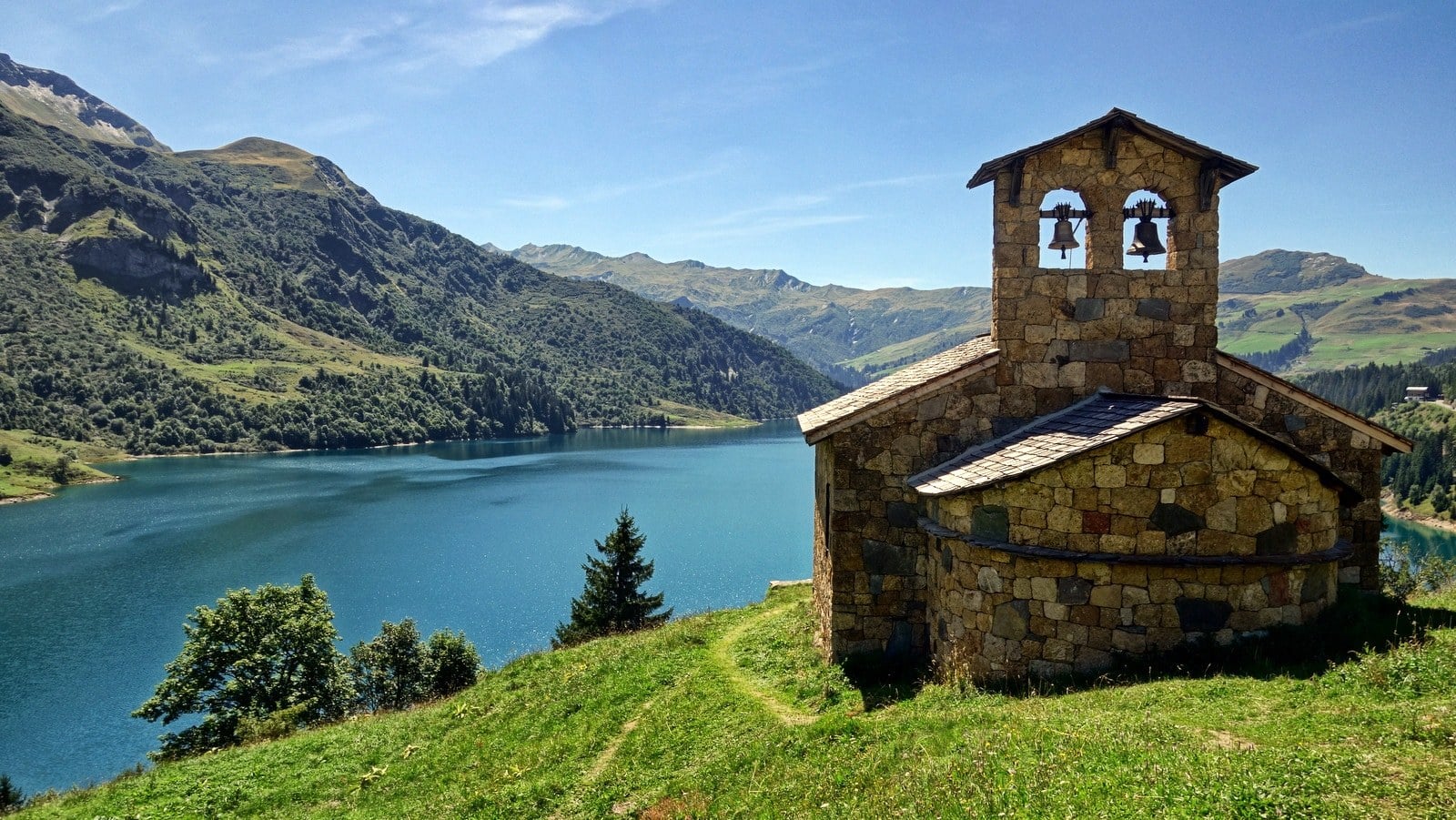
From Beaufort the usual way climbs about 12 km at just over 7% through forest to the Col du Méraillet and Lac de Roselend. The Cormet de Roselend guide calls its dam the most beautiful in Savoie, and the lake's turquoise water fills the view for the next 2 km.
Seven kilometres remain from the lake: an almost flat run along the shore, then a climb through open pasture to the col at 1,968 m. The south side from Bourg-Saint-Maurice is more regular, 19.3 km at 6%, so one base in Bourg-Saint-Maurice serves both the Cormet and the Iseran.
6. Col du Glandon and Col de la Croix de Fer
Start: Saint-Étienne-de-Cuines, under 2 km from La Chambre in the Maurienne
Length: 20.9 km to the Glandon, then about 3 km more to the Croix de Fer
Climb: 1,477 m to the Glandon at an average of 7%, with ramps of 11.5%
Highest point: 2,064 m at the Col de la Croix de Fer; the Glandon is at 1,924 m
Open: the Croix de Fer from early May, the Glandon from mid-May, both to the end of October
Best for: riders who want one of the hardest finishes in the Alps
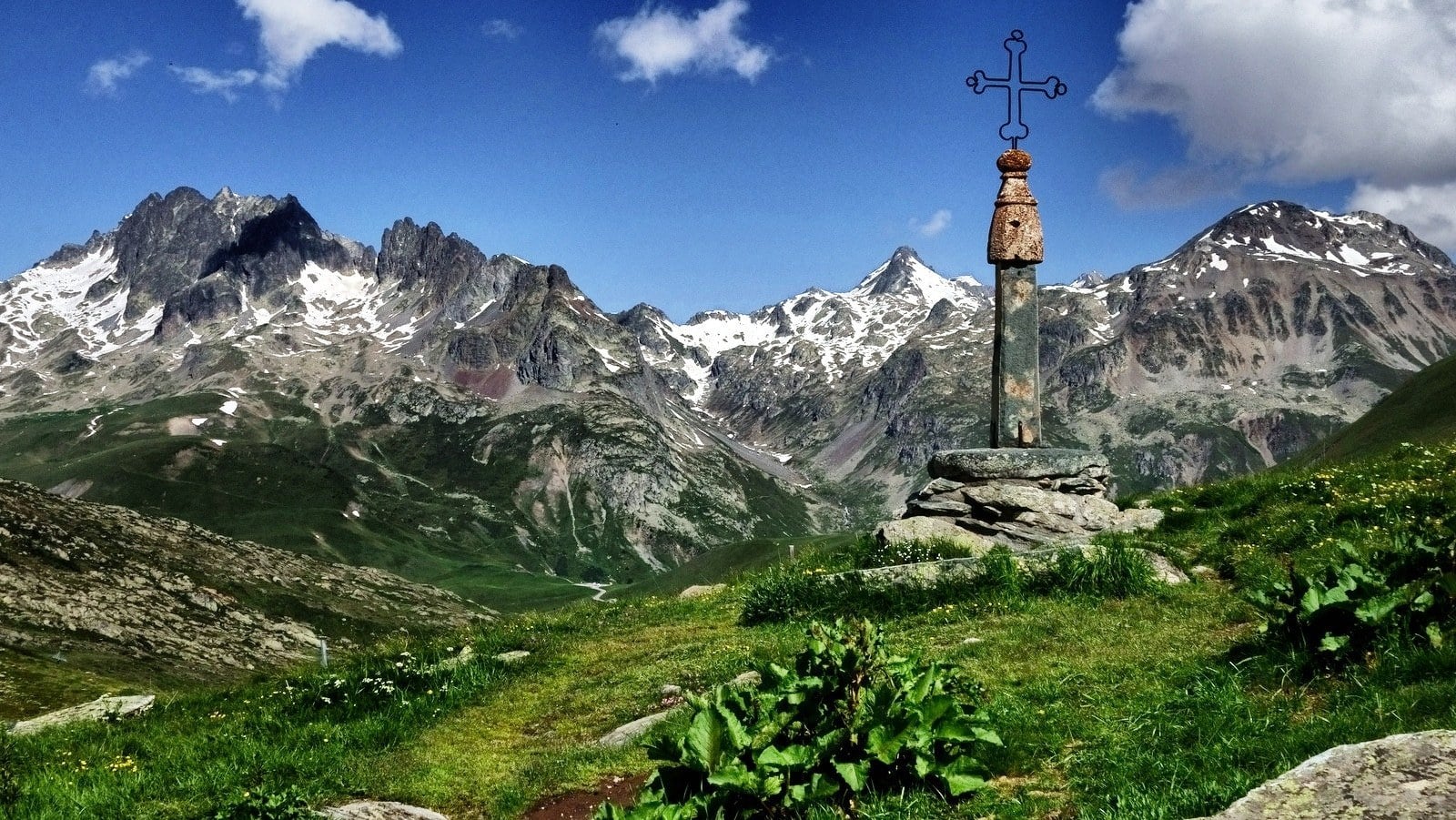
Two passes share this road out of the Maurienne. The first 13 km climb steadily through Saint-Colomban-des-Villards, then the gradient rises, and the last 2.9 km to the Glandon gain 299 m at 10% through six hairpins below the Aiguilles de l'Argentière, one of the hardest finishes in the Alps.
From the Glandon a short climb leads on to the Croix de Fer, which the Tour crossed 21 times between 1947 and 2022. Beyond the iron cross the road drops 29 km to Allemond in the Oisans, the valley of Alpe d'Huez, and a third side climbs 29 km from Saint-Jean-de-Maurienne.
7. Col de Joux Plane
Start: Samoëns, at 703 m, or Morzine, at 980 m
Length: 11.5 km from Samoëns; 10.7 km from Morzine
Climb: 991 m from Samoëns at an average of 8.5%, with a short ramp of 15%
Highest point: 1,691 m
Open: usually from early May to late November
Best for: a short, steep climb from a base in Morzine or Samoëns
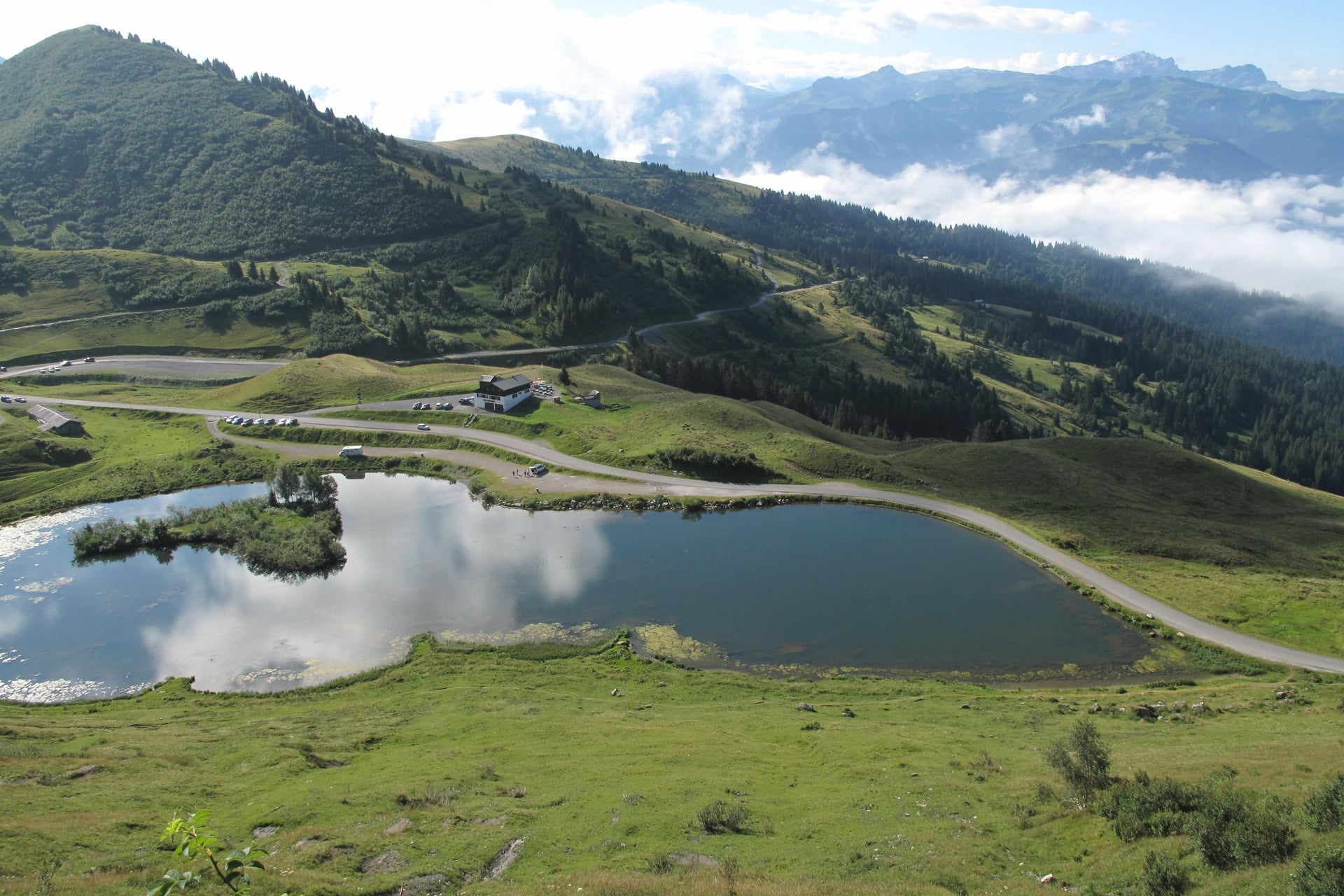
Joux Plane is neither high nor long, but the Tour has climbed it 14 times, most recently in 2023, as a hors catégorie climb. From Samoëns the south side gives almost no rest, with stretches at 8 to 10%, and most of the climb is in full sun, so start early in summer.
The top is a wide pasture with a small lake and a restaurant, the Relais des Vallées. The north side descends 10.7 km to Morzine, a climb of 747 m at 7.5% the other way, and both towns have cafés, shops and bike shops at the foot of the climb.
8. The Aravis Cols: Colombière, Aravis and Croix Fry
Start: Scionzier for the Colombière, Flumet for the Aravis, Thônes for the Croix Fry
Length: 16.5 km, 11.7 km and 12.8 km
Climb: 1,108 m at 6.8%, 606 m at 6% and 842 m at 6.6%
Highest point: 1,613 m at the Col de la Colombière
Open: the Aravis all year; the Colombière from mid-May to about 20 November
Best for: warm-up days from Annecy or La Clusaz before the 2,000 m passes
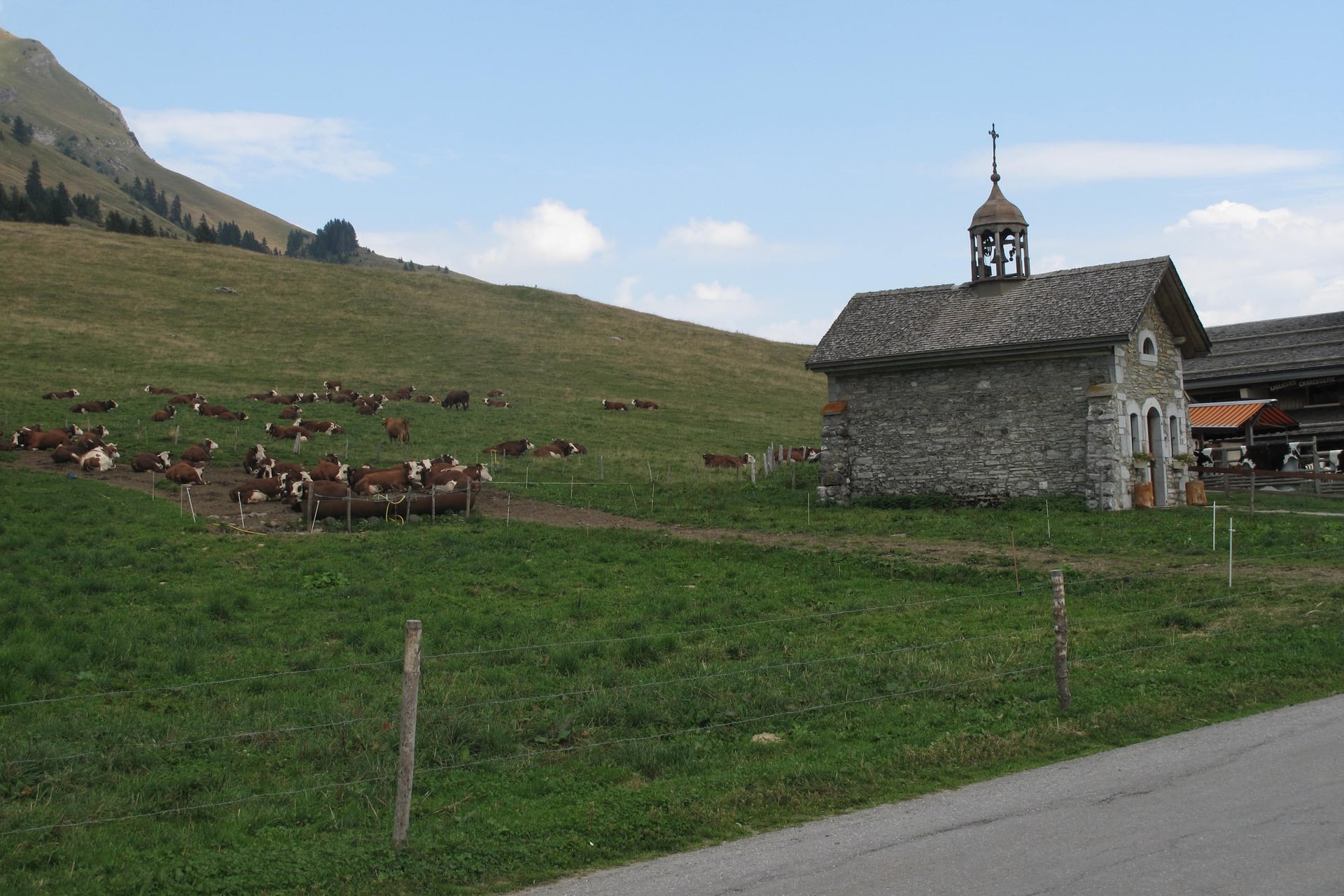
Three cols ring the Aravis range above Annecy, with La Clusaz in the middle. The Colombière is the hardest of the three cols: from Scionzier it climbs 9 km to Le Reposoir, then just over 7 km at 8.5%, with the last 800 m at 10.5%.
The Col des Aravis, at 1,486 m, has restaurants at the top and a view of Mont Blanc. From Flumet the road climbs 7 km of hairpins at 7% above La Giettaz, through an unlit tunnel of about 80 m, while the Croix Fry climbs from Thônes through Manigod.
9. The Lake Annecy Greenway
Start: Annecy, at the north end of the lake
Length: 33 km to Marlens on the greenway; 40 km for the full lake loop
Climb: 20 m on the greenway; about 200 m on the loop
Highest point: about 500 m, on the old railway line
Open: all year
Best for: families, rest days and riders who want the Alps without a col
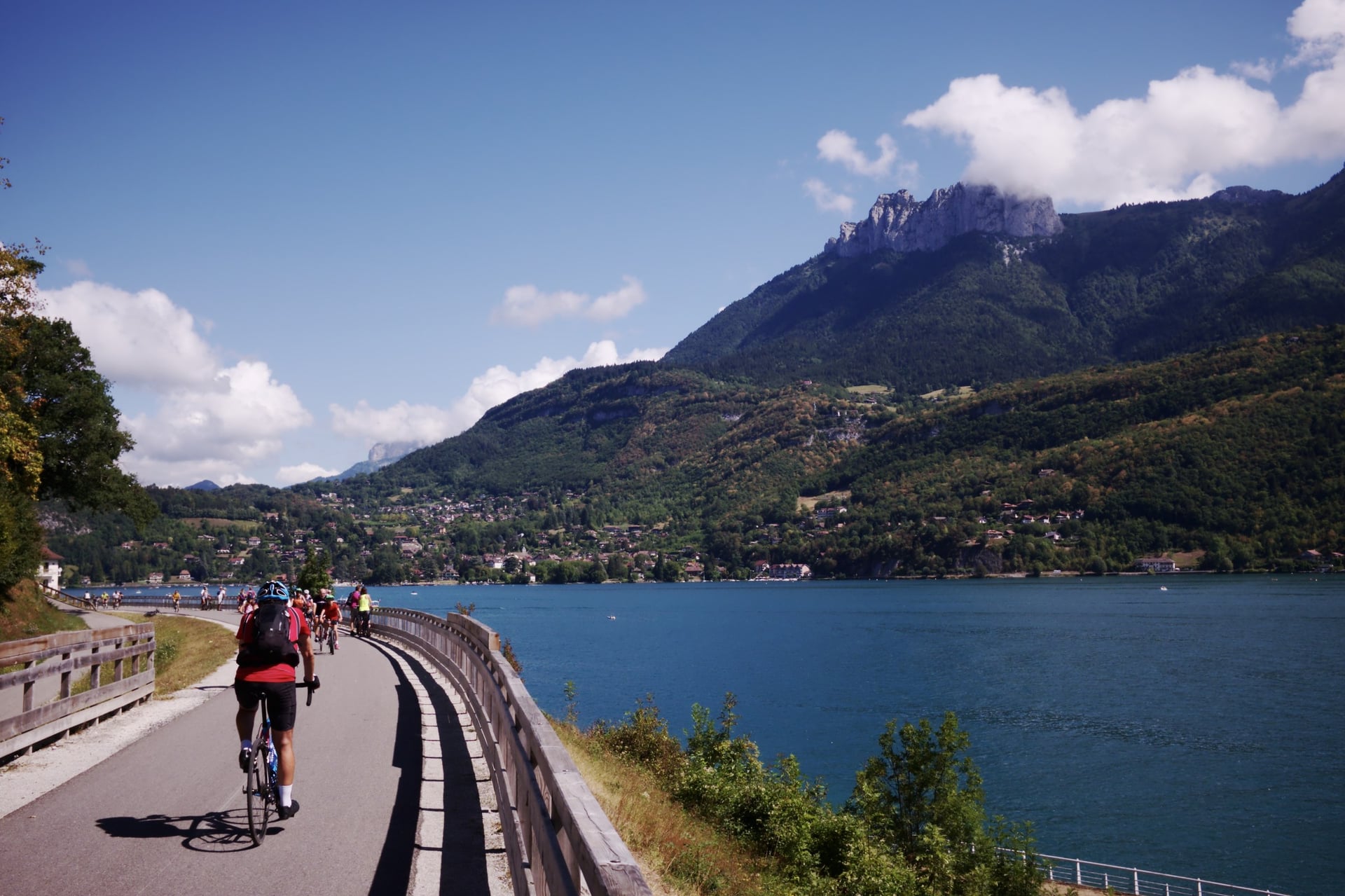
One of the oldest greenways in France, the Lake Annecy greenway follows an old railway down the west shore from Annecy through Sévrier and Duingt to Marlens. Cars are kept off it all the way, and with only 20 m of climbing in 33 km it suits any bike and any rider.
The full lake loop adds the east shore: 40 km in all, with a climb of about 100 m at Talloires-Montmin, and some village sections are shared with cars. Beyond Marlens, a cycle route continues up the valley to Albertville, and bikes can be hired all round the lake.
10. The ViaRhôna From Geneva to Belley
Start: Geneva, on Lake Geneva
Length: 97 km in three stages: Geneva to Vulbens 33 km, Vulbens to Seyssel 27 km and Seyssel to Belley 37 km
Climb: 316 m, 274 m and 157 m on the three stages
Highest point: 571 m, between Vulbens and Seyssel
Open: all year
Best for: riding from Geneva airport into the Alps, ending at Lac du Bourget
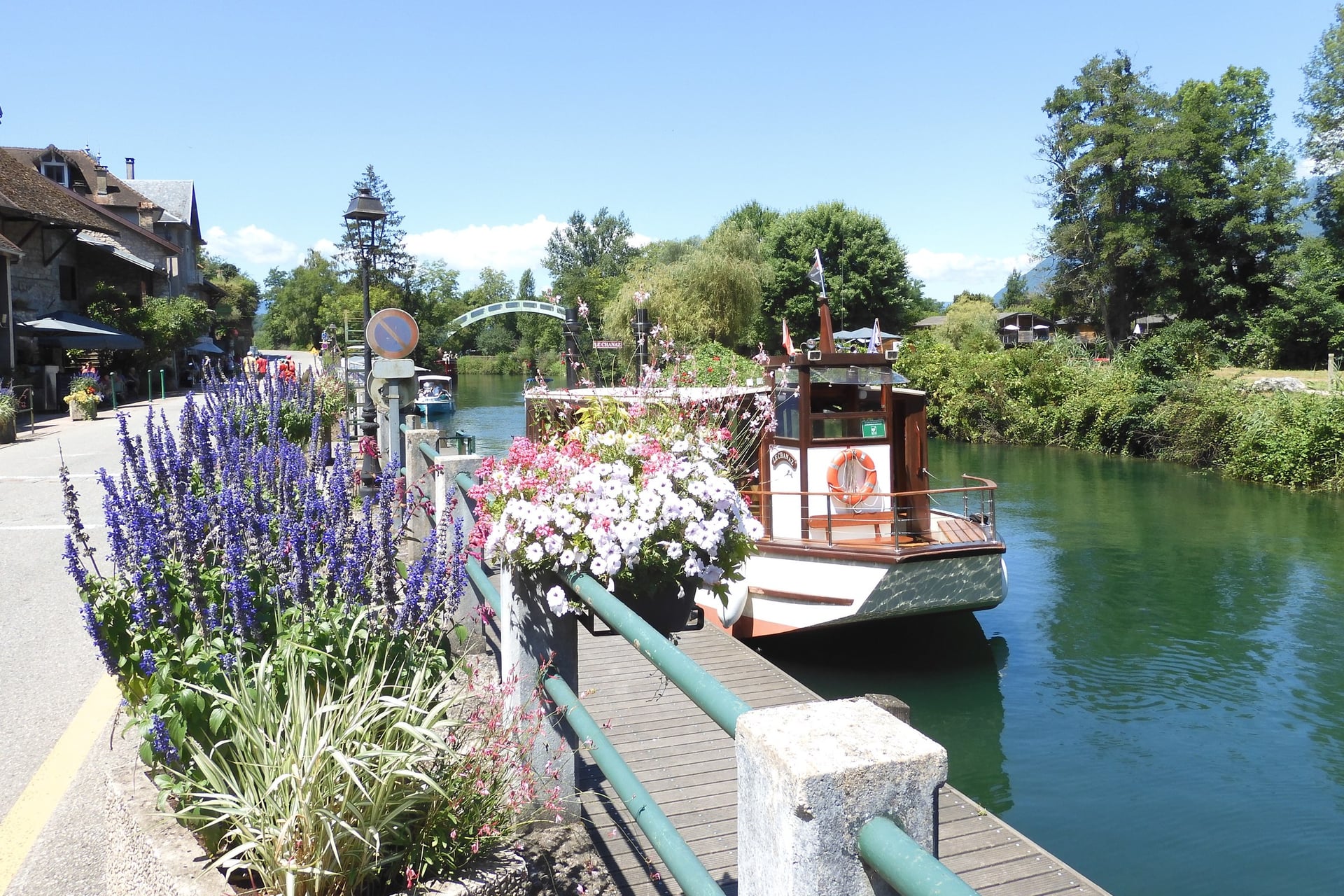
The ViaRhôna follows the Rhône for 815 km from Lake Geneva to the Mediterranean. Its first stages are the hardest, through the Geneva vineyards and the Fort l'Écluse gorge, and the stage to Seyssel runs 93% on roads shared with traffic, including the D908A and the D14.
From Seyssel, the stage to Belley gains only 157 m in 37 km, and ViaRhôna rates it for beginners and families. At Chanaz, the Canal de Savières links the Rhône with Lac du Bourget, the largest natural lake of glacial origin in France.
How Hard Is Cycling in the French Alps?
How hard cycling in the French Alps feels depends on the road: the Lake Annecy greenway gains 20 m in 33 km, while the Glandon gains 1,477 m in 20.9 km.
The Climbs Compared
Most big cols average 6 to 8% for 15 to 25 km, so one climb takes one to three hours. At a steady 11 km/h, the Galibier from Valloire takes about 1 hour 36 minutes, and the 47.5 km from Bourg-Saint-Maurice to the Iseran take over four hours.
Climb | Start | Length | Climb (m) | Average | Summit |
Alpe d'Huez | Le Bourg-d'Oisans | 14 km | 1,120 m | 7.9% | 1,860 m |
Col du Galibier | Valloire | 18.2 km | 1,239 m | 7% | 2,642 m |
Col d'Izoard | Briançon | 19.2 km | 1,170 m | 6.5% | 2,360 m |
Col de l'Iseran | Val-d'Isère | 16 km | 929 m | 5.8% | 2,764 m |
Cormet de Roselend | Beaufort-sur-Doron | 20.3 km | 1,230 m | 6% | 1,968 m |
Col du Glandon | Saint-Étienne-de-Cuines | 20.9 km | 1,477 m | 7% | 1,924 m |
Col de la Madeleine | La Chambre | 19.3 km | 1,521 m | 8% | 1,993 m |
Col de la Loze | Moûtiers | 26.5 km | 1,826 m | 7% | 2,304 m |
Col de Joux Plane | Samoëns | 11.5 km | 991 m | 8.5% | 1,691 m |
Col de la Colombière | Scionzier | 16.5 km | 1,108 m | 6.8% | 1,613 m |
Col des Aravis | Flumet | 11.7 km | 606 m | 6% | 1,486 m |
The Madeleine and the Col de la Loze, two more Tour climbs between the Maurienne and the Tarentaise, are in the table for comparison; the Loze ends on a road reserved for bikes. Mont Ventoux, in our Provence guide, climbs 1,598 m from Bédoin at 7.5%, more than Alpe d'Huez and less than the Loze.
Gearing, Descents and Altitude
On long 8% slopes, low gears matter as much as fitness. A compact 50/34 chainset with a 32- or 34-tooth largest sprocket gives a lowest gear of about 1:1, which keeps the cadence steady for an hour or more.
The descents are long and cold. In July the Galibier summit averages a high of 13.5 °C, against 25 °C in Le Bourg-d'Oisans (Open-Meteo, 2016 to 2025), so carry a gilet and gloves on every descent, and fit new brake pads before the trip.
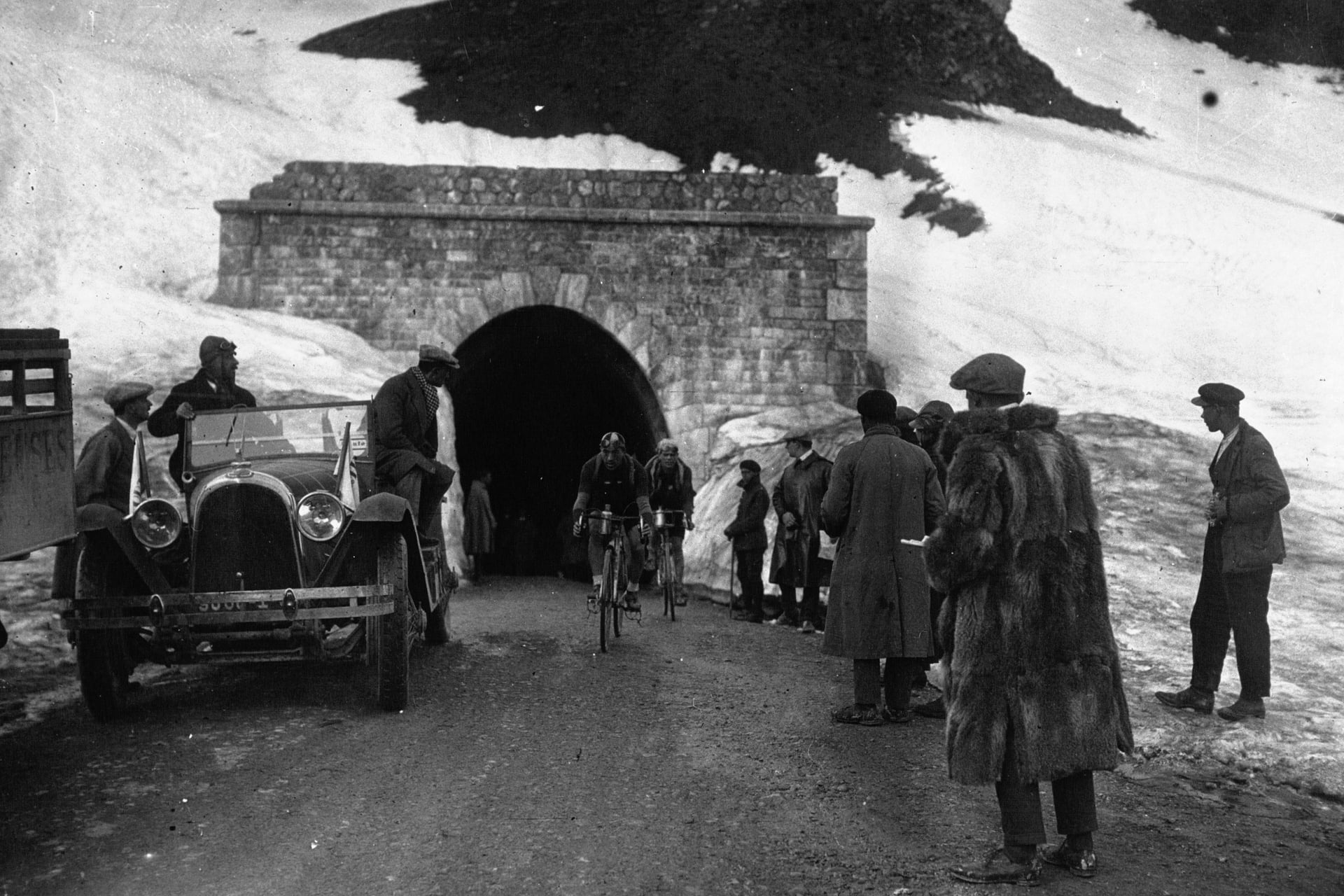
Lights matter in the tunnels: cyclists may not use the Galibier summit tunnel, and the Iseran and Aravis roads both have tunnels, one of them unlit.
Traffic and Race Days
July and August bring the most traffic, and on high roads such as the Glandon, cars, motorbikes and camper vans share narrow tarmac with bikes. Above the Galibier tunnel the road is narrow on both sides of the col.
Some mornings are free of cars. In 2026 the Galibier closed to motor vehicles on three mornings, 29 June, 16 July and 4 August, when the road above Valloire was left to bikes.
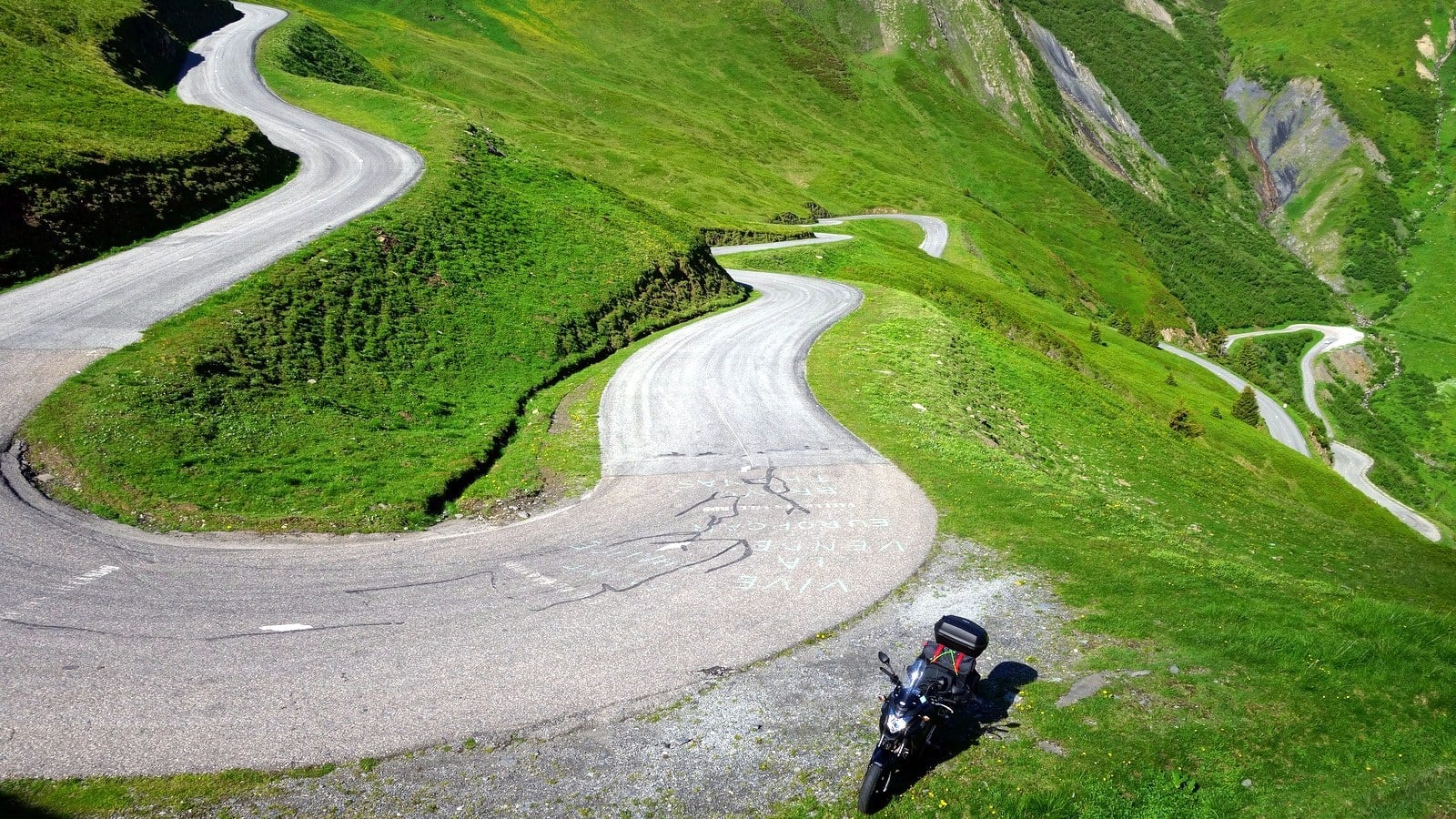
Roads on the Tour route close on race days, as on Alpe d'Huez on 24 and 25 July 2026. Afternoons at altitude bring thunderstorms in summer, so start early and be off the summits by mid-afternoon.
When to Cycle in the French Alps
Snow clearance sets the season in the French Alps: the lower cols open in May, the high passes in early June, and most close at the end of October.
In May you can ride Alpe d'Huez, the Aravis, Joux Plane, the Croix de Fer and, from mid-May, the Glandon. The Galibier, the Iseran and the Cormet de Roselend open in early June, and in 2026 the Galibier summit road opened on 5 June, a week after its tunnel.
Average daily high and rain days, 2016 to 2025 (Open-Meteo):
Month | High in Le Bourg-d'Oisans | High at the Galibier | Rain days in Le Bourg-d'Oisans | On the passes |
April | 14 °C | -1 °C | 14 | High passes closed; valleys and lakes only |
May | 17 °C | 3 °C | 18 | Croix de Fer opens in early May, Glandon in mid-May |
June | 23 °C | 11 °C | 14 | Galibier, Iseran, Sarenne and Roselend open in early June |
July | 25 °C | 14 °C | 10 | All passes open; busiest roads |
August | 25 °C | 13 °C | 9 | Fewest rain days; afternoon storms at altitude |
September | 21 °C | 9 °C | 11 | Quieter roads; cold mornings up high |
October | 17 °C | 5 °C | 11 | Most high passes close at the end of the month |
For most riders, late June, July and September are the best months, with every pass open and highs of 9 to 14 °C on the Galibier. Before an early or late trip, check the passes on Savoie's road service, under état des cols.
Getting to the French Alps
Most riders fly into Geneva or Lyon and finish the journey by train or bus, or ride out of Geneva on the ViaRhôna.
By Air
Geneva airport serves Annecy, the Aravis and Morzine, and the cross-border bus line 272 links the airport with Annecy, every 10 minutes at the morning peak.
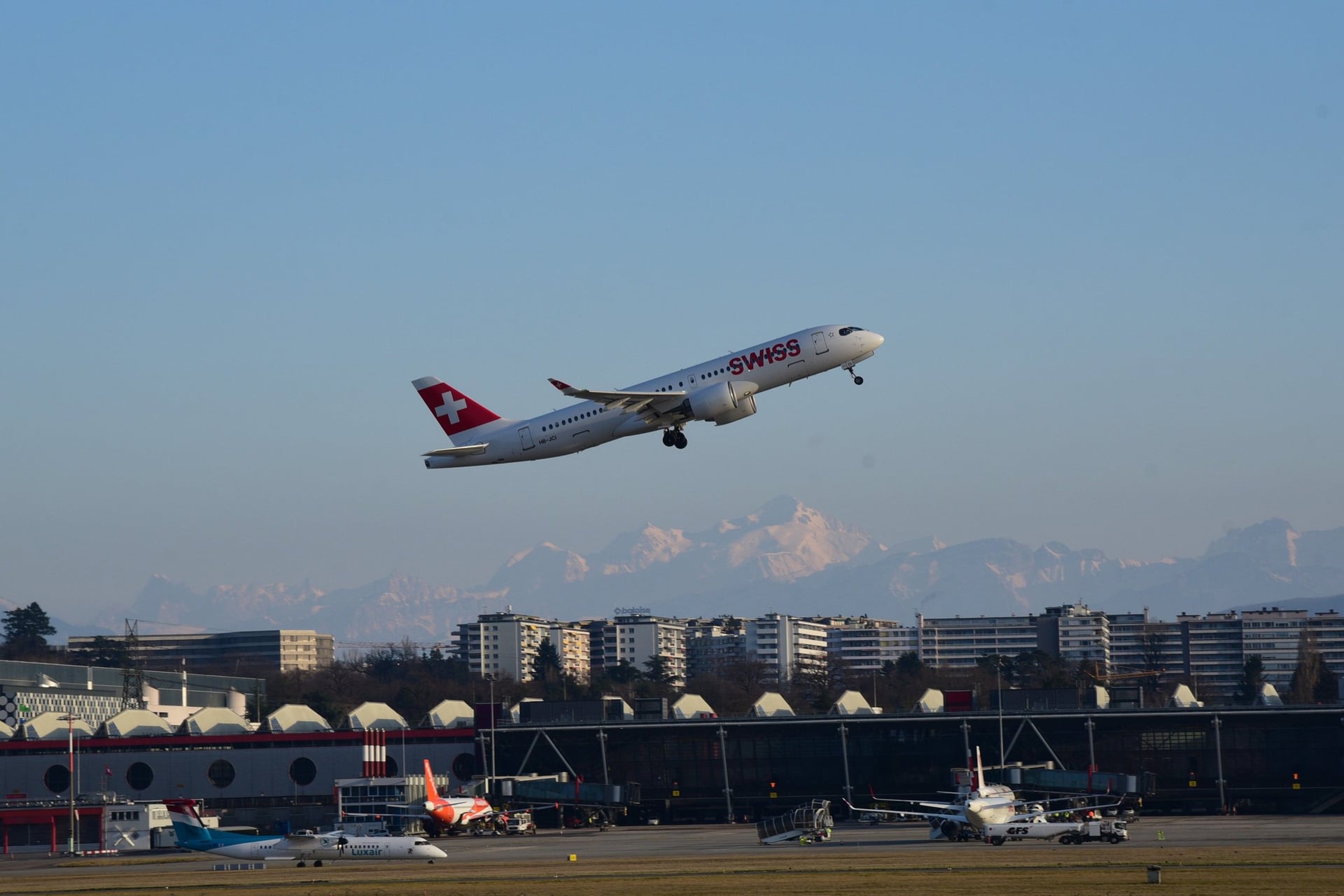
Lyon Saint-Exupéry has its own TGV station a few minutes' walk from the terminals, which suits the Maurienne, and Grenoble is the gateway to the Oisans. If you fly with a bike, book the bike box with your seat.
By Train
Regional TER trains run up the valleys to Annecy, Chambéry, Albertville, Saint-Jean-de-Maurienne, Saint-Michel-Valloire and Bourg-Saint-Maurice, and a night train runs from Paris Austerlitz to Briançon. Le Bourg-d'Oisans has no station, so the last leg is by bus.
TER in Auvergne-Rhône-Alpes: bikes travel free where there is space, but from 1 May to 27 September 2026 a bike booking is compulsory at weekends, on public holidays and every day in July and August
Night train to Briançon: couchettes from Paris Austerlitz; a bike that does not fold needs a bike place booked with the ticket
T75 bus: Grenoble to Le Bourg-d'Oisans, with a bike rack on the coach
The rules for other French trains are in our France cycling guide. The ViaRhôna summer notice lists the 2026 booking days.
Know Before You Arrive
The climbs cost nothing to ride, so the planning goes into beds, bike hire and kit for a 2,000 m pass.
Where to Stay
Choose your base by the climbs you want, and prefer a valley town at the foot of a climb, so the day ends with a descent rather than a climb home.
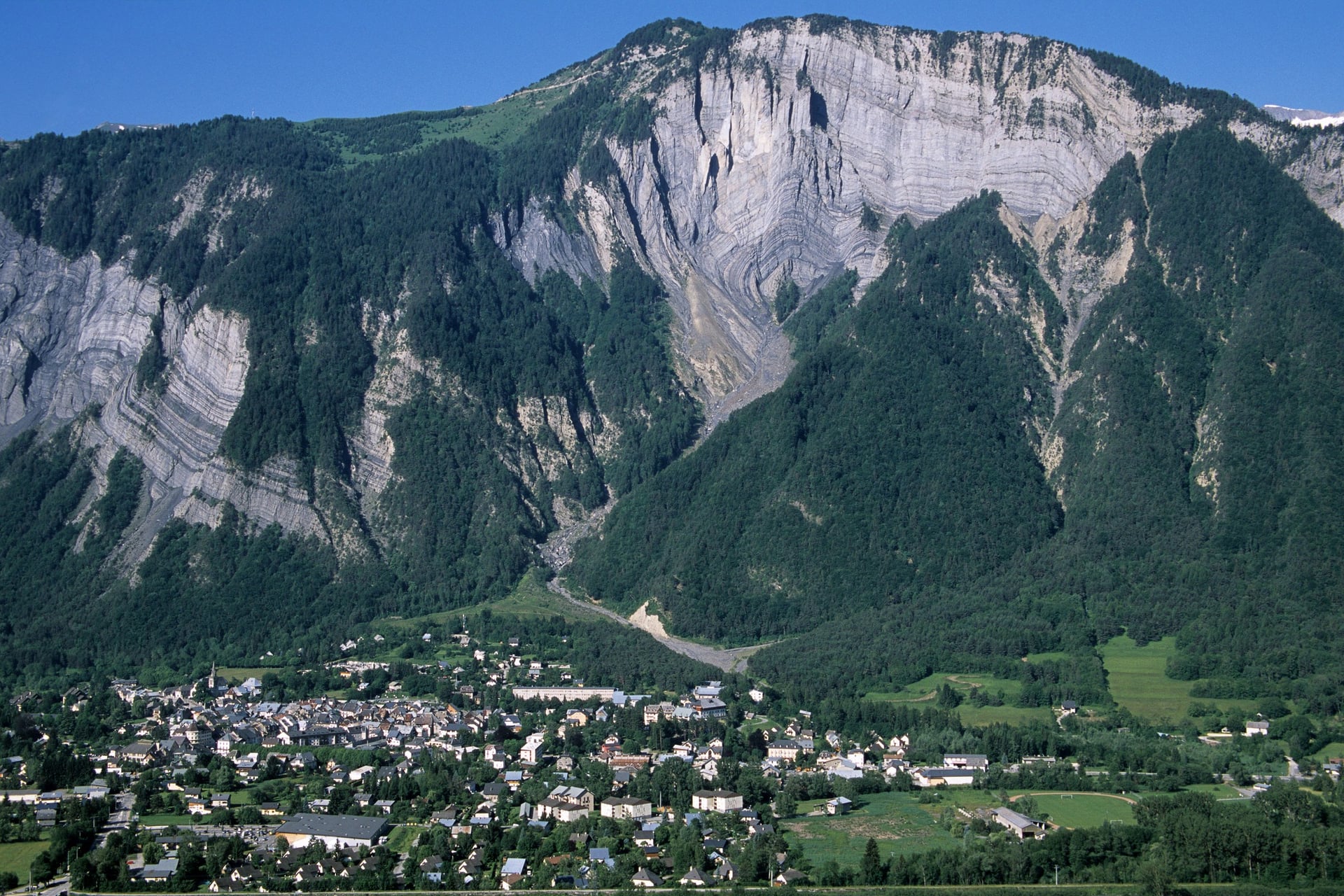
Bases and the climbs they serve:
Le Bourg-d'Oisans (720 m): Alpe d'Huez, the Sarenne, and the Croix de Fer via Allemond
Valloire (1,403 m): the Galibier and the Télégraphe, above Saint-Michel-Valloire station
La Chambre or Saint-Jean-de-Maurienne: the Glandon, the Croix de Fer and the Madeleine
Bourg-Saint-Maurice (815 m): the Iseran and the Cormet de Roselend, at the end of the Tarentaise railway
Briançon (1,209 m): the Izoard, and the Galibier via the Lautaret
Annecy (448 m) or La Clusaz: the lake greenway and the Aravis cols
Morzine (980 m) or Samoëns (703 m): the Col de Joux Plane
Hotels with the Accueil Vélo label offer secure bike parking and a repair kit; the Oisans label adds a locked bike room and tools. Towns on the Tour route fill early in July.
How Much Does It Cost?
The cols, greenways and the ViaRhôna are free to ride, so the money goes on beds, bike hire and transport.
Bike hire in Le Bourg-d'Oisans: €41 to €89 a day for a carbon road bike, €44 to €69 for an e-bike, at Cycles et Sports
Road bike hire in Annecy: from €57 a day for a carbon road bike, helmet included
TER bike booking: €1 in Auvergne-Rhône-Alpes on the summer booking days, from 1 May to 27 September 2026
TGV: free for a bagged bike; €10 for a bike space on TGV INOUI
Tourist tax: €0.50 to €1.70 per person per night in a three-star hotel, set by each town
What to Pack
Pack for two climates: in July the Galibier summit averages a high of 13.5 °C, while Le Bourg-d'Oisans averages 25 °C.
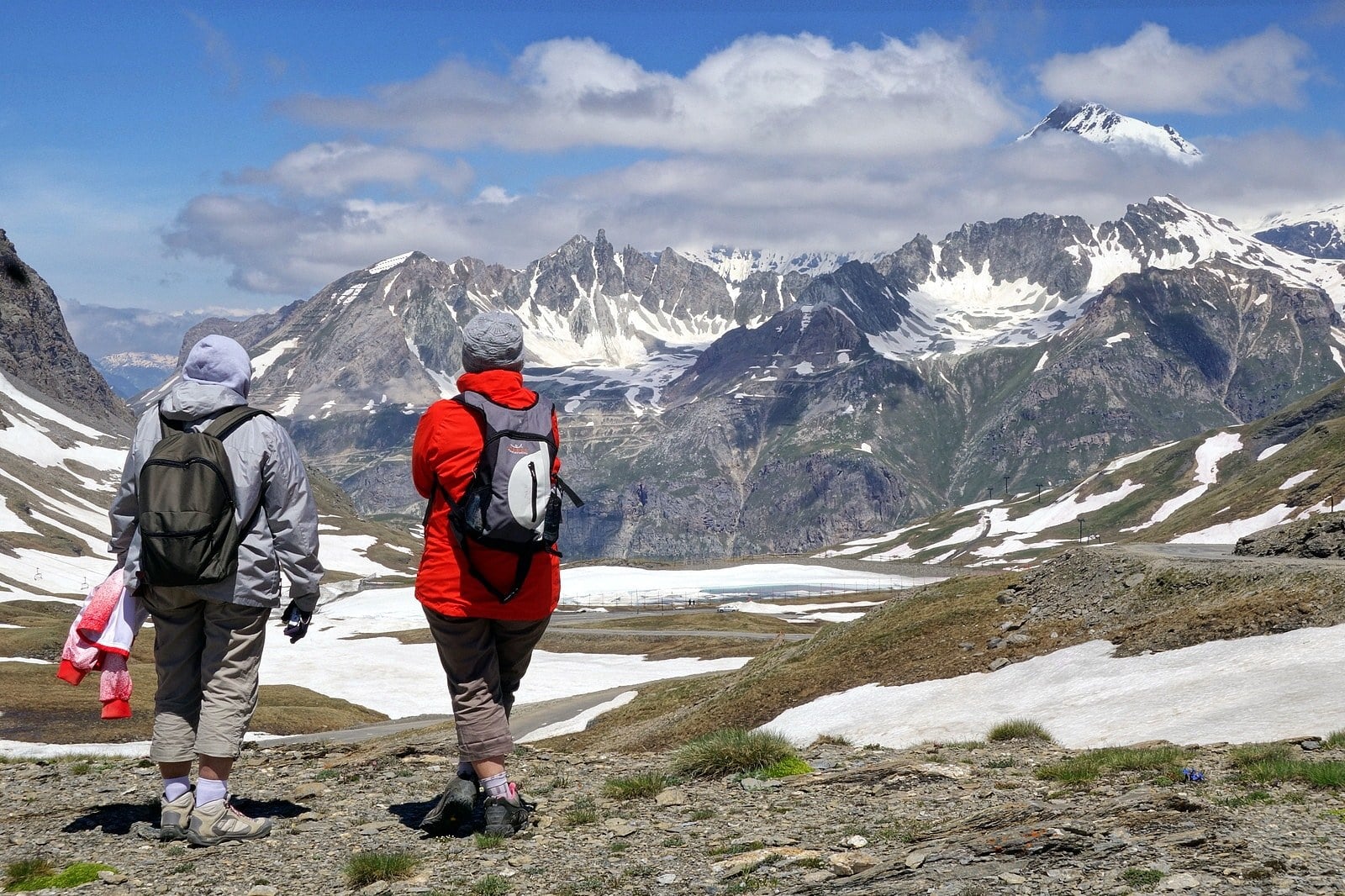
For any ride:
A helmet, two 750 ml bottles and a pump
Two spare tubes, tyre levers and a multi-tool, as bike shops are far apart above the valleys
Lights, reflectors and a bell, which French law requires and the tunnels need
A reflective vest, required outside towns at night
Sun cream and sunglasses, as the high roads have no shade above the tree line
For the high passes:
A gilet, arm and leg warmers and full-finger gloves for descents of 20 km or more
A windproof jacket and a thin cap under the helmet, as advised for the Iseran
Food for the whole climb, as the Galibier has no café at the top and no water after Valloire
Linking the Big Cols in One Week
The famous cols sit in different valleys. The Aravis cols rise above Annecy, the Glandon and the Croix de Fer above the Maurienne, and Alpe d'Huez above the Oisans, so a week that links them means a hotel in each col town and bags moved between valleys.
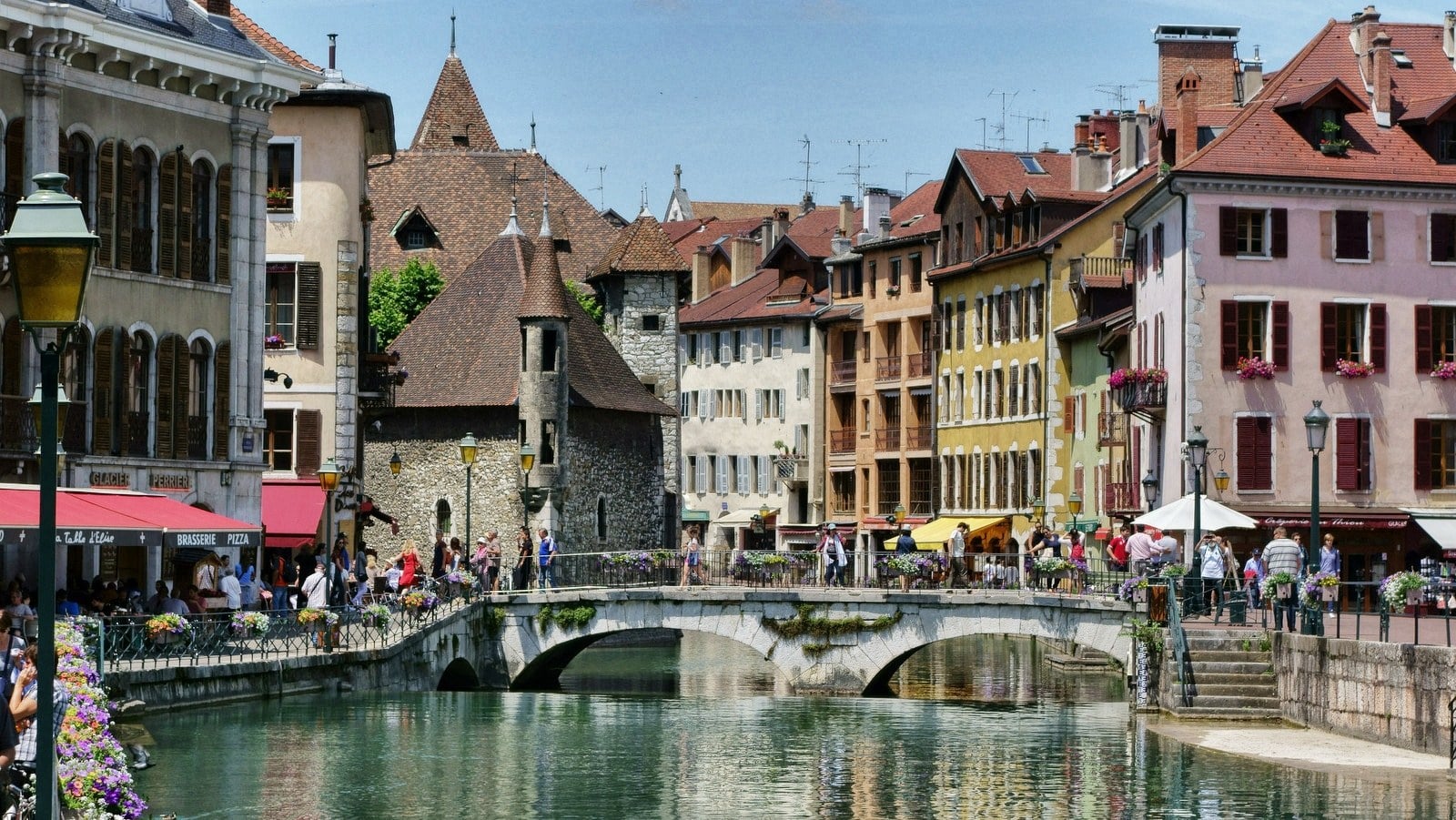
Our self-guided bike tours in the French Alps book the hotels for you, and each suits a different kind of week.
Col week: French Alps Cycling Tour, 7 days / 6 nights from Annecy to Grenoble, 383 km and 10,473 m in five riding days over the Aravis cols, the Glandon and Alpe d'Huez, with the day 4 shuttle included
Longer col week: Classic Alps Climbing Tour, 8 days / 7 nights from Annecy to Grenoble, 535 km and 14,326 m in six riding days, adding the Col de la Madeleine
One-base week: Tour de France Cycling Tour, 7 days / 6 nights in one hotel in Morzine, 312 km and 8,454 m, with the Joux Plane and a 152 km day over six cols
Lake week: The Three Lakes Bike Tour, 6 days / 5 nights from Geneva to Annecy along the Rhône and the Isère, 235 km with 270 to 890 m of climbing a day
All four include 3-star hotels with breakfast, luggage transfers, route instructions, a GPS app and support while you ride. The col weeks run from May to October and the lake week from April. To plan your week, ask us about dates for next season.
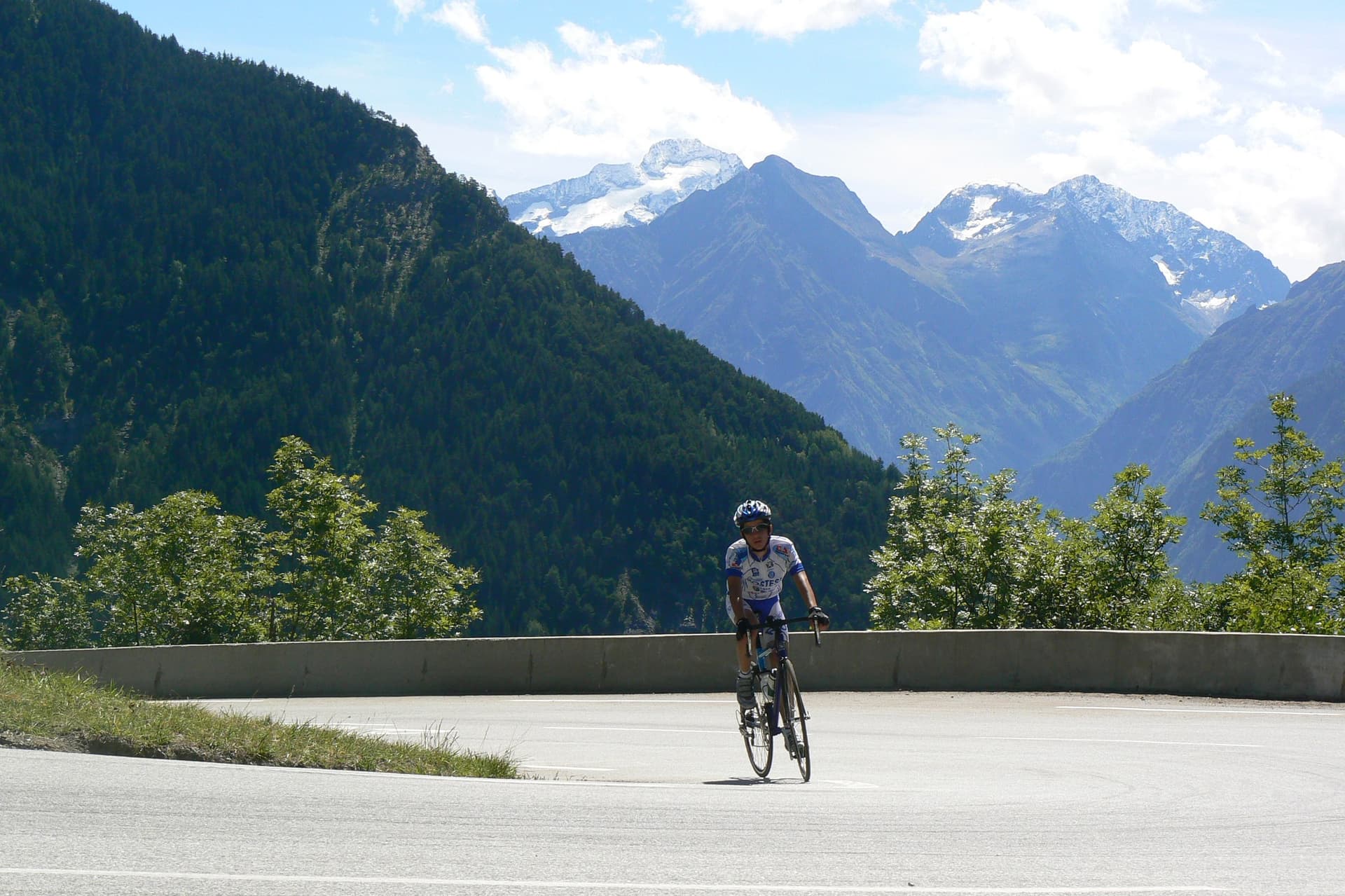
On a clear morning at the Col des Aravis, Mont Blanc fills the eastern sky, and the road drops through meadows of grazing cattle towards Flumet.
Frequently Asked Questions


Plan with a cycling expert
Free advice from a team that knows these routes inside out - real people, not a bot

Hassle-Free
We take care of route planning, accommodations, luggage transfers, and all logistics, so you can focus purely on enjoying your ride.

Tried & Tested Adventures
Our cycling routes are hand-picked & tested, to ensure breathtaking landscapes, smooth roads, and maximum safety - giving you the perfect ride every day.

Unbeatable Support
Our 24/7 customer support is where we show our passion, ensuring your cycling holiday runs smoothly and your well-being is always our top priority.

Book with Confidence
We are a financially protected company, fully bonded and insured, keeping your money safe and allowing you to travel with confidence.