Cycling in Provence: 8 Best Routes, Ventoux to the Camargue
The eight best bike rides in Provence, from the three roads up Mont Ventoux to the Luberon villages and the flat Camargue, with distance and climb for each.
Quick links
Don't want to read all this?
We've planned 800+ cycling trips. Send your dates, fitness and group size — we'll map the route and book every night.


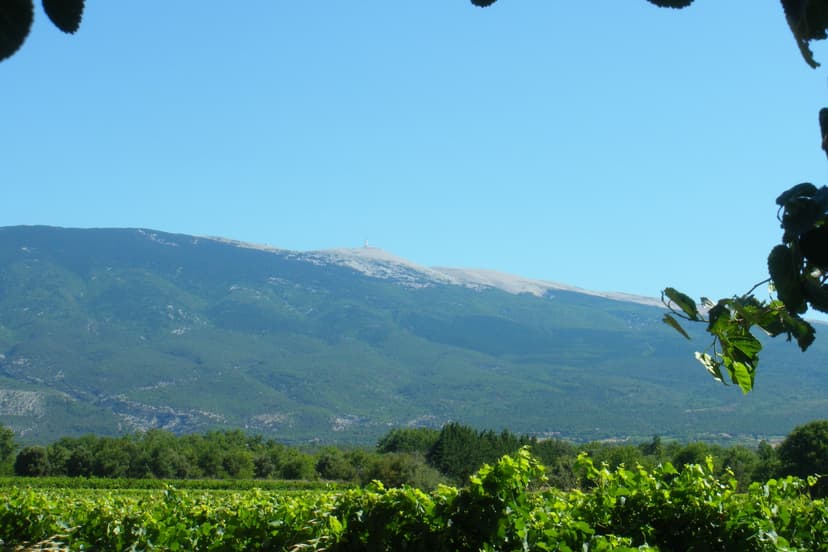
Cycling in Provence means short hops between hill villages, each with a café on its square, on quiet lanes through vineyards and olive groves. From the vineyard roads around Bédoin and Carpentras, the bare white summit of Mont Ventoux stays in view all day.
Within 100 km of Avignon the riding changes completely. The Camargue paths stay below 15 m, the Luberon villages sit on short, steep hills, and Ventoux climbs about 1,600 m from Bédoin. Lavender flowers from mid-June on the Valensole plateau.
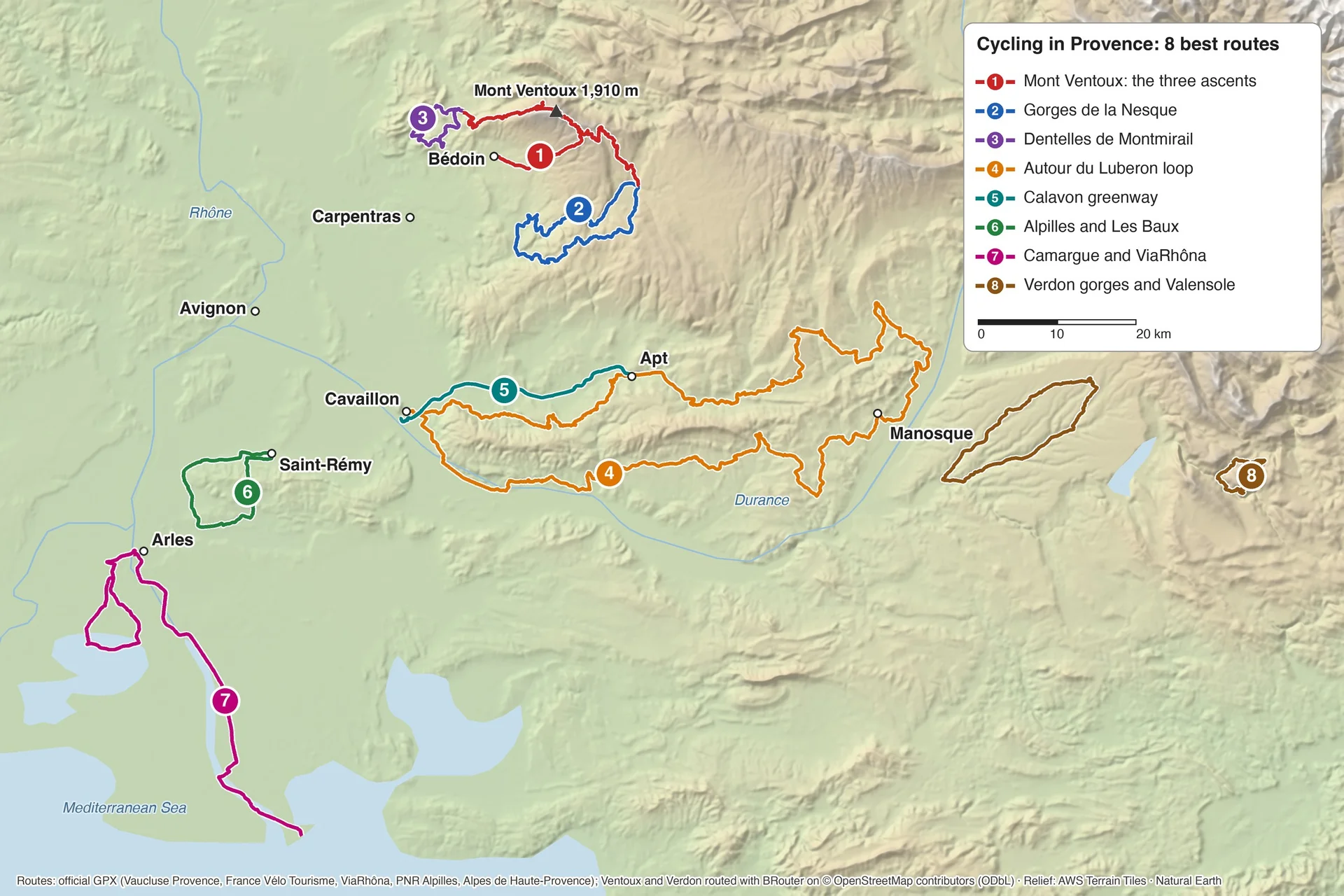
The eight best routes run from Ventoux and the Dentelles in the north to the Camargue coast and the Verdon gorges. For other regions, see our guide to cycling in France.
The 8 Best Cycling Routes in Provence
The road to the top of Ventoux crosses bare limestone at 1,900 m, while the ViaRhôna to the sea never rises above 11 m. The eight routes run from the mountain in the north through the Luberon and the Alpilles to the Camargue and the Verdon.
1. Mont Ventoux: The Three Ascents
Distance: 21 to 25.6 km to the summit, depending on the village you start from
Elevation gain: 1,210 to 1,598 m, at an average of 5 to 7.5%
Start and finish: Bédoin, Malaucène or Sault, then down the same road or over the top to another village
Surface: tarmac on the D974 and the D164; the last 6 km above the Chalet Reynard cross bare scree with no shade
Highest point: 1,910 m at the summit
Best for: fit road riders who want the most famous climb in Provence; Sault, at 5%, is the gentlest way up
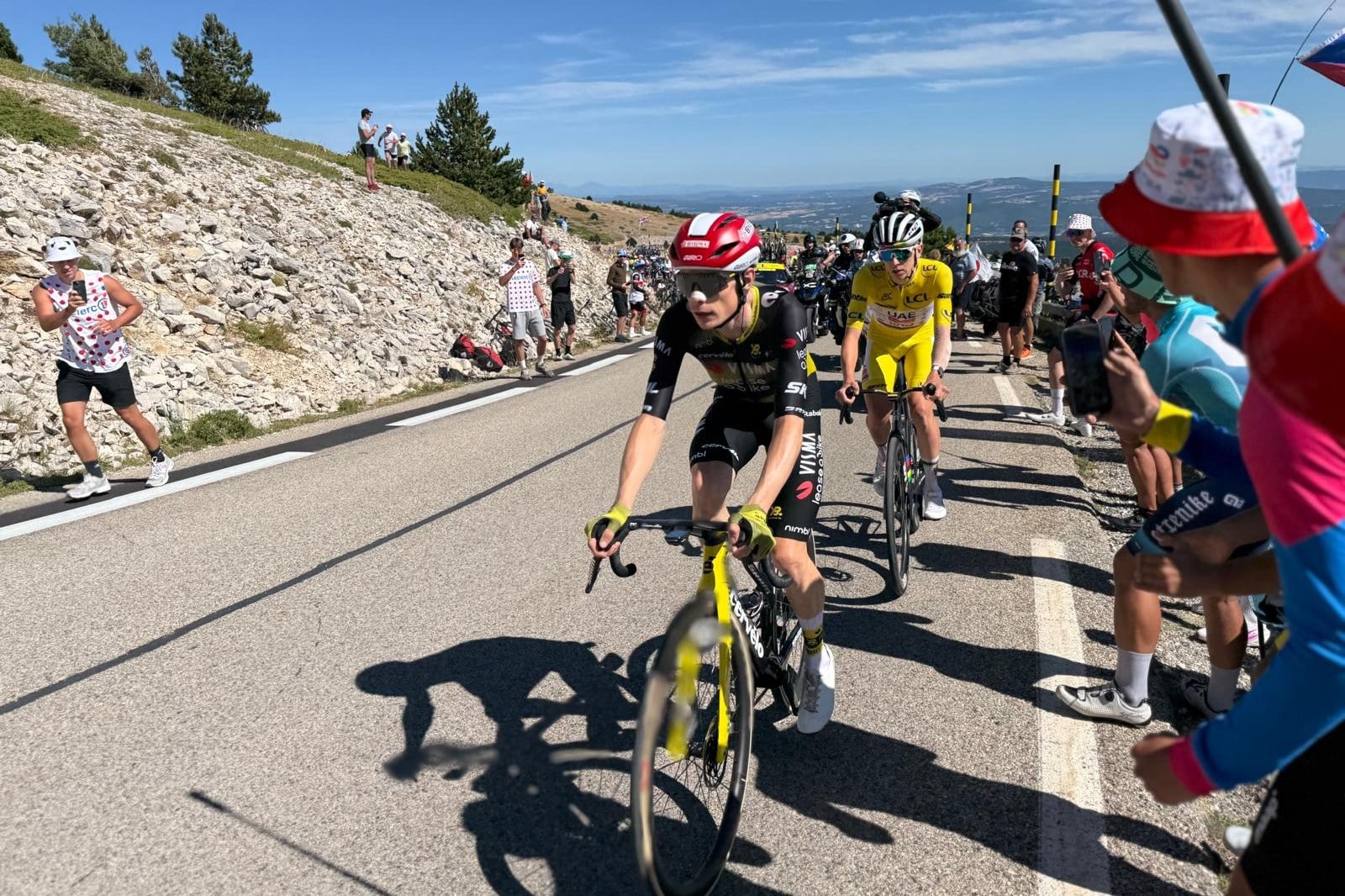
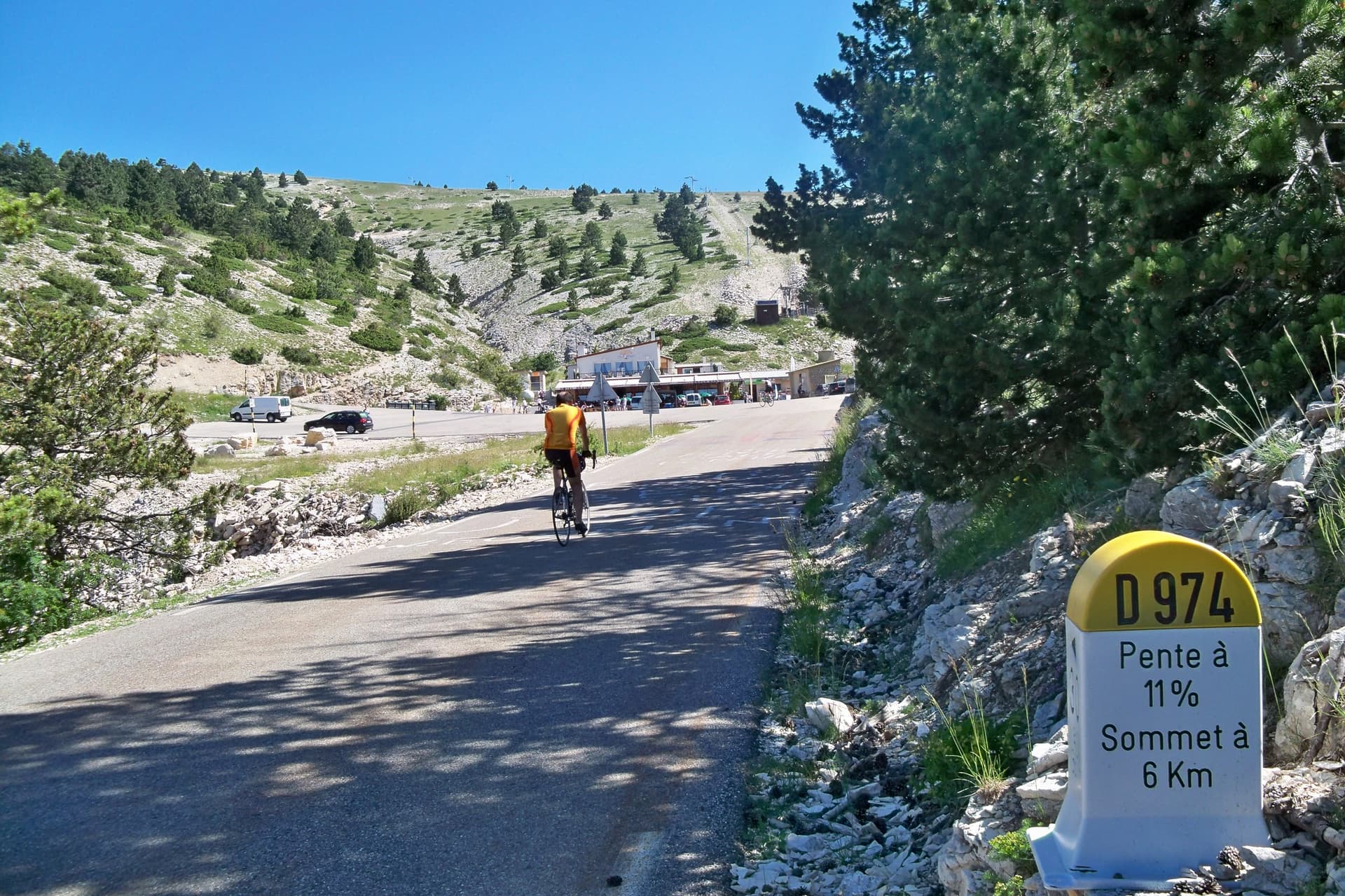
Three roads climb to the summit, and the official access page gives their figures. From Bédoin the D974 climbs through forest to the Chalet Reynard at 1,417 m, then crosses white scree for the last 6 km, past the memorial to Tom Simpson 1.5 km below the top.
The Malaucène road is as steep and stays in the trees for longer, past the Mont Serein ski station at 1,437 m. From Sault the D164 climbs gently for about 20 km to the Chalet Reynard, then joins the Bédoin road for the last 6 km.
Start | Road | Distance | Elevation gain | Average gradient | Steepest |
Bédoin | D974 | 21.8 km | 1,598 m | 7.5% | 15% |
Malaucène | D974 | 21 km | 1,575 m | 7.5% | 15% |
Sault | D164, then D974 | 25.6 km | 1,210 m | 5% | 10% |
2. The Gorges de la Nesque
Distance: 64 km loop, with a 22 km climb through the gorge
Elevation gain: 974 m on the loop; the gorge road gains about 440 m in 20 km, at about 2%
Start and finish: Villes-sur-Auzon, via Monieux and Méthamis
Surface: tarmac on the D942, a balcony road with tunnels and stone-walled viewpoints
Highest point: 832 m, on the return over the Monts de Vaucluse
Best for: a long, gentle climb on a quiet road, as a warm-up the day before Ventoux
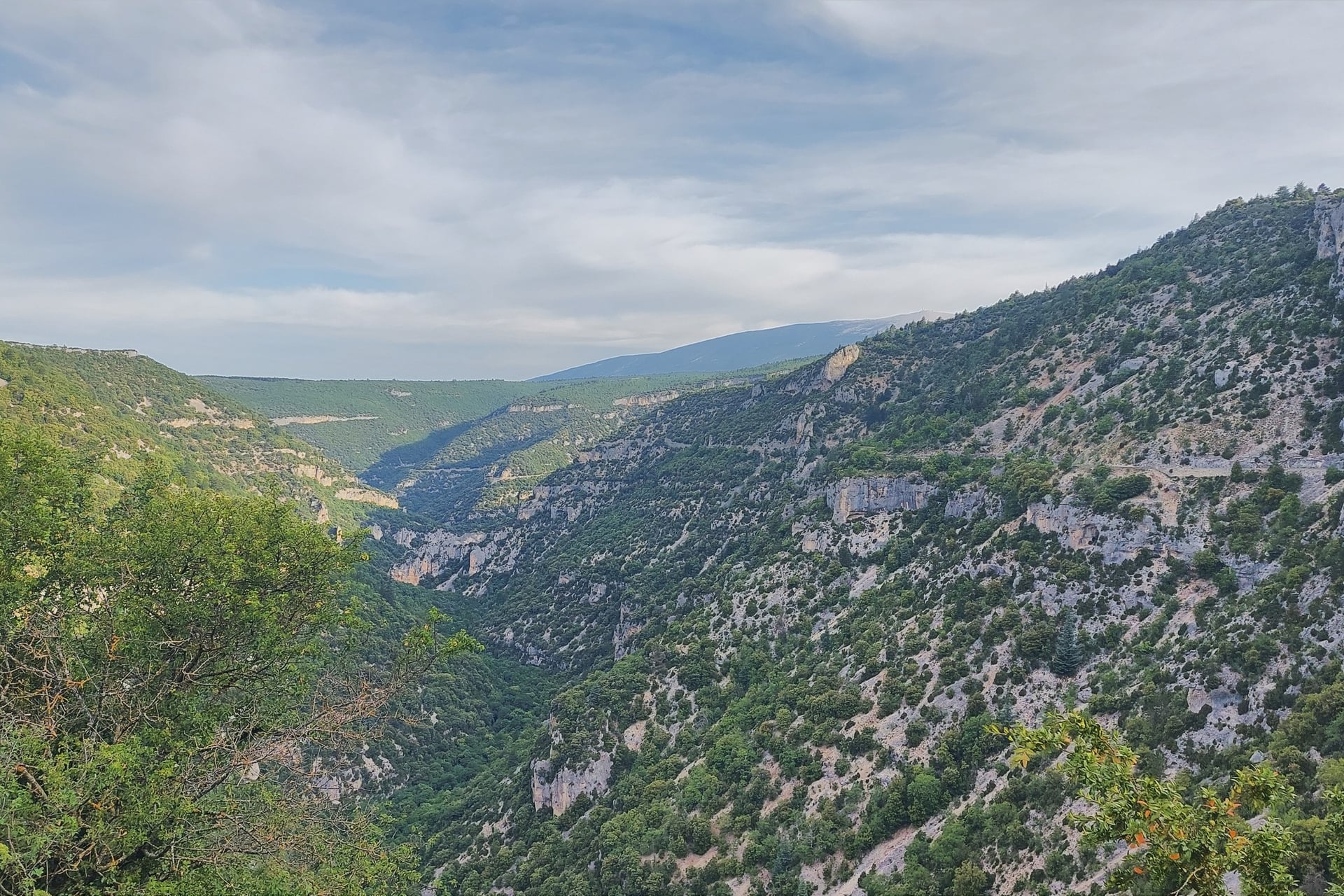
From Villes-sur-Auzon, at about 290 m, the D942 follows the Nesque upstream into a limestone canyon where some cliffs rise more than 200 m. The route 27 loop climbs gently but steadily for 22 km to Monieux, at about 650 m, past the Castelleras viewpoint and the Rocher du Cire.
A memorial put up at the Castelleras viewpoint in 1966 honours the poet Frédéric Mistral, who wrote about the gorge. After Monieux the loop crosses the plateau at up to 832 m, then returns on a descent of about 18 km through the Javon forest and Méthamis.
3. The Dentelles de Montmirail
Distance: 28.7 km loop
Elevation gain: 715 m
Start and finish: Malaucène tourist office, via the Col de la Chaîne, Suzette, La Roque-Alric and Le Barroux
Surface: tarmac on narrow, winding minor roads through vineyards and pine woods
Highest point: 478 m
Best for: a short, hilly half day among vineyards, with Ventoux behind you
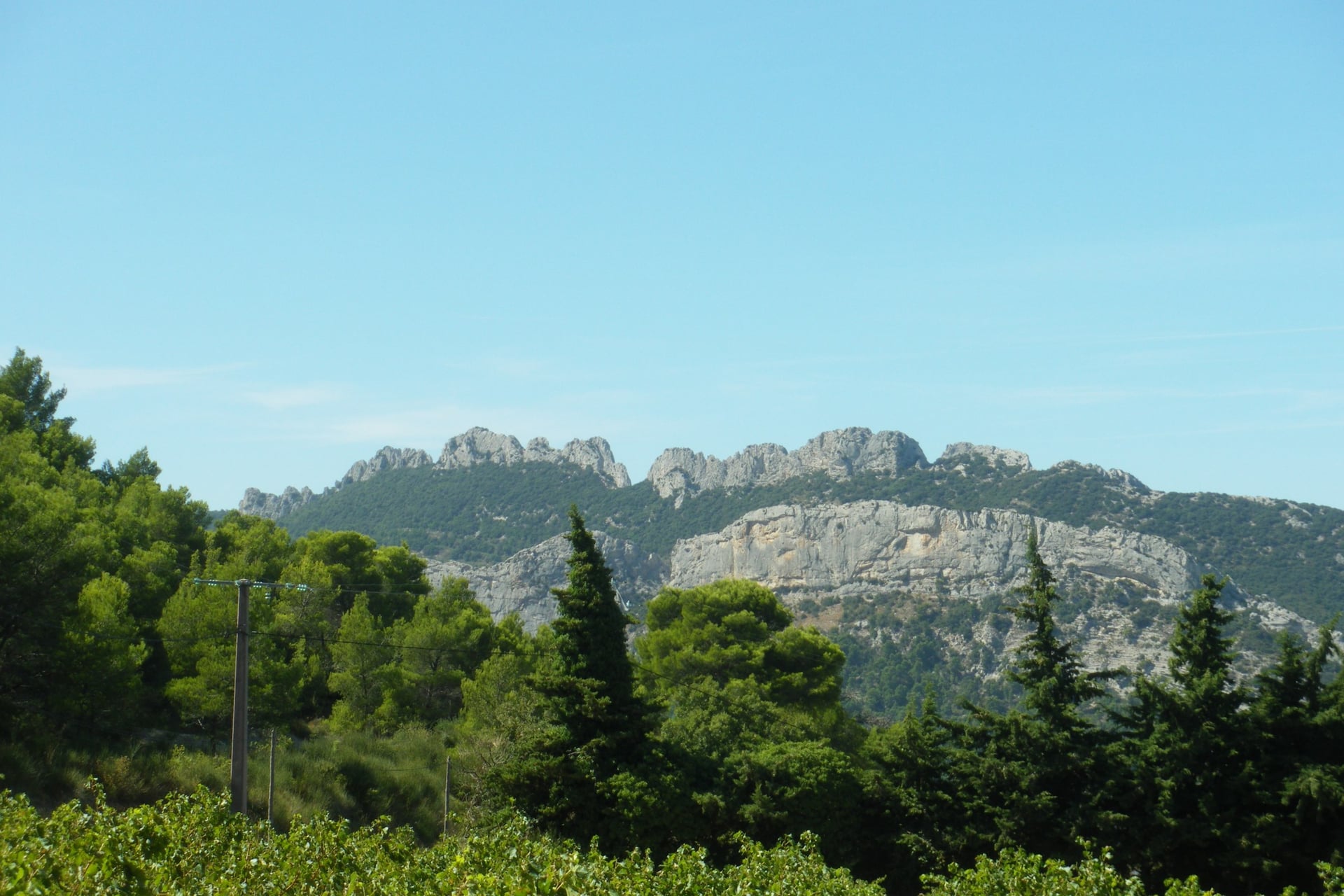
West of Malaucène, the Dentelles de Montmirail are a short range of jagged limestone blades above terraced vineyards. The Entre Ventoux et Dentelles loop crosses the Col de la Chaîne after 4.2 km and reaches Suzette at 8.2 km, with Ventoux behind you at every stop.
From Suzette the loop drops to Lafare and La Roque-Alric below the rocks, then returns through Le Barroux at 19 km; a shorter return goes straight to Le Barroux. Vaucluse's tourist board calls it one of its hardest and most beautiful loops, with 715 m of climbing in 28.7 km.
4. The Luberon Villages and the Autour du Luberon Loop
Distance: 241 km loop in five stages of 29 to 64 km
Elevation gain: 2,670 m on the whole loop; 460 m on the 46 km village stage from Apt to Cavaillon
Start and finish: Cavaillon, or any stage town; stations at Cavaillon and Manosque
Surface: quiet roads shared with traffic for 94% of the way, and about 15 km of greenway
Highest point: 782 m, between Forcalquier and Apt
Best for: a week of hill villages and markets, or one village day from Apt
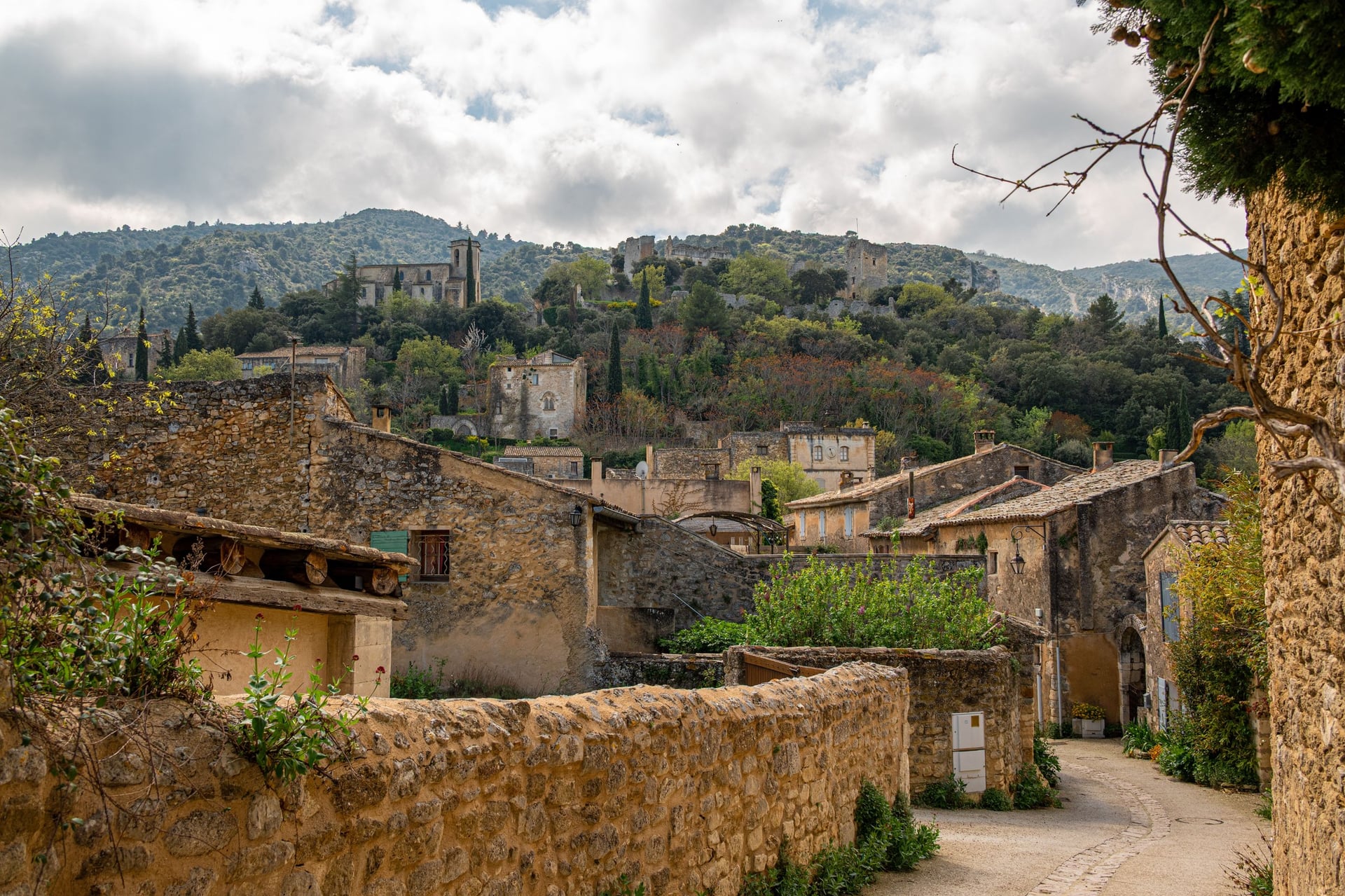
Signed in both directions, Autour du Luberon à vélo circles the Luberon regional park, with orange signs clockwise and blue anticlockwise. Its stages run 49 km from Cavaillon to Cucuron, past Lourmarin, then 52 km to Manosque, 29 km to Forcalquier and 64 km to Apt.
The best day is the 46 km stage from Apt back to Cavaillon. It passes Bonnieux, Lacoste, Ménerbes, listed among the most beautiful villages of France, and Oppède-le-Vieux, and each village sits on its own short, steep hill. France Vélo Tourisme suggests a hybrid or gravel bike, with or without electric assistance.
5. The Calavon Greenway: Cavaillon to Apt
Distance: 34 km one way, a stage of La Méditerranée à Vélo (EuroVelo 8)
Elevation gain: 163 m, all gently uphill towards Apt
Start and finish: Cavaillon station to Apt, with 4 km of signed link on shared roads to Robion
Surface: 89% cycle path, mostly tarmac greenway on the old railway between Robion and Apt
Highest point: 238 m at Apt
Best for: families and a flat valley day, with Gordes and Roussillon a short climb to the north
Built on a former railway, the Véloroute du Calavon climbs gently up the valley between the Luberon and the Monts de Vaucluse. From Cavaillon a signed link on shared roads reaches Robion, and from there the path is kept apart from traffic most of the 34 km to Apt.
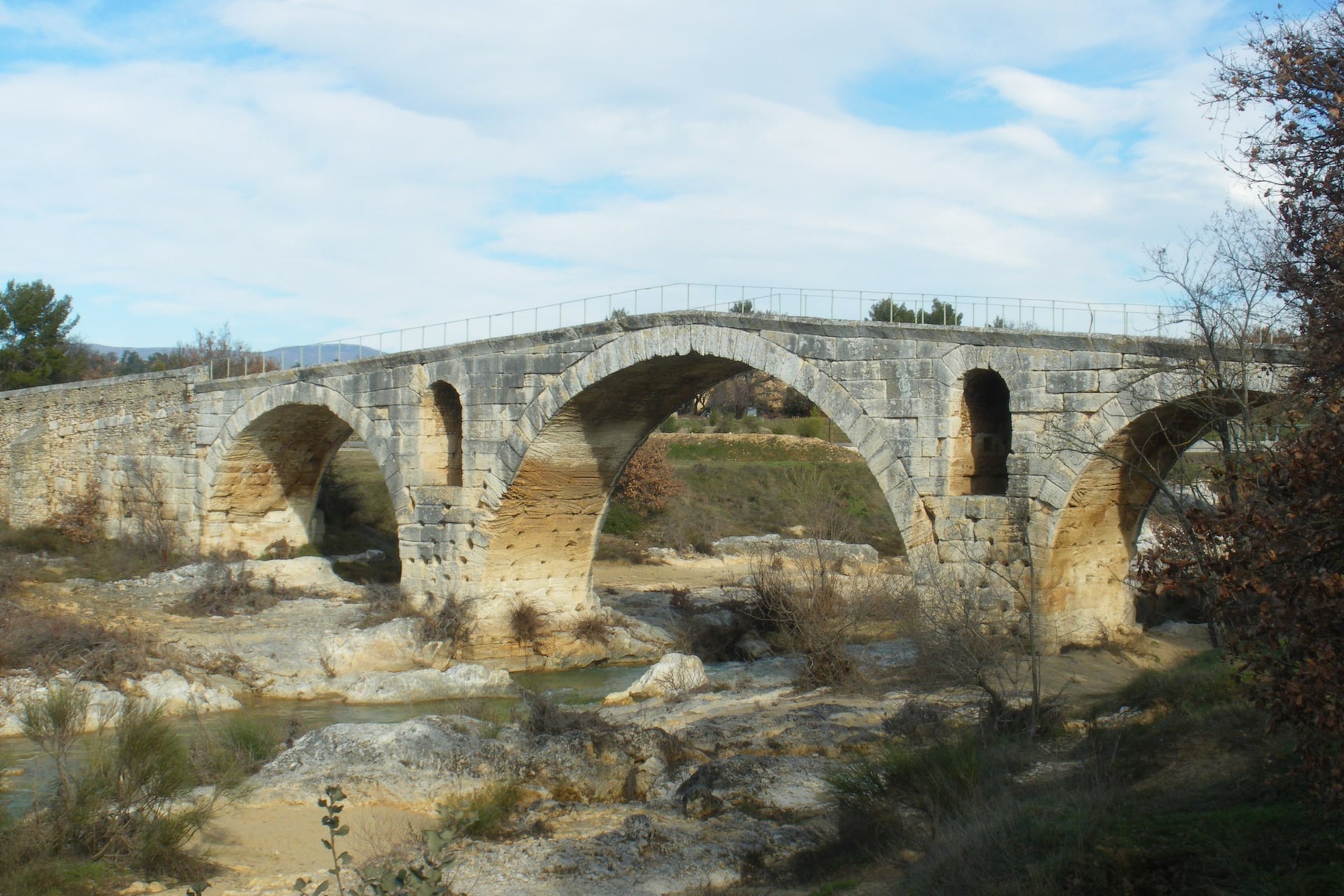
The path passes the lavender museum at Coustellet after 11.5 km, the picnic area at Goult's old station at 19.7 km, and the Pont Julien at 25.4 km, a Roman bridge of about 3 BC that carried cars until 2005. Gordes is 7.8 km and about 250 m of climbing north of Coustellet.
6. The Alpilles and Les Baux-de-Provence
Distance: 41.2 km loop
Elevation gain: 388 m
Start and finish: Saint-Rémy-de-Provence, via the Val d'Enfer, Les Baux, Maussane, Paradou and Fontvieille
Surface: tarmac on small roads and lanes through olive groves and vineyards, with one climb of about 175 m through the Val d'Enfer
Highest point: 228 m, at the top of the Val d'Enfer below Les Baux
Best for: an easy base week with one real climb
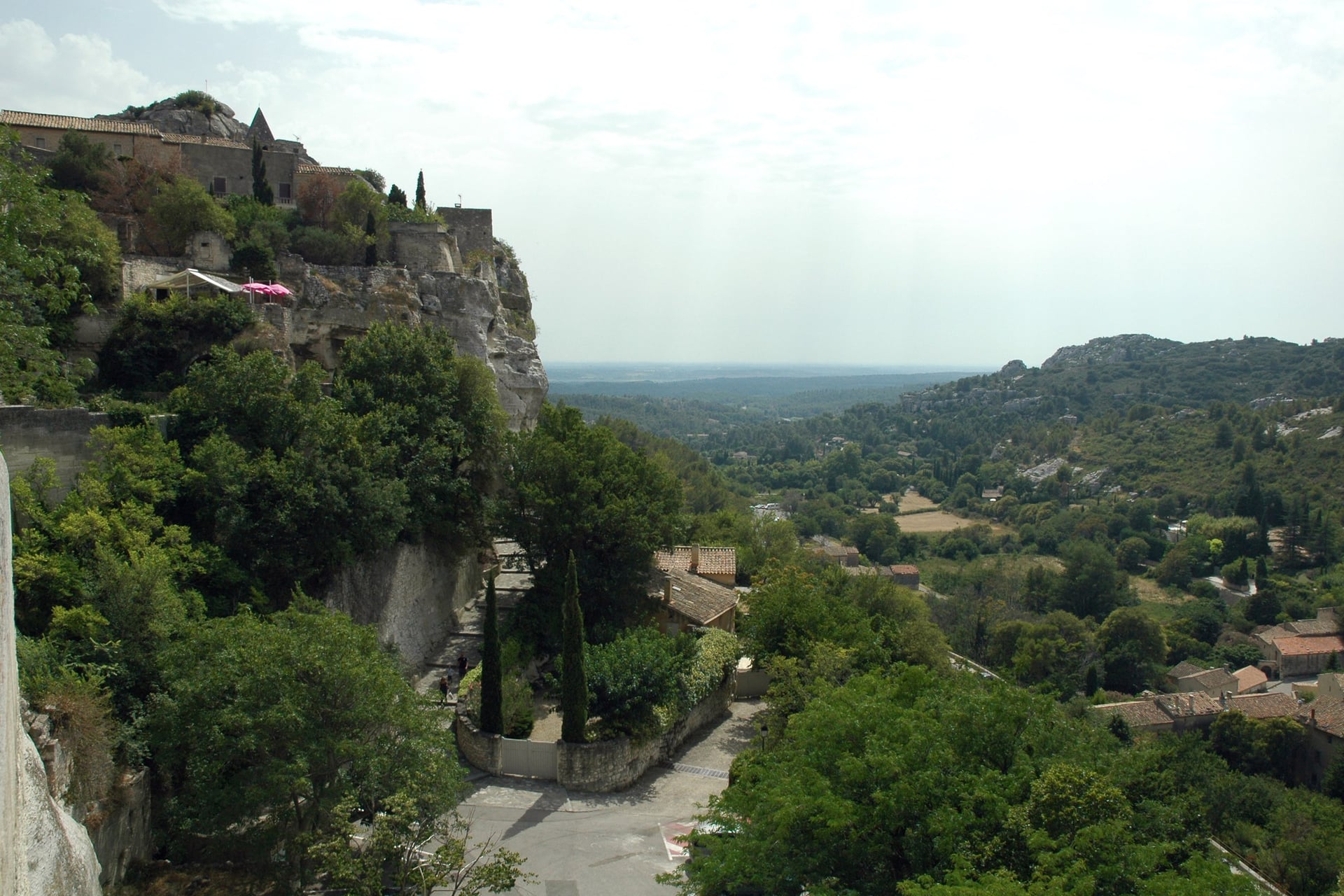
Saint-Rémy sits at the foot of the Alpilles, a small limestone range, and the Val d'Enfer loop does all its climbing in the first 9 km. It tops out at 228 m in the Val d'Enfer, a valley of rocks shaped by erosion where Jean Cocteau filmed in 1959.
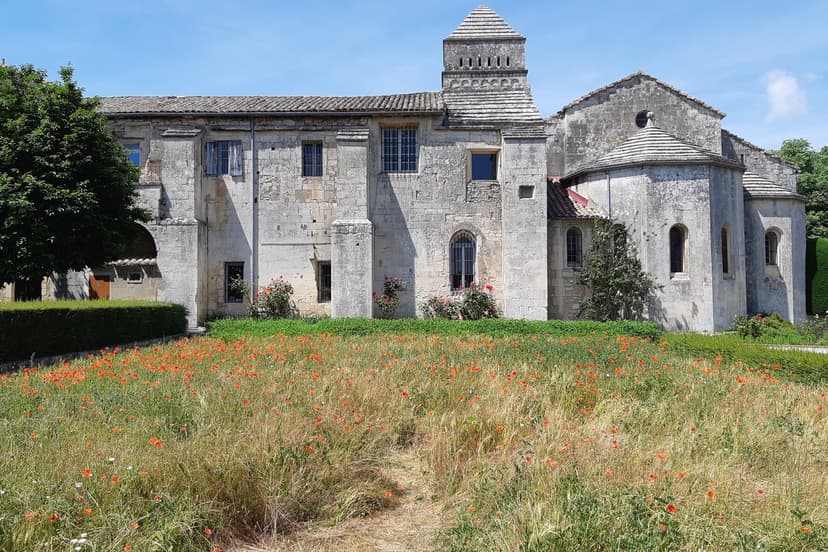
Les Baux stands on its spur at 10.4 km, above the old quarry of the Carrières de Lumières. After it, the last 30 km are almost flat, through Maussane, Paradou and Fontvieille to Saint-Rémy, where Van Gogh painted 143 oils in 1889 and 1890 at the Saint-Paul de Mausole asylum.
7. The Camargue and the ViaRhôna to the Sea
Distance: 52 km one way on the ViaRhôna; 44 km for the Vaccarès loop
Elevation gain: 0 m on both routes, by the official figures
Start and finish: Arles to the Plage Napoléon at Port-Saint-Louis-du-Rhône; the loop starts and ends in Arles
Surface: 99% cycle path on the ViaRhôna; quiet roads on the loop, with care needed on the D570
Highest point: 15 m, on the Vaccarès loop
Best for: flat riding past rice fields, flamingos and the 6,500 ha Vaccarès lagoon
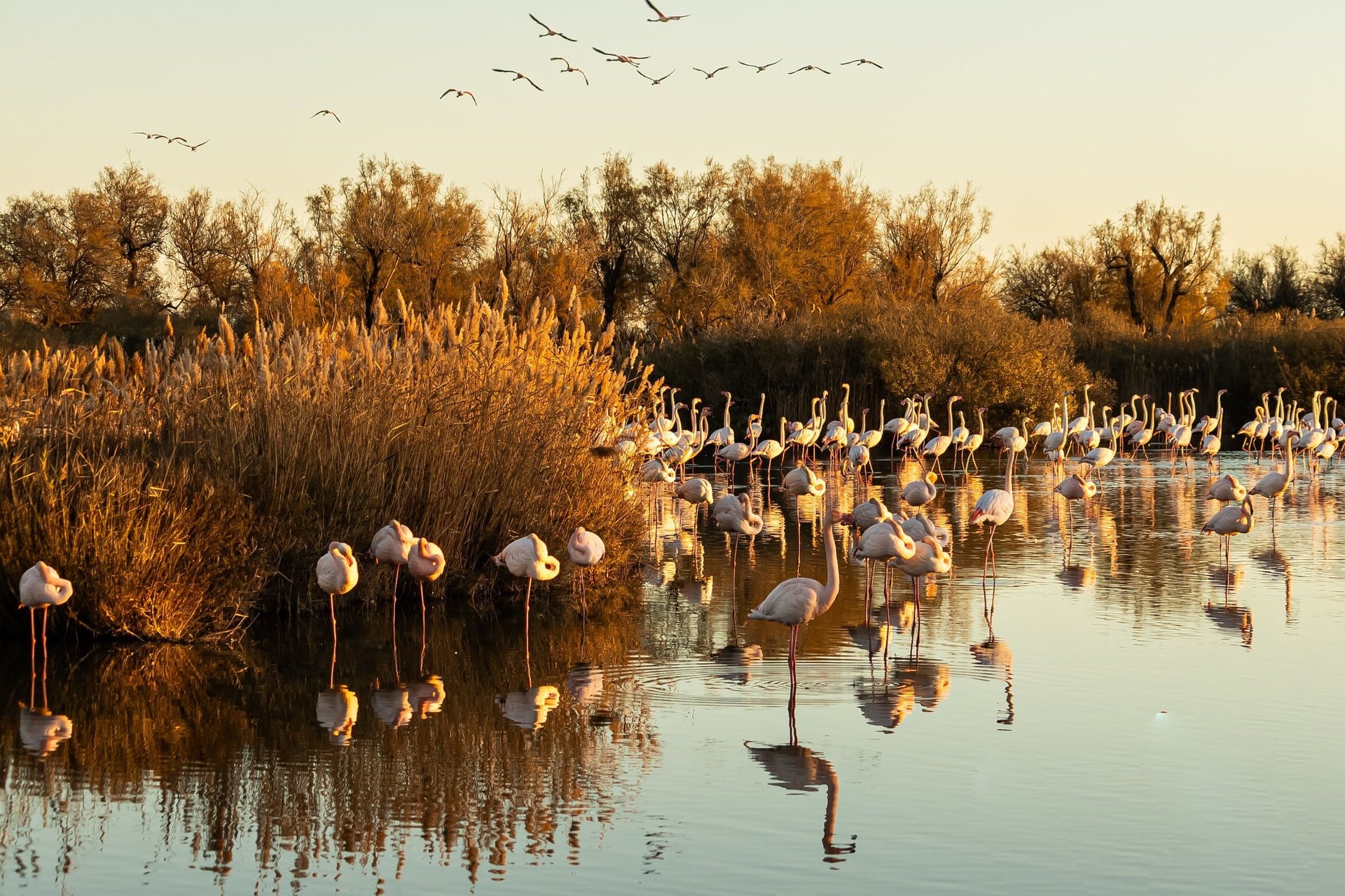
South of Arles the Rhône splits into its delta. The ViaRhôna leaves Arles at the Pont Van Gogh and runs its last 52 km beside the Arles to Bouc canal and across the marshes. It ends at the Plage Napoléon, 10 km of sand, so you can finish the ride with a swim.
The 44 km Vaccarès loop heads south through rice fields to the Étang de Vaccarès, the largest lagoon in the Camargue at 6,500 ha. Green and white signs numbered 4 mark the way. Its roads have no shade, and France Vélo Tourisme advises riding it in any season but summer.
8. The Verdon Gorges and the Valensole Plateau
Distance: 24 km for the Route des Crêtes loop; 54.2 km for the Valensole plateau loop
Elevation gain: about 700 m on the Route des Crêtes; 557 m on the Valensole loop
Start and finish: La Palud-sur-Verdon, ridden clockwise as the one-way section requires; Gréoux-les-Bains, via Riez, Puimoisson and Valensole
Surface: narrow tarmac with ramps of 15% on the one-way section of the Crêtes; quiet roads across the plateau
Highest point: about 1,320 m on the Route des Crêtes; 694 m near Puimoisson
Best for: canyon views, and lavender from mid-June to mid-July
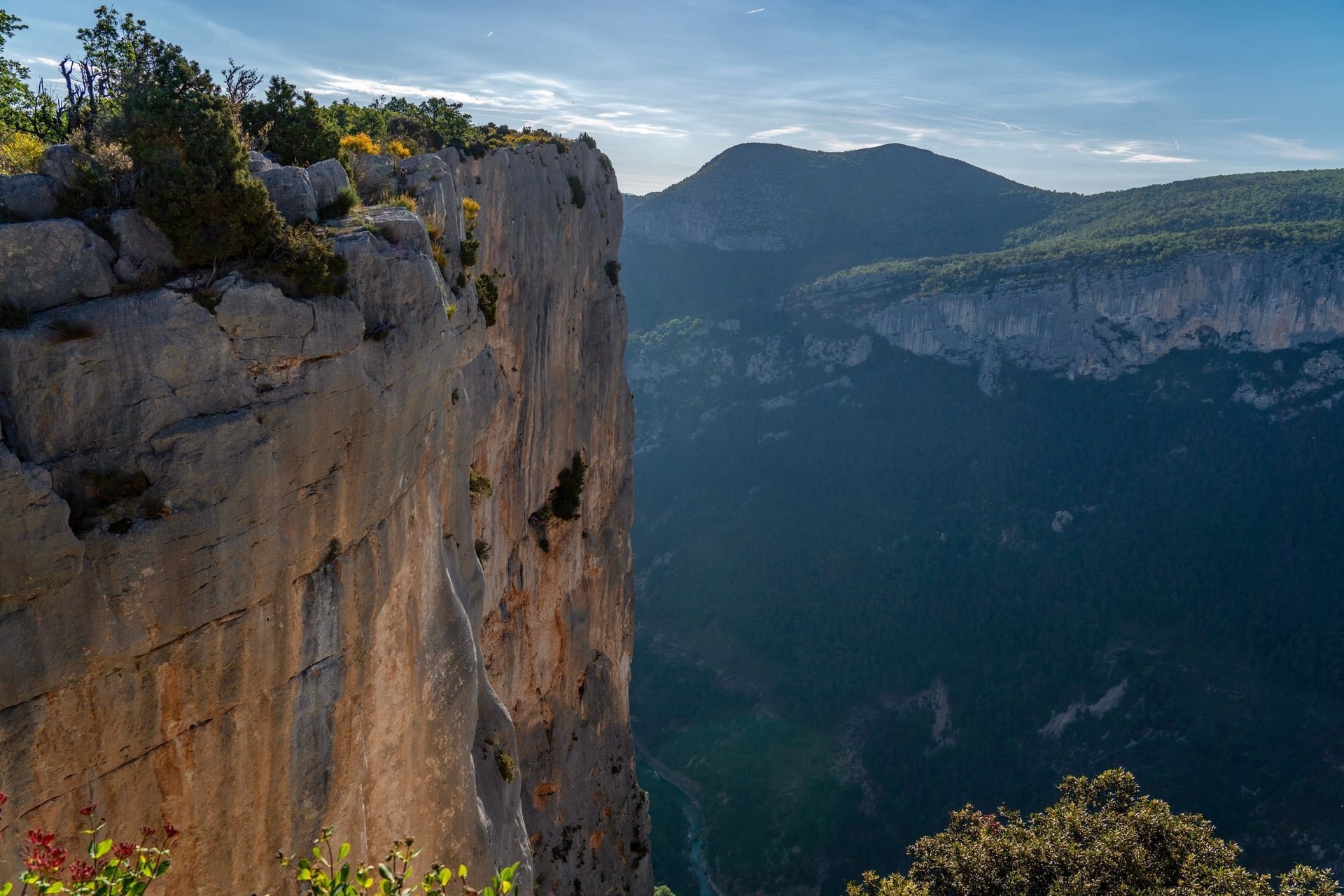
Along the north rim of the Verdon gorge, 25 km long and up to 700 m deep, the Route des Crêtes passes about 15 viewpoints. It opens from late March to late November, and its central section is one-way and steep, so ride it clockwise from La Palud-sur-Verdon.
West of the gorge, the Valensole plateau loop starts at the spa town of Gréoux-les-Bains, at 329 m, where the car park has a bike wash, pump and water tap. It climbs between Allemagne-en-Provence at 11 km and Puimoisson at 26 km, and its lavender weeks are the busiest on these roads.
How Hard Is Cycling in Provence?
Cycling in Provence ranges from flat delta paths to a 1,598 m climb up Mont Ventoux, so how hard a week feels depends on where you ride.
Climbs and Gradients
Most riding falls into three kinds: the Camargue routes and the greenway are nearly flat, with 163 m of climbing in 34 km on the greenway. The Luberon loop, the Alpilles and the Dentelles roll, gaining 9 to 25 m for every kilometre ridden.
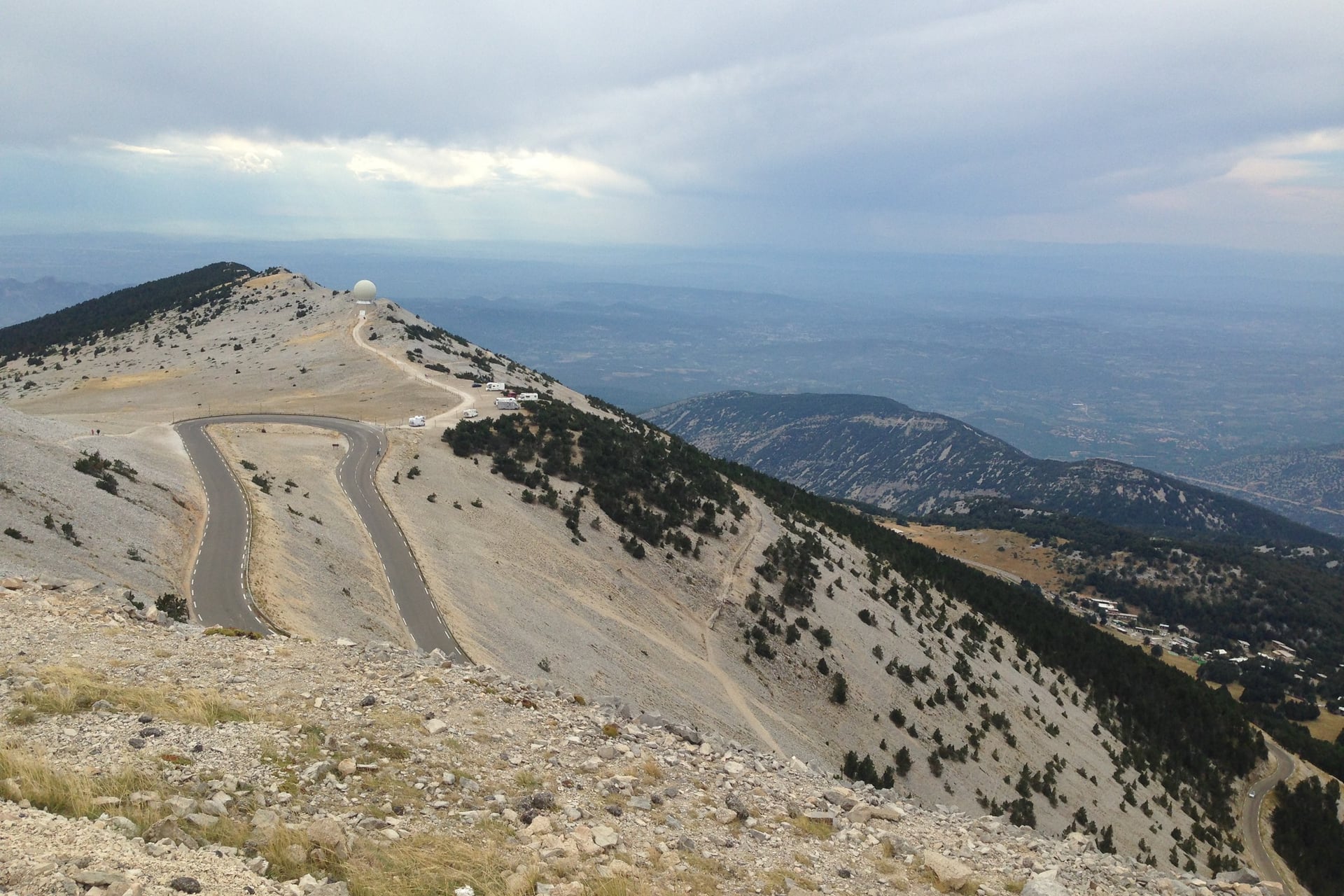
On the rolling routes the effort comes in short ramps into villages such as Gordes and Bonnieux. Mont Ventoux is a different sport, as the Bédoin road climbs for 21.8 km to the summit at an average of 7.5%, with ramps of 15%; the Sault road averages 5%.
Mistral, Heat and Traffic
The mistral is the cold north wind of the lower Rhône valley. Météo-France gives it an average speed of 50 km/h with gusts of 80 to 100 km/h, and it blows hardest in winter and spring, sometimes for several days.
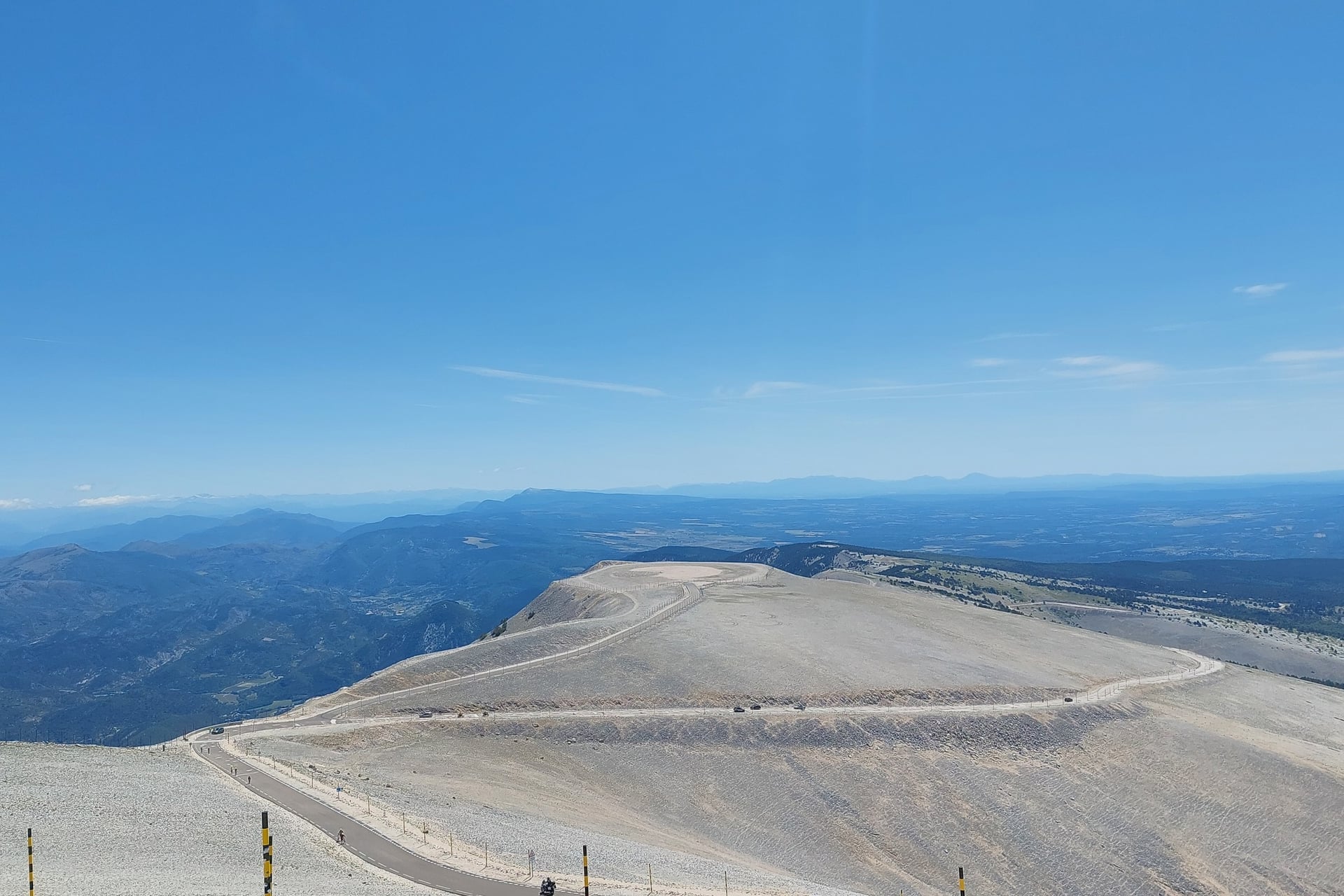
On Mont Ventoux, where the pass below the summit is called the Col des Tempêtes, winds over 60 km/h blow on about 121 days a year, so check the summit forecast before you start. Summer brings the other problem: Avignon averaged 23 days of 30 °C or more each July from 2016 to 2025.
The signed routes keep to minor roads and greenways. The exception is the Route des Crêtes, busiest from 15 July to 30 August, where its tourist office suggests riding before 10:00 or after 18:00.
When to Cycle in Provence
The season runs from April to October, and what changes through it is the heat on the plain, the wind, the lavender and the snow on Ventoux.
The Ventoux summit road reopens in mid-April on the Bédoin and Sault side and in mid-May on the Malaucène side, and it closes again around mid-November, for bikes as well as cars.
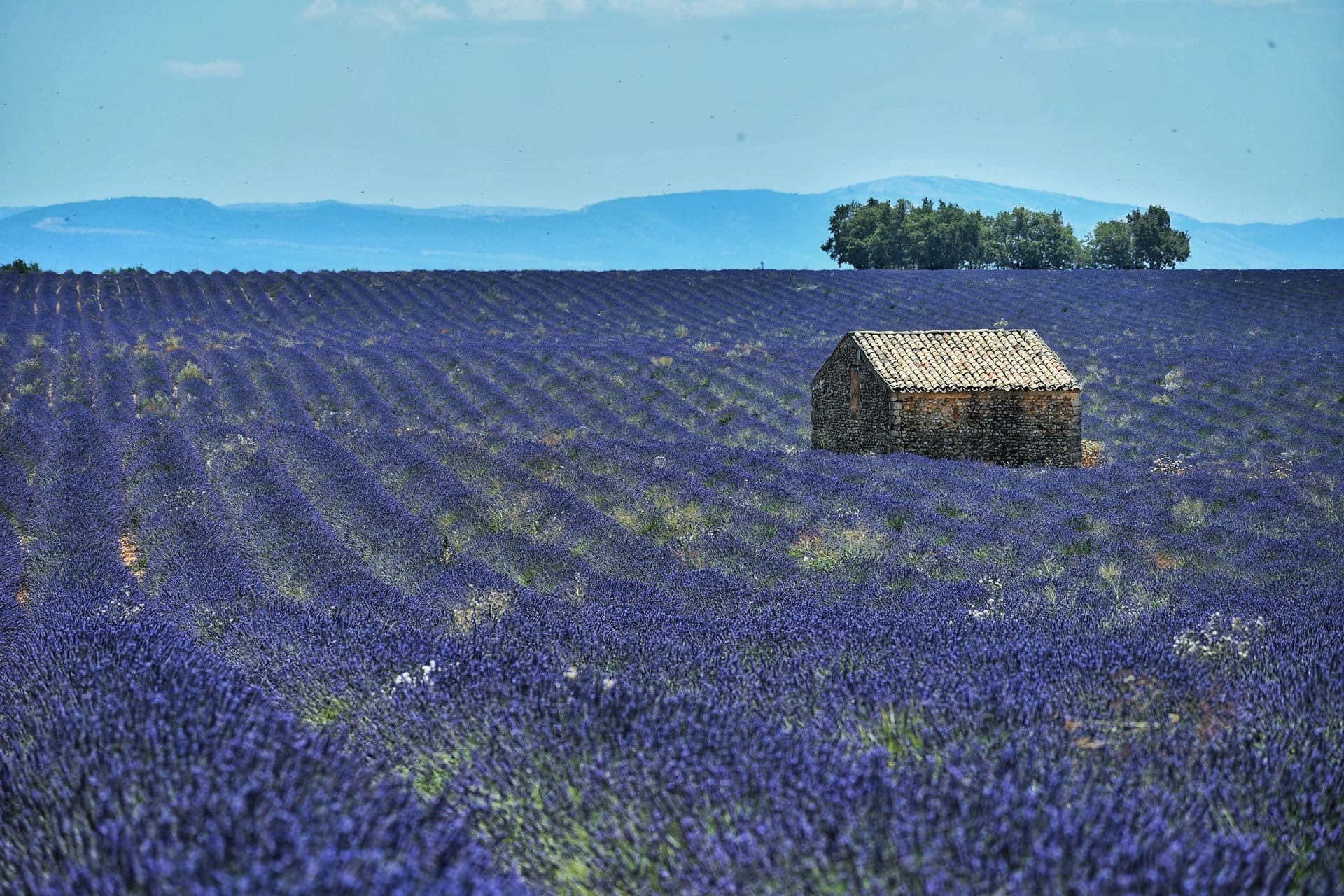
Lavender flowers on the Valensole plateau from mid-June to mid-July, and later on the Sault plateau at 700 to 900 m, which holds its lavender festival on 15 August. July and August are the hottest months, so ride the lavender weeks in the morning.
Average daily high and weather days in Avignon, 2016 to 2025 (Open-Meteo):
Month | High in Avignon | Rain days | Days over 30 °C | Days with gusts over 60 km/h | On the roads |
April | 19 °C | 8 | 0 | 7 | Ventoux summit road reopens on the south side |
May | 23 °C | 9 | 1 | 7 | Ventoux north side reopens; the wettest month of the season |
June | 29 °C | 7 | 12 | 5 | Lavender starts flowering on the Valensole plateau |
July | 32 °C | 3 | 23 | 5 | Hottest weeks; Valensole lavender harvest from mid-July |
August | 31 °C | 4 | 20 | 6 | Sault lavender festival on 15 August; busiest roads |
September | 26 °C | 7 | 5 | 4 | Fewer hot days and quieter roads after the holidays |
October | 21 °C | 8 | 0 | 7 | Cool mornings; summit road open until mid-November |
For most riders, May, June and September are the best months, with long days, the Ventoux road open and far fewer hot afternoons than July and August.
Getting to Provence With a Bike
Avignon is the gateway to Provence by train, and the fastest TGV from Paris takes 2 hours 33 minutes.
By Train
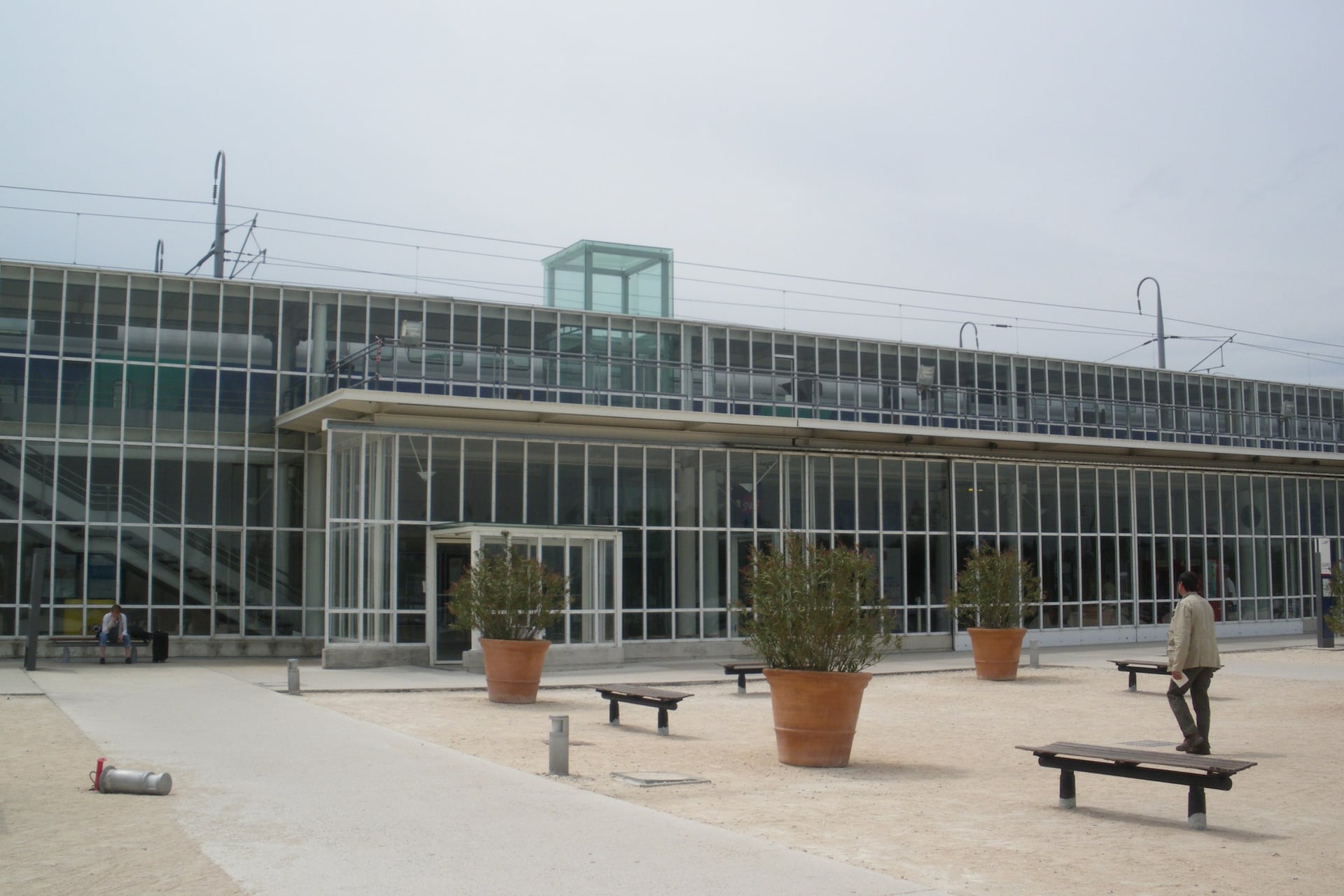
TGVs stop at Avignon TGV, outside the city, and shuttle trains on the Virgule line take under five minutes to Avignon Centre. From there regional ZOU! trains run to Cavaillon for the Luberon and the greenway, and to Arles for the Camargue.
TGV INOUI: a bike packed in a bag of up to 90 × 130 × 50 cm travels free; an assembled bike needs a booked bike space, where the train has one
OUIGO: add the bike option when you book; assembled bikes travel only on OUIGO Train Classique
ZOU! regional trains: bikes travel free in the marked spaces, but may be refused on full trains at weekday rush hours
Summer booking: from 1 May to 27 September 2026, a bike booking is compulsory on trains of the Lyon to Marseille line through Avignon, every day in July and August and at weekends otherwise
The rules for other French trains are in our France cycling guide, and on the TGV it pays to book the bike space when you buy the ticket.
By Air
Of the nearby airports, Marseille Provence has the most flights, 79 km by road from Avignon and 70 km from Saint-Rémy. Nîmes airport, 23 km from Arles, has a handful of Ryanair routes, and Avignon's own airport has no regular scheduled flights.
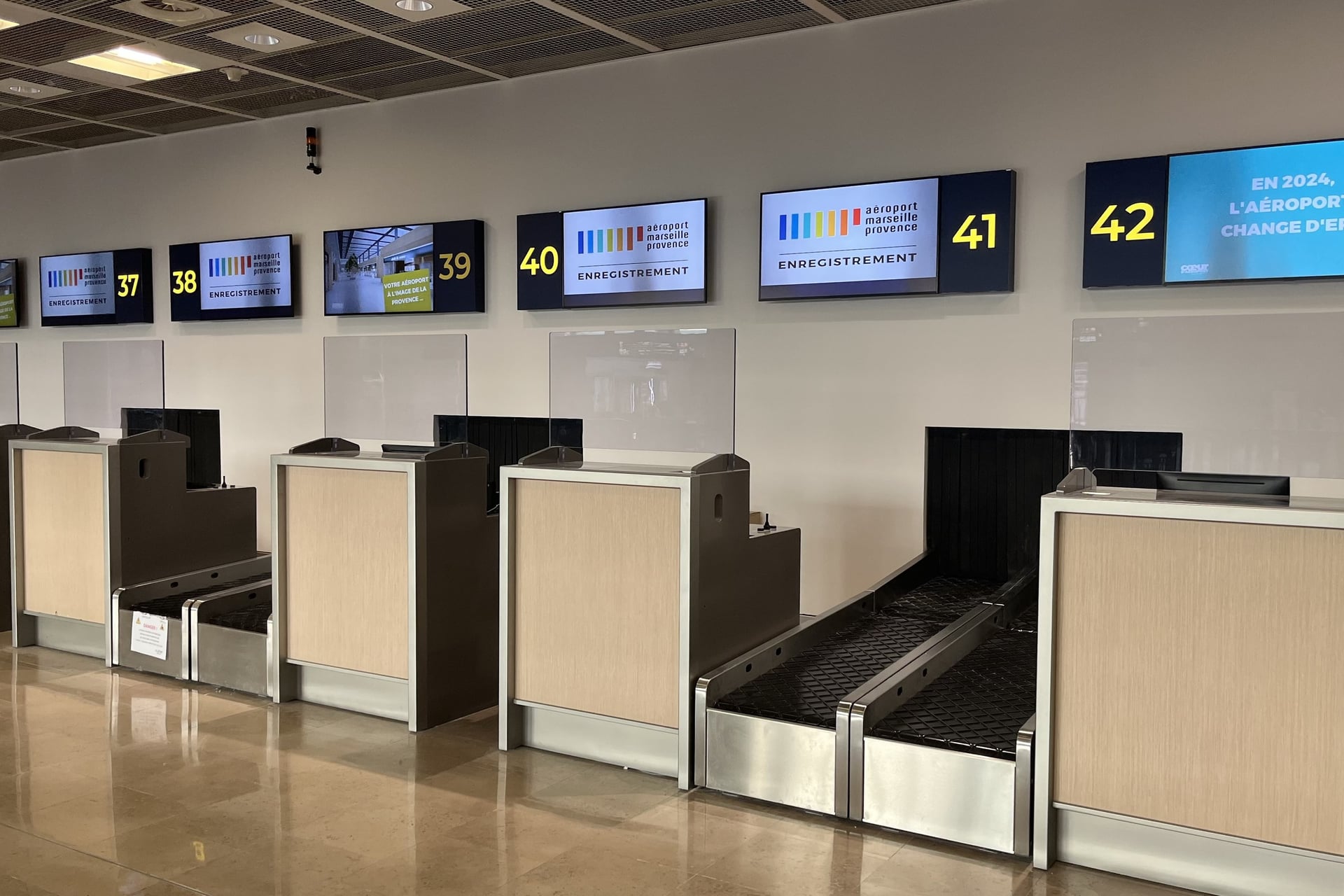
Nice airport is 254 km east of Avignon by road. If you fly with a bike, book the bike box with your seat.
Know Before You Arrive
Provence's routes cost nothing to ride, so the planning goes into beds, bike hire and kit.
Where to Stay
Bédoin and Malaucène suit Ventoux, the Nesque and the Dentelles, and Gordes, Roussillon and Apt suit the Luberon and the greenway. Saint-Rémy is the base for the Alpilles and Arles for the Camargue, while La Palud-sur-Verdon sits at the start of the Route des Crêtes.
France Vélo Tourisme lists 73 hotels, B&Bs and campsites with the Accueil Vélo label along the Luberon loop, all with secure bike storage. Hill villages have only a few hotels, so book Gordes and Roussillon first, especially for the lavender weeks of June and July.
How Much Does It Cost?
The roads, the Ventoux climb and the regional parks cost nothing, so the money goes on beds, trains and bike hire, plus a few paid sights.
Riding: free on all eight routes
Bike hire in Bédoin: road bikes from €45 a day, and e-bikes for about €35 to €50 a day
Trains: €1 for the summer bike booking on the Lyon to Marseille ZOU! line through Avignon; €10 for a bike space on TGV INOUI
Saint-Paul de Mausole: €10 for Van Gogh's former asylum in Saint-Rémy
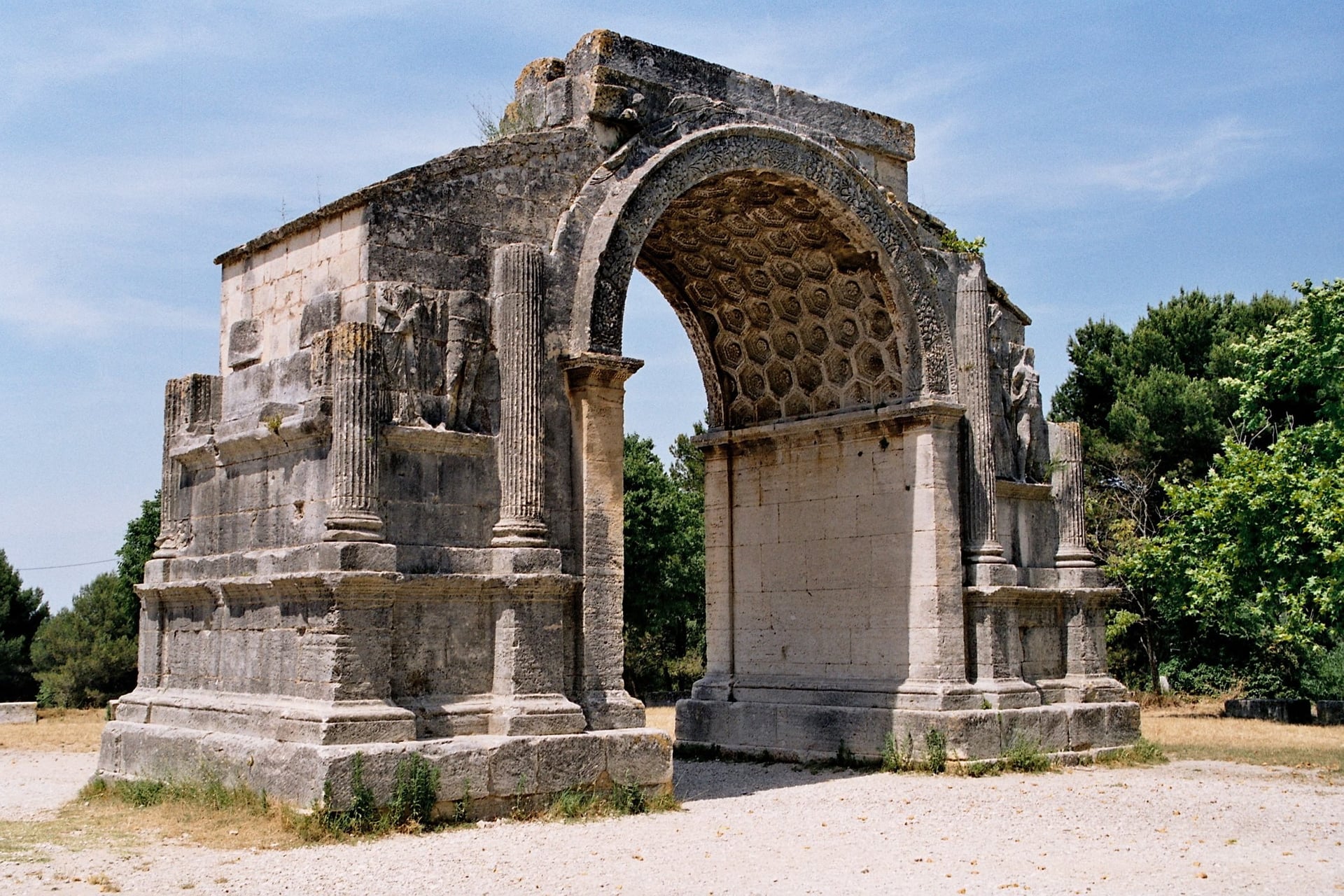
Glanum: €9 for the Roman town on the southern edge of Saint-Rémy
Tourist tax: €0.50 to €1.70 per person per night in a three-star hotel, set by each town
What to Pack
Pack for two climates: the top of Ventoux is usually about 10 °C colder than the plain, while Avignon averages 32 °C in July.
For any ride:
A helmet, two 750 ml bottles and a pump
Two spare tubes, tyre levers and a multi-tool, as bike shops are far apart outside towns
Lights, reflectors and a bell, which French law requires
A reflective vest for riding outside towns at night or in poor light
Sun cream and sunglasses for the unshaded Camargue roads
For Provence:
A gilet, arm warmers and full-finger gloves for the Ventoux descent
A third bottle on the Route des Crêtes, as the tap water at the Chalet de la Maline is not drinkable
Low gears, such as a 34-tooth chainring with a 32- or 34-tooth sprocket, for Ventoux
Insect repellent for summer evenings in the Camargue marshes
Ventoux Week or Village Week?
Provence suits three kinds of cycling week, and the base matters more than the route. Ventoux riders want several nights under the mountain, village riders want their bags moved between hill towns, and mixed groups want loop days from one hotel.
Arranging that yourself means booking small hotels far apart and finding routes between the signed loops. Our self-guided bike tours in Provence book the hotels for you, and each one suits a different kind of week.
Village week: Cycling Provence: Luberon Landscapes, 8 days / 7 nights on a loop from Saint-Rémy-de-Provence via Fontaine-de-Vaucluse and Roussillon, 238 km and 2,250 m in all, with luggage transfers and a touring bike included
Ventoux week: Provence Bike Tour, 7 days / 6 nights from the Château de Mazan, with the Nesque, the Bédoin ascent of Ventoux (58 km and 1,861 m that day) and the Luberon villages from Gordes, 302 km and 5,358 m in all, with luggage transfers
Easy week: Van Gogh's Secrets Bike Tour, 6 days / 5 nights in one hotel in Saint-Rémy-de-Provence, with loops of 13 to 40 km to Les Baux, Tarascon and Saint-Paul de Mausole
All three run from April to October and include 3-star hotels with breakfast, route instructions, a GPS app and support while you ride. To plan your week, ask us about dates for next season.
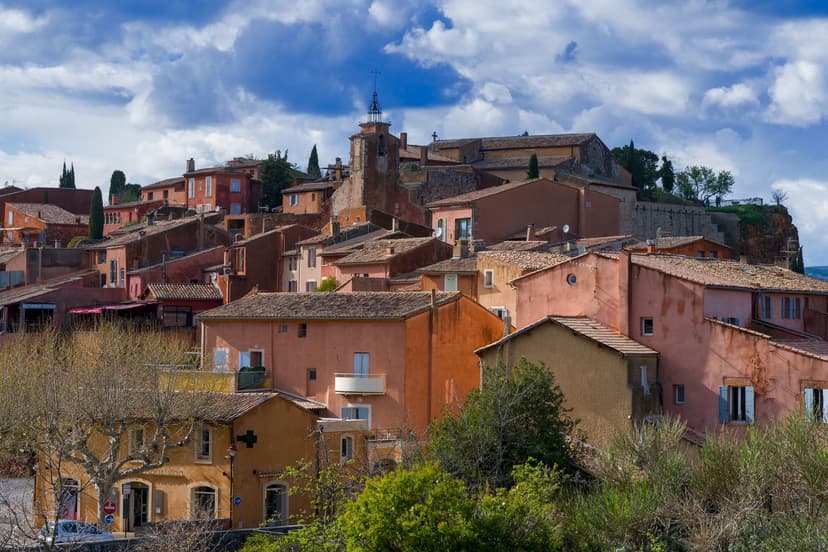
In late June the lavender below Roussillon is in flower, the ochre cliffs turn red in the evening light, and Mont Ventoux stands white on the northern skyline.
Frequently Asked Questions



Plan with a cycling expert
Free advice from a team that knows these routes inside out - real people, not a bot

Hassle-Free
We take care of route planning, accommodations, luggage transfers, and all logistics, so you can focus purely on enjoying your ride.

Tried & Tested Adventures
Our cycling routes are hand-picked & tested, to ensure breathtaking landscapes, smooth roads, and maximum safety - giving you the perfect ride every day.

Unbeatable Support
Our 24/7 customer support is where we show our passion, ensuring your cycling holiday runs smoothly and your well-being is always our top priority.

Book with Confidence
We are a financially protected company, fully bonded and insured, keeping your money safe and allowing you to travel with confidence.