Cycling in Corsica: 10 Best Routes From Cap Corse to Bavella
The ten best road rides in Corsica, from the signed 592 km GT20 to the Bavella and Vergio cols, with the distance, elevation gain and start town for each.
Quick links
Don't want to read all this?
We've planned 800+ cycling trips. Send your dates, fitness and group size — we'll map the route and book every night.


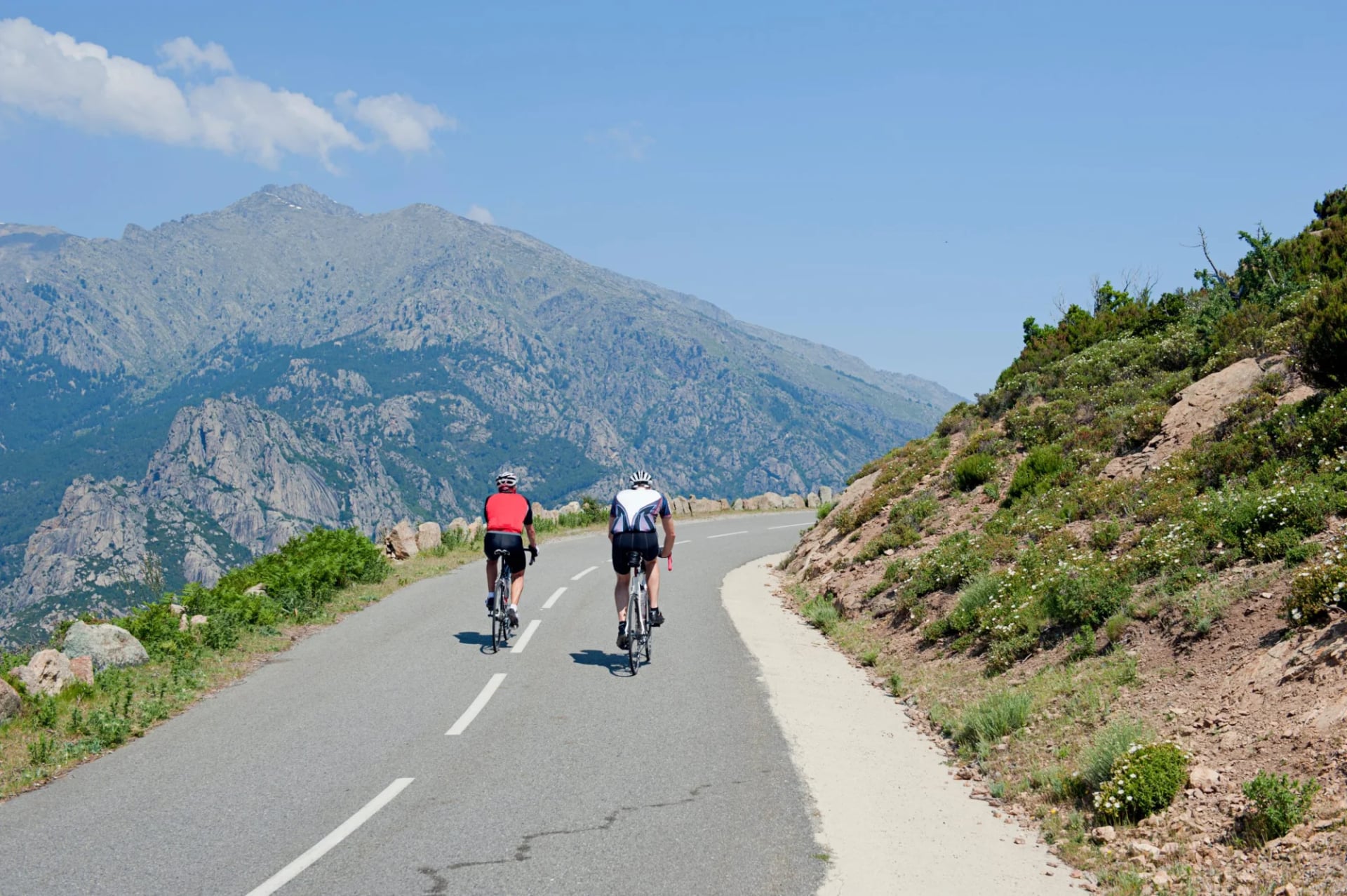
Cycling in Corsica means leaving a harbour in the morning and reaching a mountain pass by lunch. Roads climb from Porto or Solenzara through granite gorges and forests of tall laricio pines to cols of 1,200 to 1,477 m, then drop back to a coast of red rock and clear water.
The island is only 183 km long, yet two-thirds of it is mountain, with about 120 summits over 2,000 m. Because the climbs are long rather than steep, a fit rider can link two cols in a day and still reach the sea for a swim.
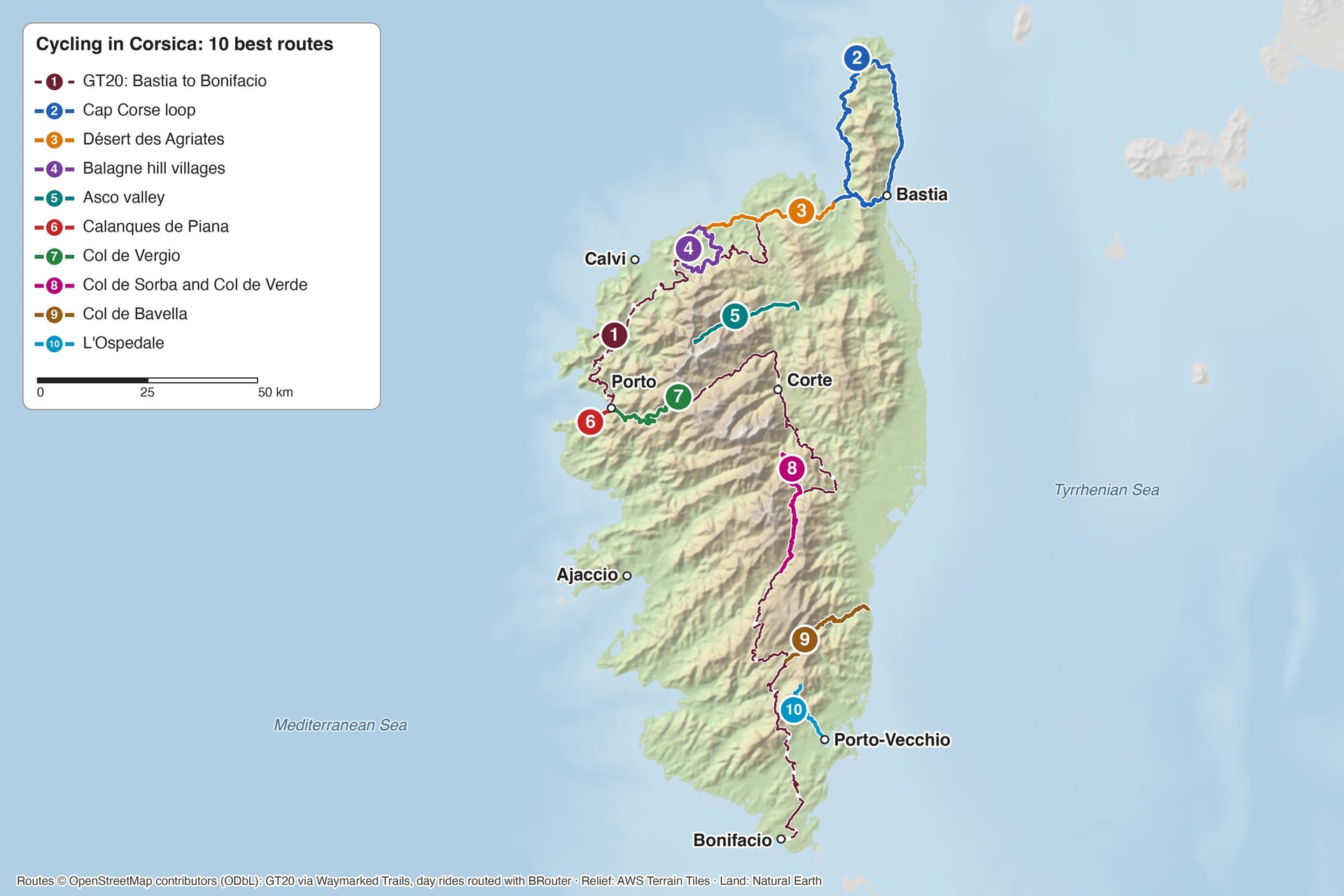
The ten best routes run from Cap Corse in the north to L'Ospedale in the south, starting with the signed 592 km GT20. For the mainland regions, see our guide to cycling in France.
The 10 Best Cycling Routes in Corsica
On eight of the ten routes the road climbs from near sea level to between 350 m and 1,477 m, and nine of them are day rides from a single base town.
1. The GT20: Bastia to Bonifacio
Distance: 592 km in 12 signed stages of 30 to 72 km, one way
Elevation gain: 10,047 m over the whole route
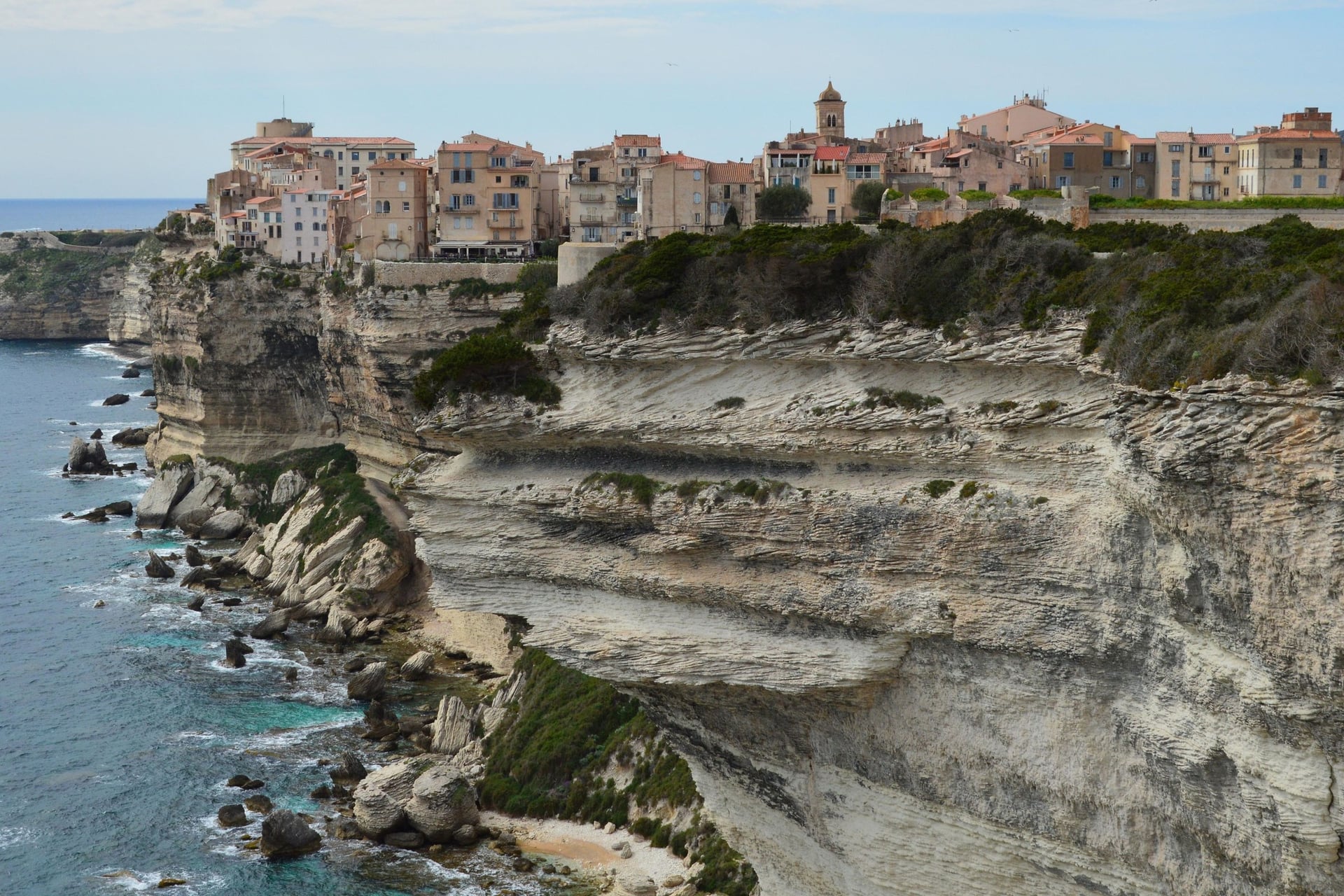
Start and finish: Bastia ferry port to Bonifacio
Surface: tarmac throughout, mostly on quiet secondary roads
Highest point: 1,477 m at the Col de Vergio
Best for: fit riders who want a signed route they can plan alone, over 7 to 12 days
Corsica's official long-distance cycle route, the GT20, crosses the island from Bastia to Bonifacio. It has been signed in both directions since August 2021 and passes Cap Corse, the Agriates, the Balagne villages, Porto, the Col de Vergio, Corte, the Col de Verde and the Alta Rocca.
The line misses two of the island's best roads. It turns inland at Porto, 12 km short of the Calanques de Piana, and passes Zonza, 8.8 km below the Col de Bavella, so routes 6 and 9 are detours off the line.
France Vélo Tourisme publishes a GPX file for each stage and lists 12 Accueil Vélo stays, hotels and campsites with secure bike storage. The route runs one way, so plan the return: ferries leave from Porto-Vecchio, Propriano and Ajaccio in the south.
2. Cap Corse Loop From Bastia
Distance: 132 km loop
Elevation gain: about 1,850 m
Start and finish: Bastia, via Erbalunga, Macinaggio, Centuri, Nonza and Saint-Florent
Surface: tarmac; the D80 on the west side is narrow and cut into the cliffs
Highest point: 536 m at the Col de Teghime
Best for: a long coast day, or two days with a night in Centuri
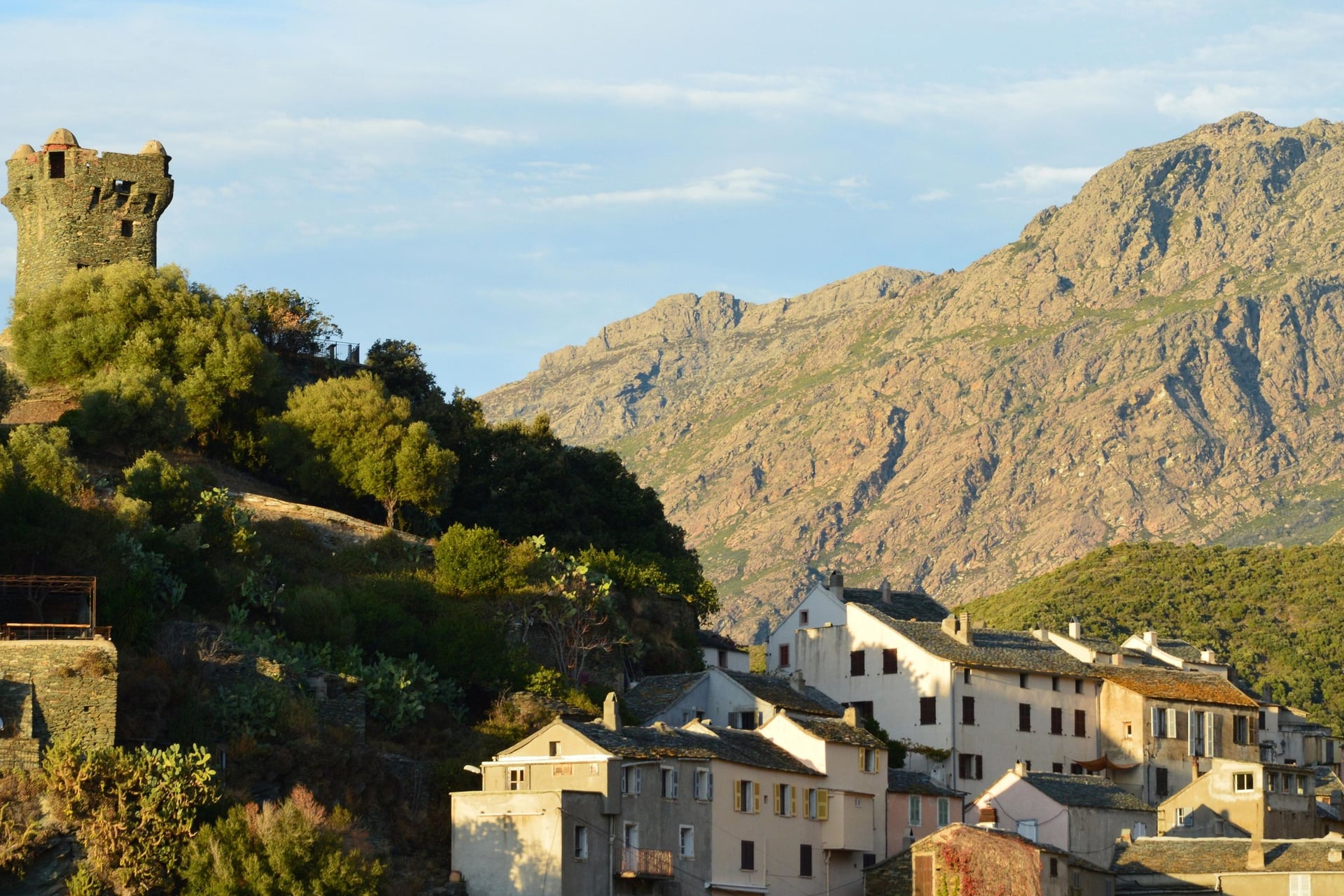
Gentle at first, the east side of the cape follows the coast through Erbalunga to Macinaggio. The climbing starts there: the Col de la Serra is 12 km at 3%, with sections of 4 to 5%, and the descent to Centuri harbour is narrow and winding.
On the west side the D80 runs high above the sea past Nonza, which stands on a rock over its black-pebble beach. The last climb is the Col de Teghime, 12.1 km at 4.5% from Saint-Florent, before the descent into Bastia. GT20 stages 1 and 2 follow the same coast as far as Saint-Florent.
3. Désert des Agriates: Saint-Florent to L'Île-Rousse
Distance: 46 km one way
Elevation gain: about 580 m
Start and finish: Saint-Florent to L'Île-Rousse, via Casta
Surface: tarmac on the D81, rolling, with no shade
Highest point: 350 m, after a climb of almost 10 km from Saint-Florent
Best for: linking Cap Corse and the Balagne in half a day
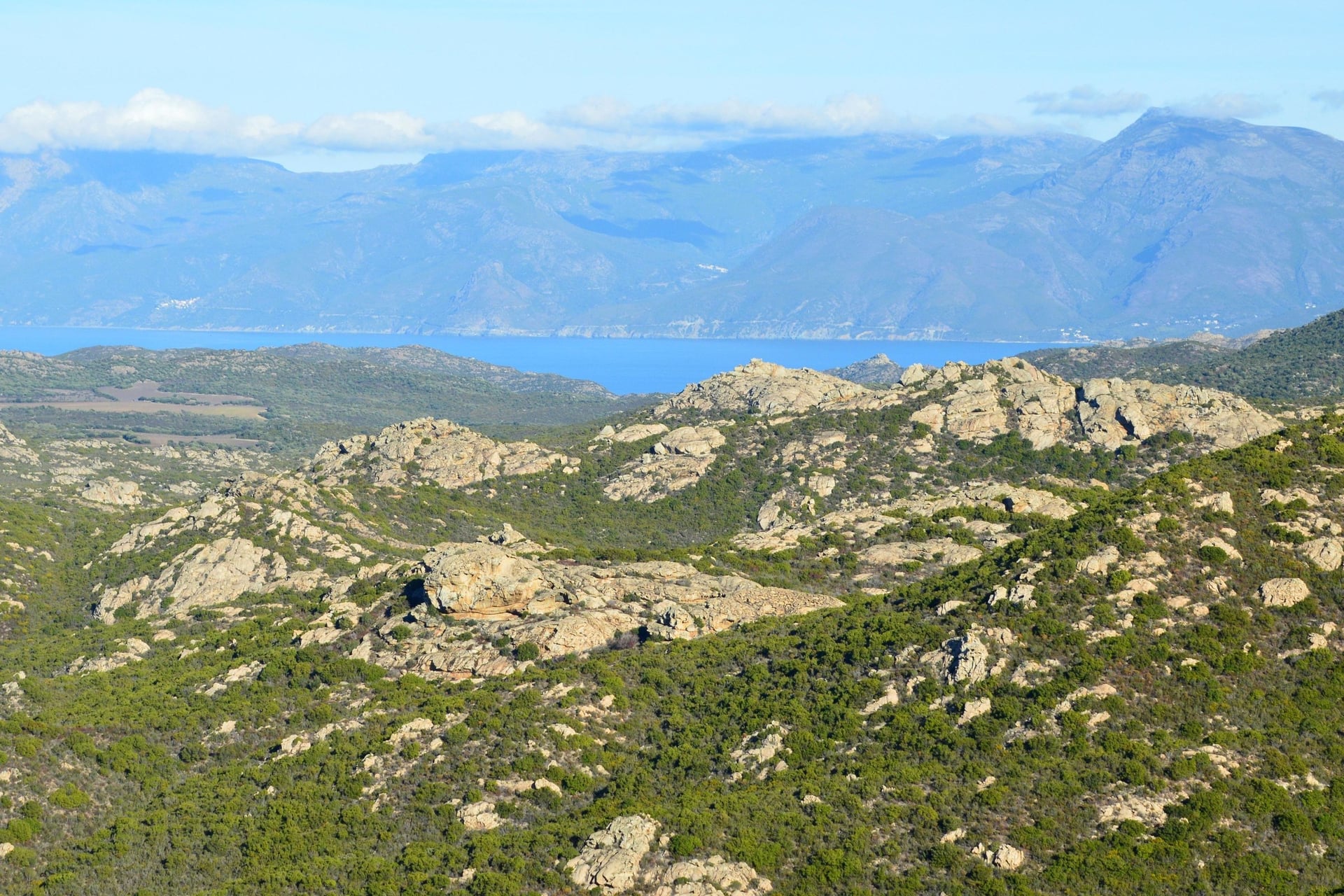
West of Saint-Florent the D81 crosses the Désert des Agriates, about 15,000 ha of granite hills and maquis, the dense scented scrub that covers much of Corsica. Casta is the only village on the road, so fill your bottles and buy lunch in Saint-Florent.
After the high point the road drops for 8 km to the T30 near the Ostriconi valley and follows the coast to L'Île-Rousse. GT20 stage 3 rides the same D81 through Casta, then turns inland over the Col de San Colombano, 692 m, to Belgodère.
4. Balagne Hill Villages From L'Île-Rousse
Distance: 52 km loop
Elevation gain: about 900 m
Start and finish: L'Île-Rousse, via Speloncato, Feliceto, Sant'Antonino and Pigna
Surface: tarmac, with many short climbs between villages
Highest point: about 520 m at Speloncato
Best for: a shorter day of short climbs and village cafés
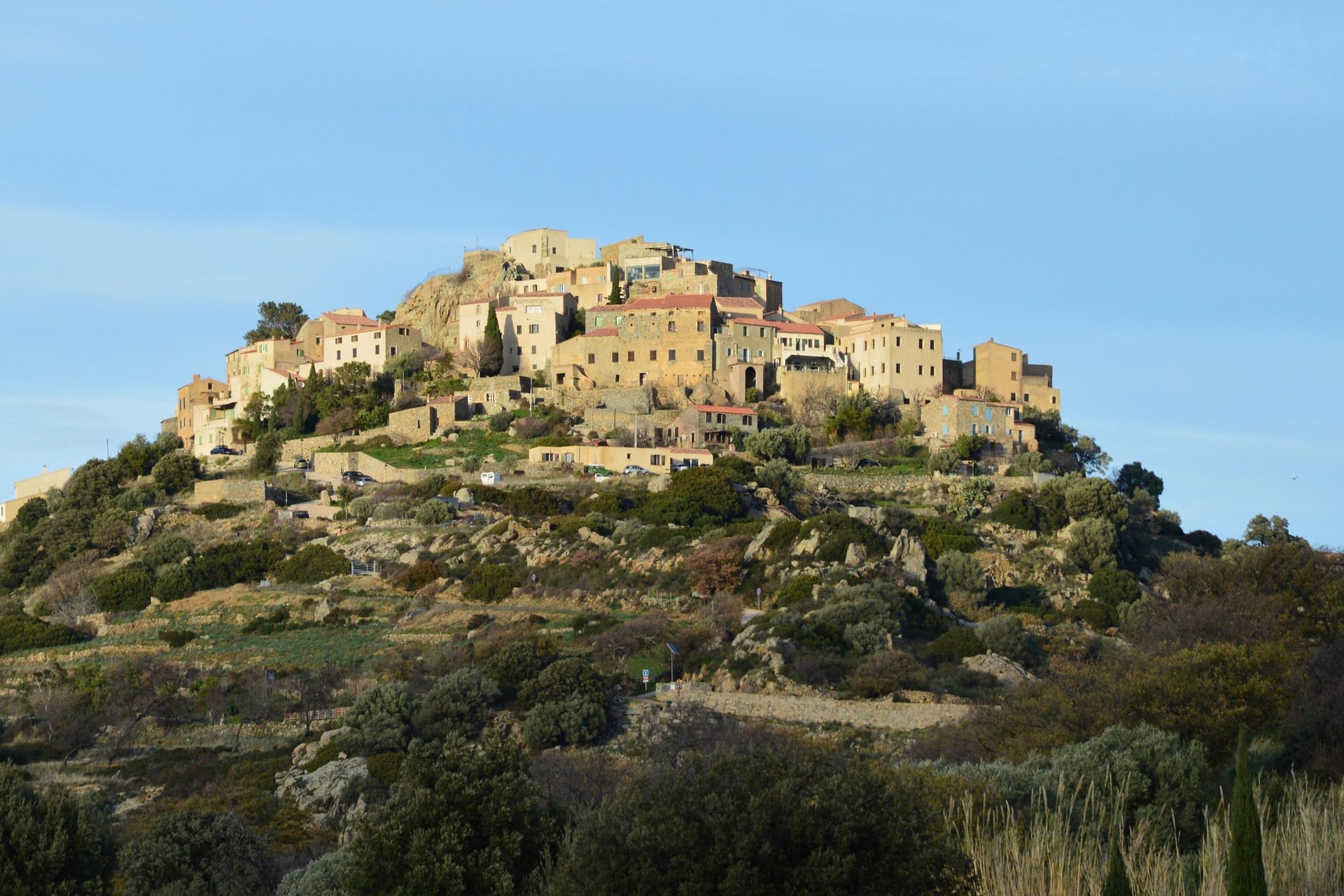
Inland from L'Île-Rousse, the Balagne villages sit on ridges above olive groves and the sea. The loop climbs to Speloncato, then follows the balcony road west through Nessa, Feliceto and Muro to Sant'Antonino, whose stone houses cover the top of a granite hill.
Pigna, the last village before the descent, lies on the Strada di l'Artigiani, a signed route of craft workshops. The train along this coast carries bikes only dismantled in a bag, so ride the Balagne as a loop rather than one way.
5. Asco Valley From Ponte-Leccia
Distance: 34 km one way from Ponte-Leccia station, then back the same way
Elevation gain: 1,223 m on a 30.9 km climb at 4%
Start and finish: Ponte-Leccia to the Haut-Asco ski station
Surface: tarmac (D147), narrow in the lower gorge, with passing bays
Highest point: 1,422 m at the end of the road
Best for: a long dead-end climb with river pools and a café at the top
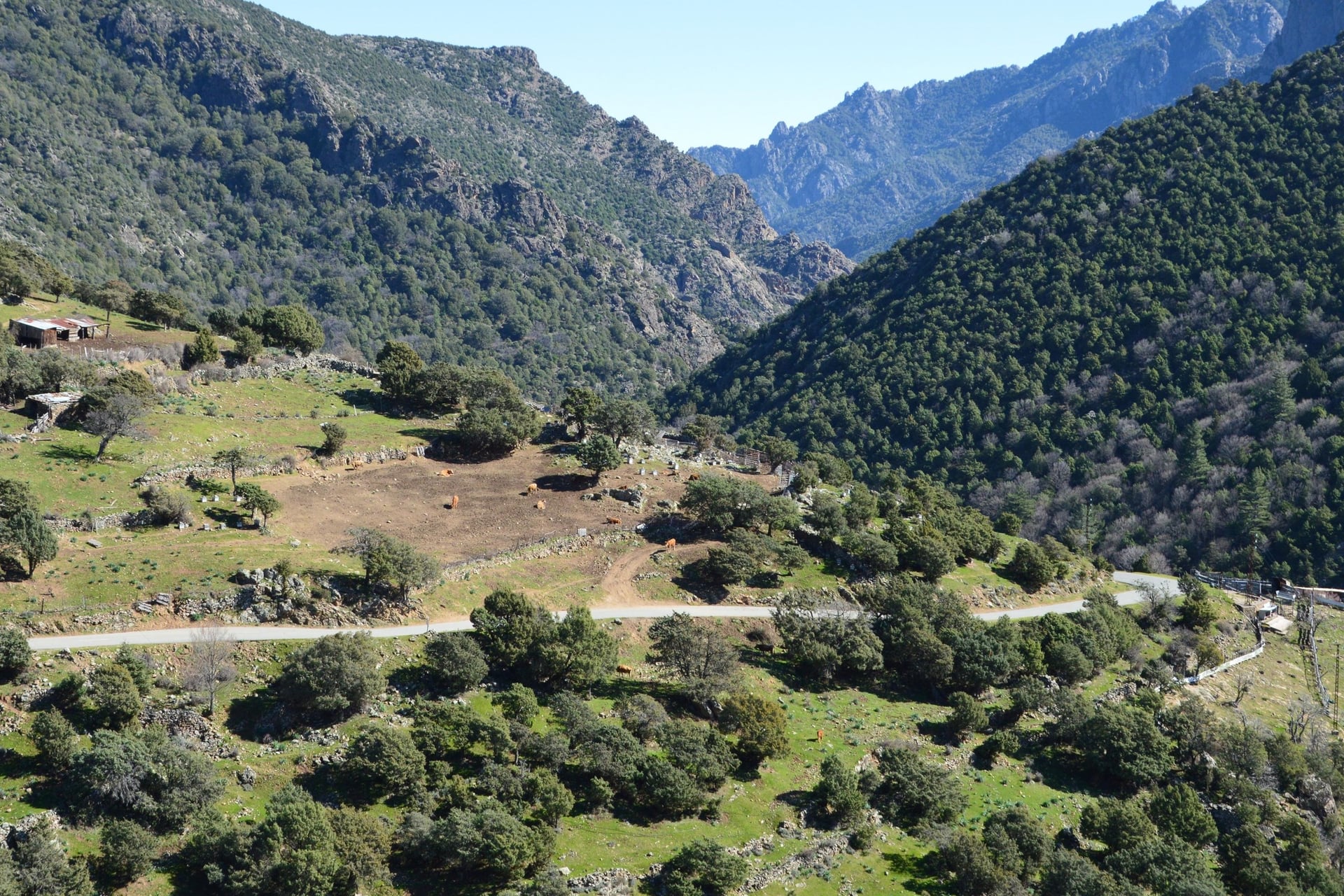
Few roads go as deep into the mountains as the D147. It leaves the main road just north of Ponte-Leccia and follows the Asco river into the massif of Monte Cinto, at 2,706 m the island's highest summit. In the lower gorge the road is cut into the rock, with bays for passing traffic.
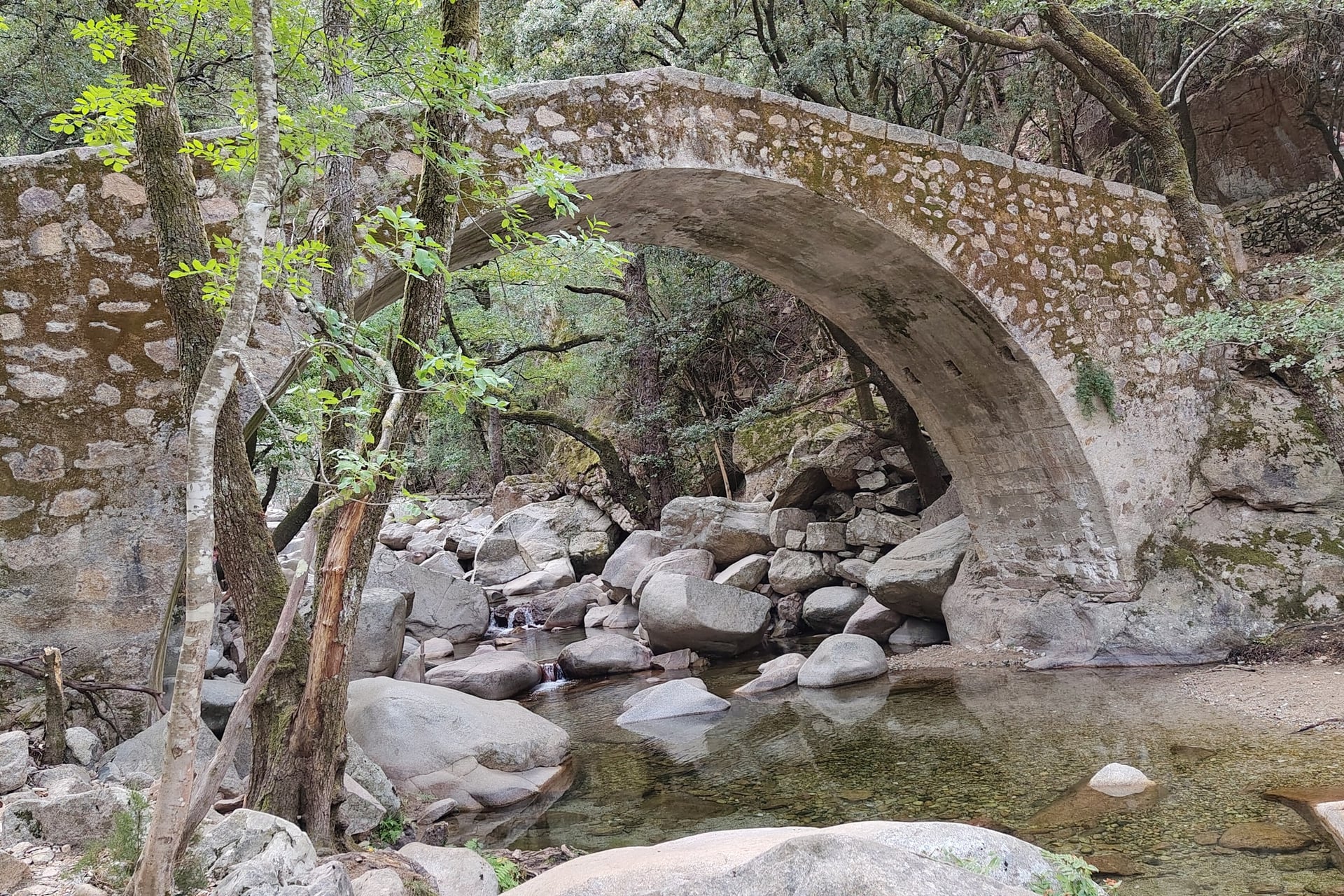
Asco village, about 19 km in at 600 m, has a Genoese bridge over a deep green pool. Above it the road climbs through laricio pines to Haut-Asco, a ski station opened in 1964, where the road ends at 1,422 m and restaurants serve lunch in summer.
6. Calanques de Piana: Porto to Piana
Distance: 12 km one way, then on south or back to Porto
Elevation gain: 447 m on a 9.2 km climb at 4.9%
Start and finish: Porto to Piana on the D81
Surface: narrow tarmac cut into the rock, with stone parapets
Highest point: 473 m at the top of the climb, before Piana
Best for: the most photographed coast road on the island, ridden before 10 am
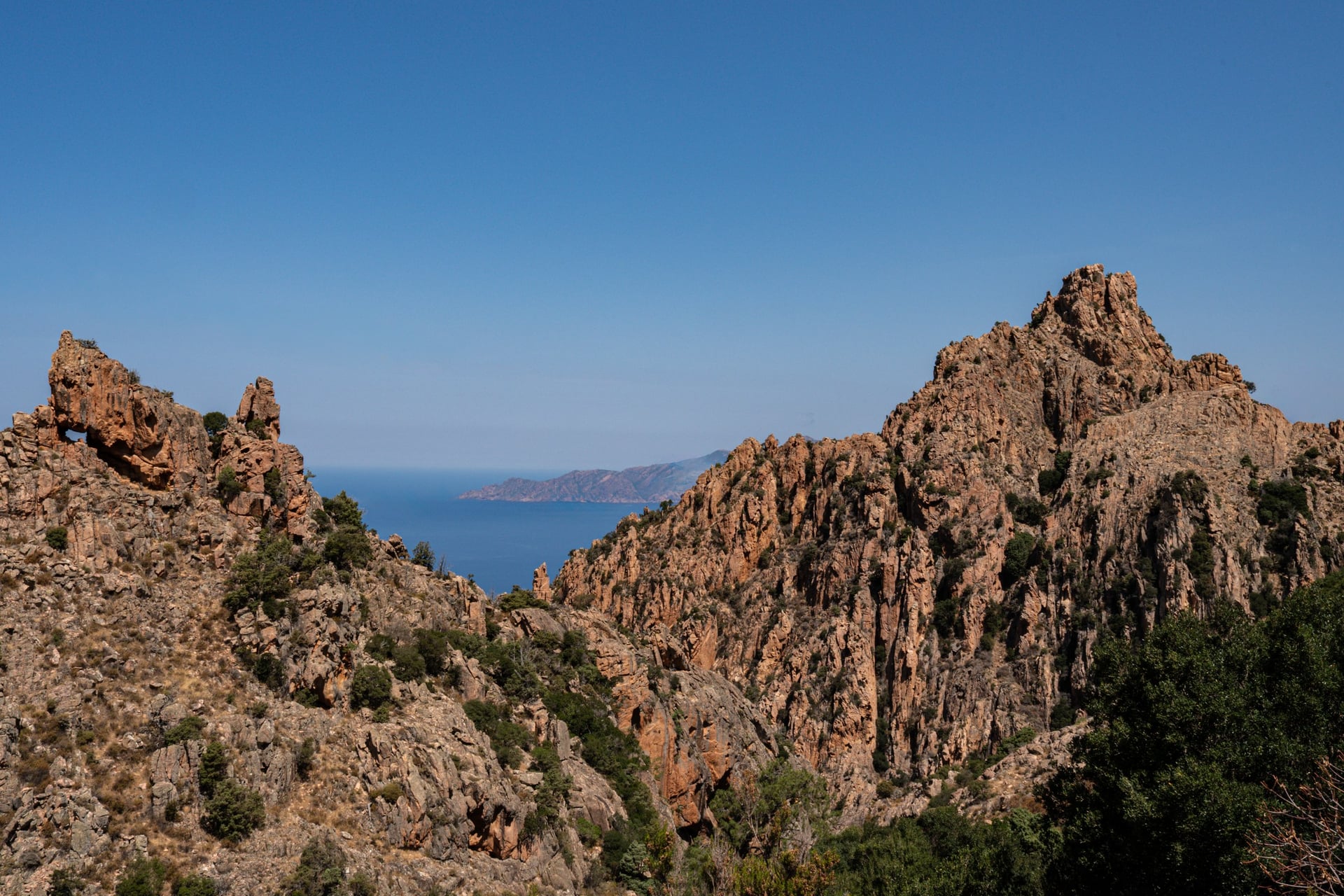
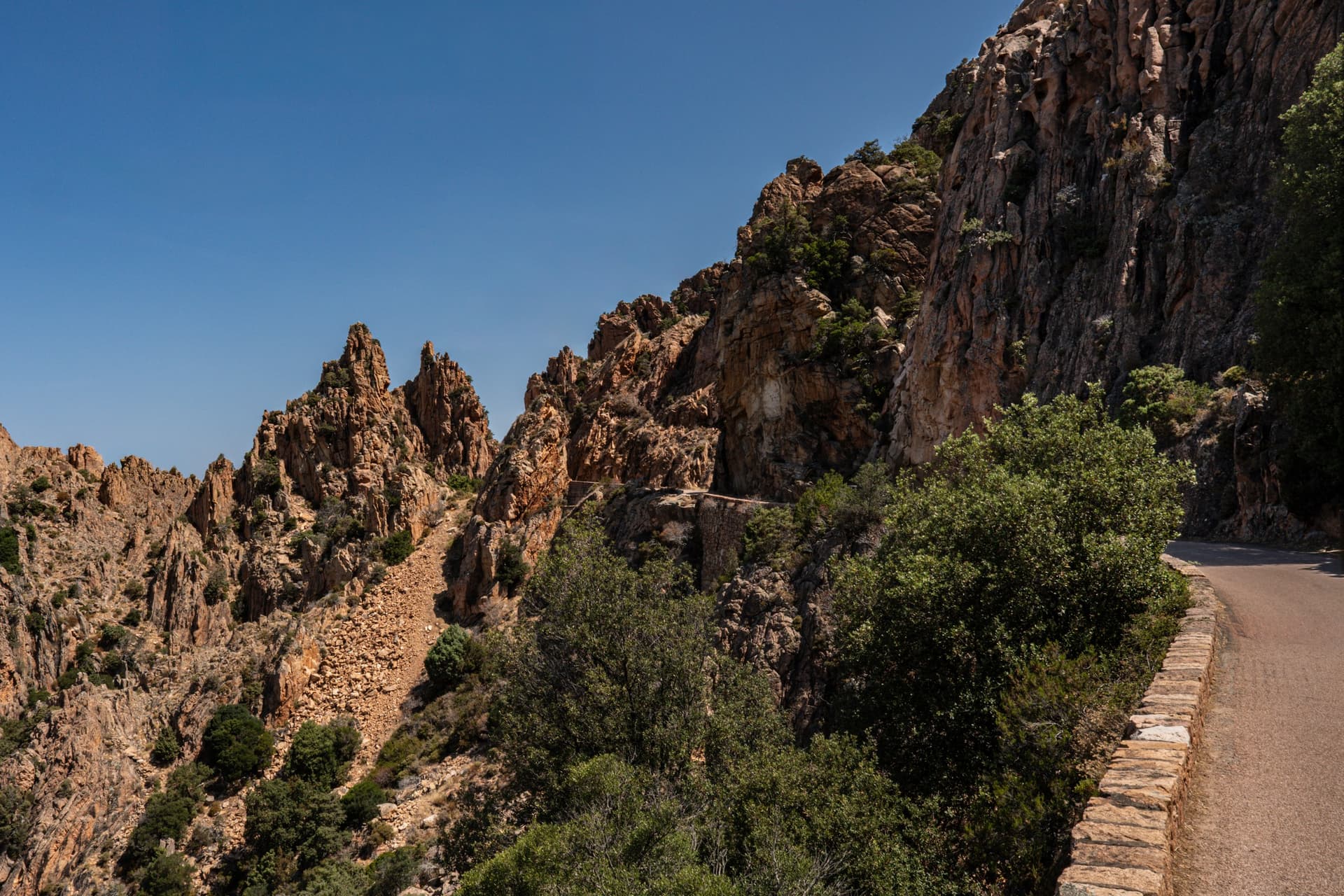
Above the Gulf of Porto the D81 threads between the Calanche, towers of red granite shaped by wind and salt. With the Gulf of Girolata and the Scandola reserve, they have been a UNESCO World Heritage site since 1983.
The steepest 100 m of the climb reach 13.1%, and the road has no verge, so stop at the viewpoints rather than on bends. North of Porto, GT20 stage 6 crosses the Col de Palmarella, 408 m, above Girolata, but the GT20 itself does not pass the Calanche.
7. Col de Vergio From Porto
Distance: 34 km from the harbour to the col, climbing almost all the way
Elevation gain: 1,486 m at 4% on average, with 8% through Évisa
Start and finish: Porto to the Col de Vergio, via Évisa (850 m)
Surface: tarmac (D84), with cliff-side hairpins in the first 10 km
Highest point: 1,477 m, the highest road pass in Corsica
Best for: the longest climb on the island from sea level
The Vergio from Porto is the longest climb from sea level on the island, starting at the harbour. The first 10 km of hairpins cling to the cliffs above the Spelunca gorge, then 7 km run almost flat before the climb through Évisa.
Above Évisa the road enters the Aïtone forest of laricio pines and steepens for the last 10 km. A granite statue of Christ the King stands at the col, where the GR20 hiking trail crosses the road. From Corte, riders climb the other side through the Scala di Santa Regina gorge: 38.7 km at 3%.
8. Col de Sorba and Col de Verde From Vivario
Distance: 55 km one way
Elevation gain: about 1,340 m
Start and finish: Vivario to Cozzano, via the Col de Sorba, Ghisoni and the Col de Verde
Surface: tarmac (D69) through forest, with little traffic
Highest point: 1,311 m at the Col de Sorba
Best for: two very different cols in one day from a Corte base
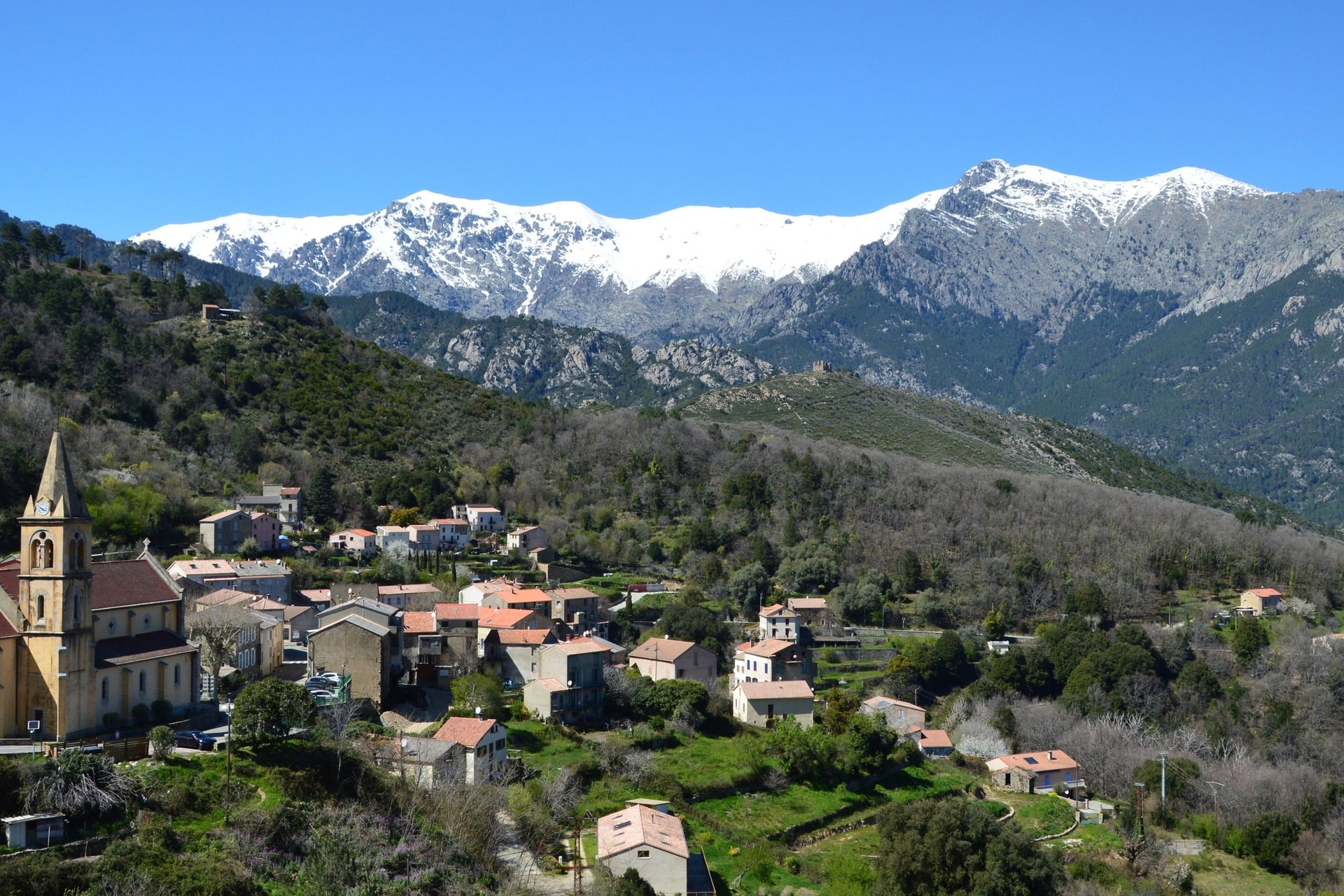
Two cols with opposite characters sit on the D69 south of Vivario. The Sorba is short and steep, 7.1 km at 7.1% from the village. The Verde is long and gentle: 16.8 km at 3.7% from Ghisoni, the first 10 km through the Marmano forest and the last 7 km harder, at about 6%.
Vivario has a station on the Bastia to Ajaccio line, so the ride can start from the train. From the Col de Verde the road descends 17 km to Cozzano, and GT20 stage 10, Ghisoni to Zicavo, follows the same road over the col.
9. Col de Bavella From Solenzara
Distance: 29.6 km of climbing, 40 km to Zonza
Elevation gain: 1,380 m at 4.7% on average; the steepest 100 m reach 10.8%
Start and finish: Solenzara to Zonza over the Col de Bavella
Surface: tarmac (D268), narrower near the top
Highest point: 1,218 m at the Col de Bavella
Best for: the island's signature climb, under the granite needles of Bavella
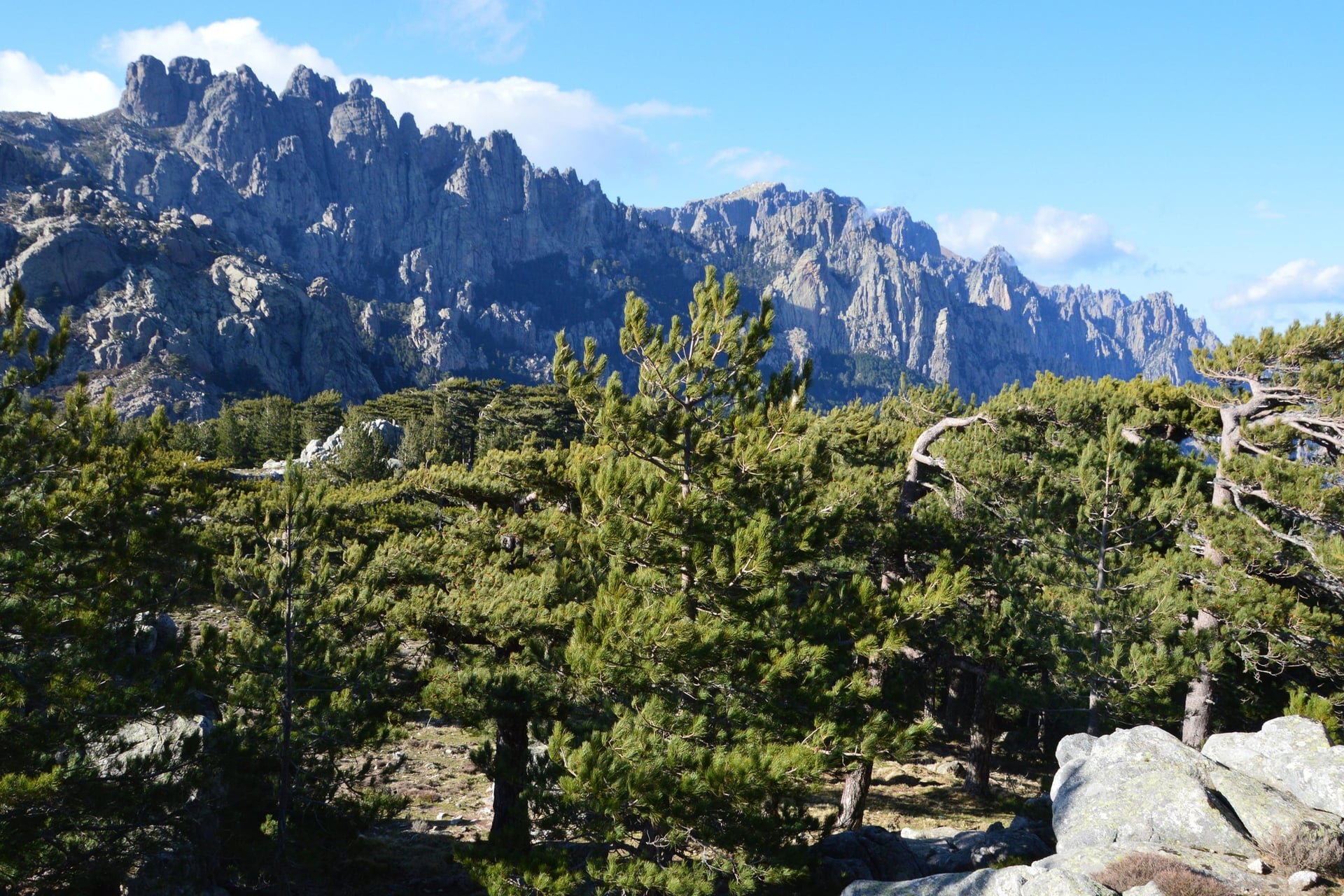
From Solenzara on the east coast, the D268 follows the Solenzara river inland on gentle gradients. The road steepens in its last third, climbing through pines to the col below the Aiguilles de Bavella, the granite needles above the pass.
With the Vergio, Vizzavona and Verde, the Bavella is one of Corsica's four grands cols, the passes that cross the island's mountain spine. It is not on the GT20: GT20 riders reach it from Zonza, 8.8 km at 5.1%. For a loop, descend to Zonza and return to the coast over L'Ospedale.
10. L'Ospedale From Porto-Vecchio
Distance: 25.9 km of climbing to the Bocca d'Illarata
Elevation gain: 1,017 m at 3.9% on average
Start and finish: Porto-Vecchio to the Bocca d'Illarata via L'Ospedale; on to Zonza or back the same way
Surface: tarmac (D368), on a steady gradient
Highest point: 991 m at the Bocca d'Illarata
Best for: a climb from the hotel door, with the gulf below on the way down
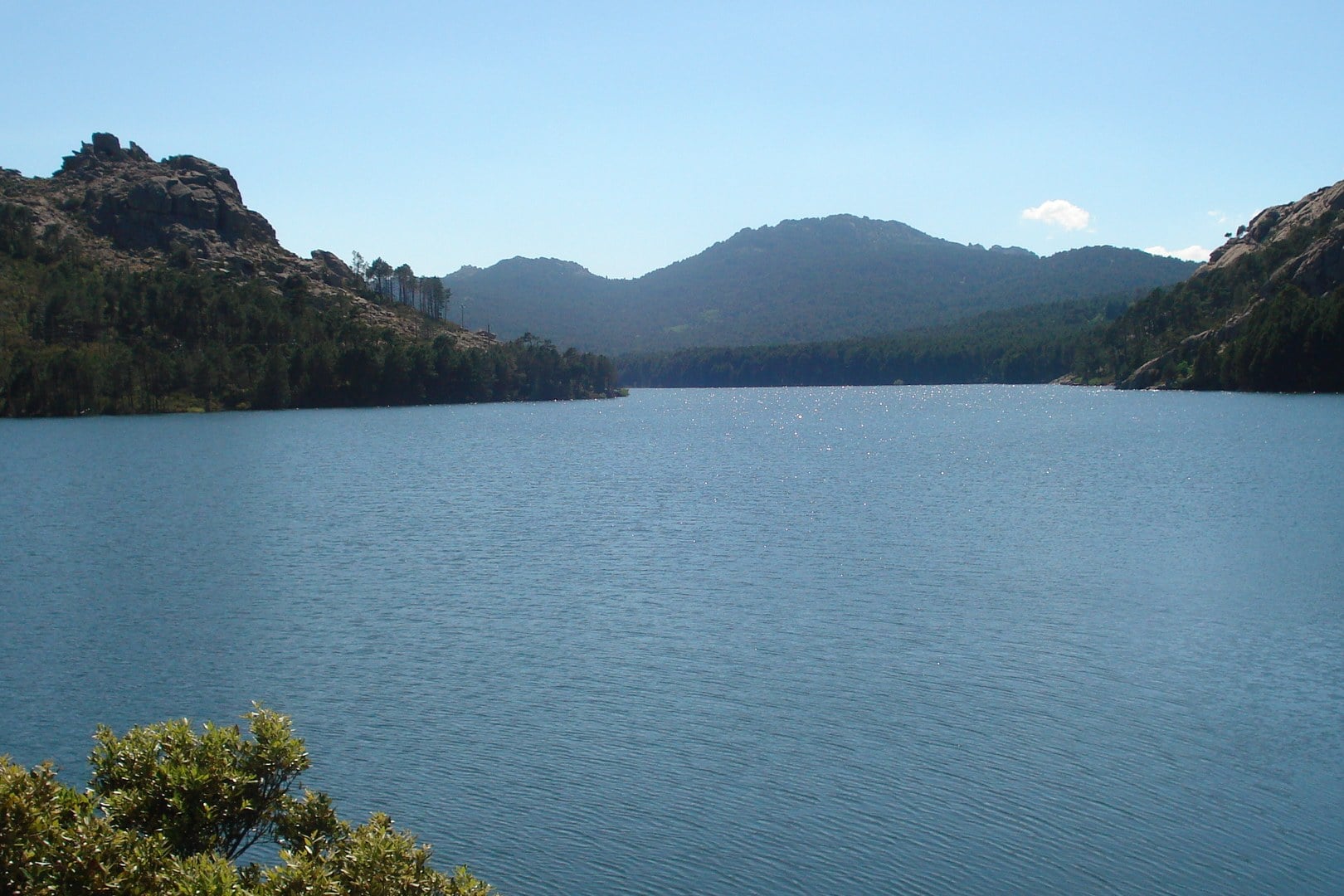
Straight out of Porto-Vecchio, the D368 climbs above the gulf to the village of L'Ospedale and the reservoir behind its dam. The gradient hardly changes for 26 km, so it suits riders who like to settle into a rhythm.
The road is exposed to the sun, so ride it early on summer mornings. From the Bocca d'Illarata you can carry on to Zonza and the Bavella, or turn round for the long descent back to Porto-Vecchio, with the gulf in view.
How Hard Is Cycling in Corsica?
Cycling in Corsica is hard because of the length of the climbs and the total climbing each day, rather than steep gradients.
Climbs and Gradients
The long cols average 3 to 5%: the Vergio climbs at 4% from Porto, the Bavella at 4.7%, the Asco valley at 4%, L'Ospedale at 3.9% and the Verde at 3.7%. The Sorba is the steep one, 7.1% from Vivario, and the steepest 100 m on these rides are on the Calanques road, at 13.1%.
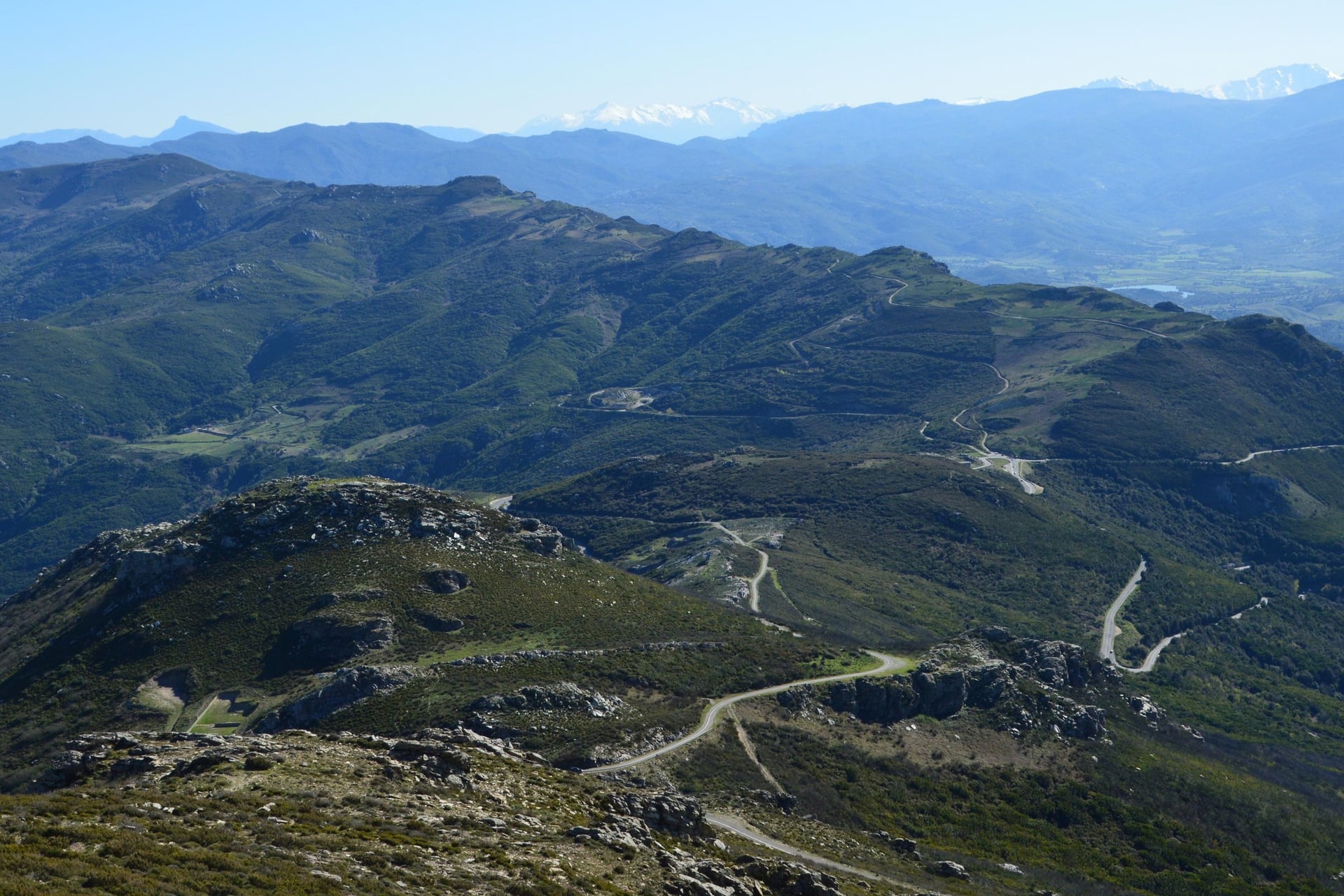
Linking two cols makes a big day: the Sorba and Verde ride climbs about 1,340 m in 55 km, and the Cap Corse loop 1,850 m in 132 km over the Teghime above Bastia. Visit Corsica recommends a 50-34 chainset with a 12-32 cassette; France Vélo Tourisme suggests an e-bike for less experienced riders.
For comparison, the Vergio from Porto climbs 1,486 m at an average of 4%, while Alpe d'Huez in the French Alps climbs 14 km at 8%.
Traffic, Road Surfaces and Descents
Most mountain roads are quiet. Traffic gathers on the T20 between Bastia and Ajaccio and on the T10 down the east coast, and it peaks in July and August; GT20 stage 9 joins the T20 for the run into Venaco.
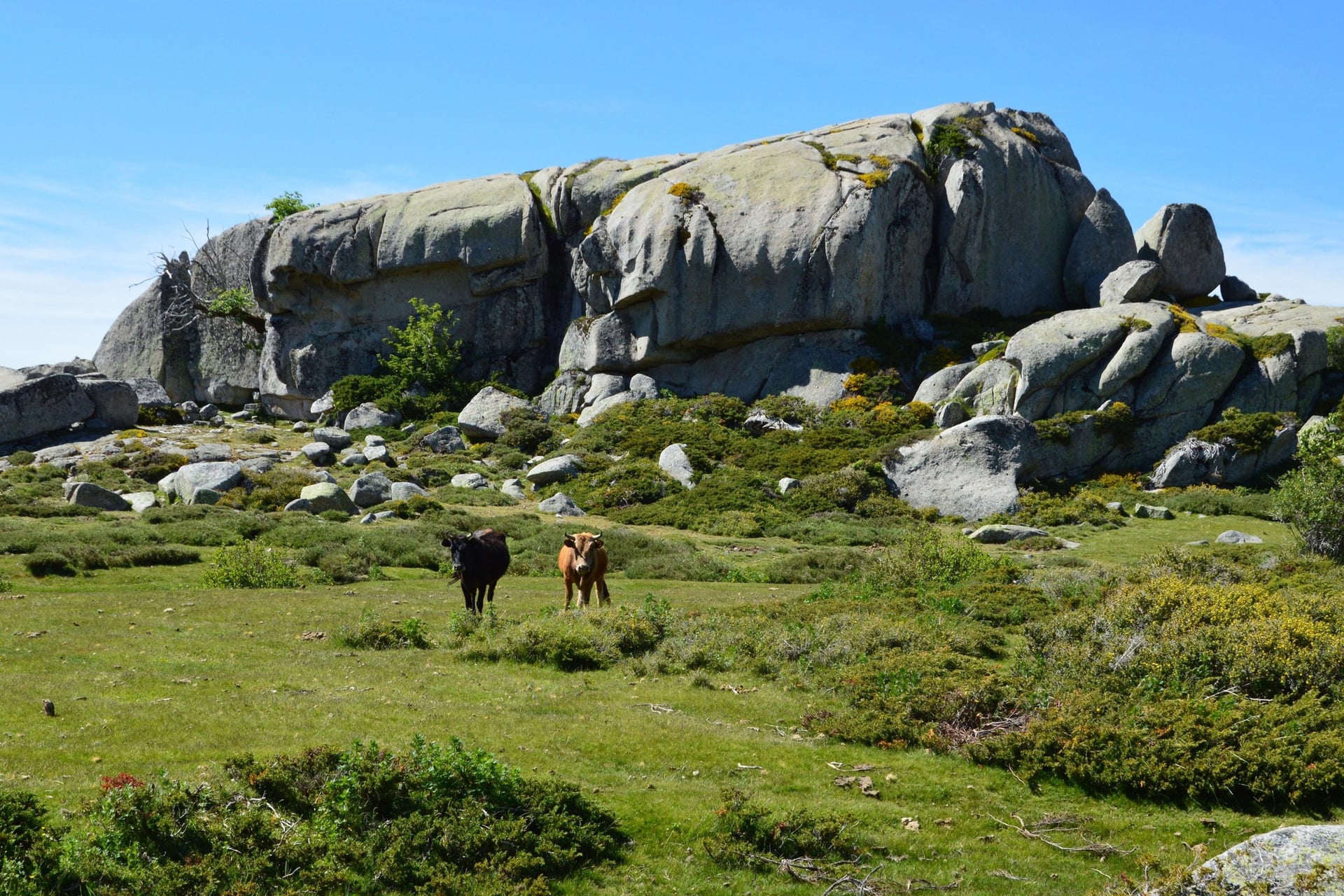
Cows, pigs and goats roam free in the mountains; on the GT20 stage from Zicavo to Zonza, France Vélo Tourisme warns of pigs and cattle on the road. After storms, stones fall onto the roads in the ravines, so slow down at the top of every descent.
Best Time to Cycle in Corsica
The riding season runs from April to October, and what changes through it is the heat on the coast, the traffic and the snow on the highest cols.
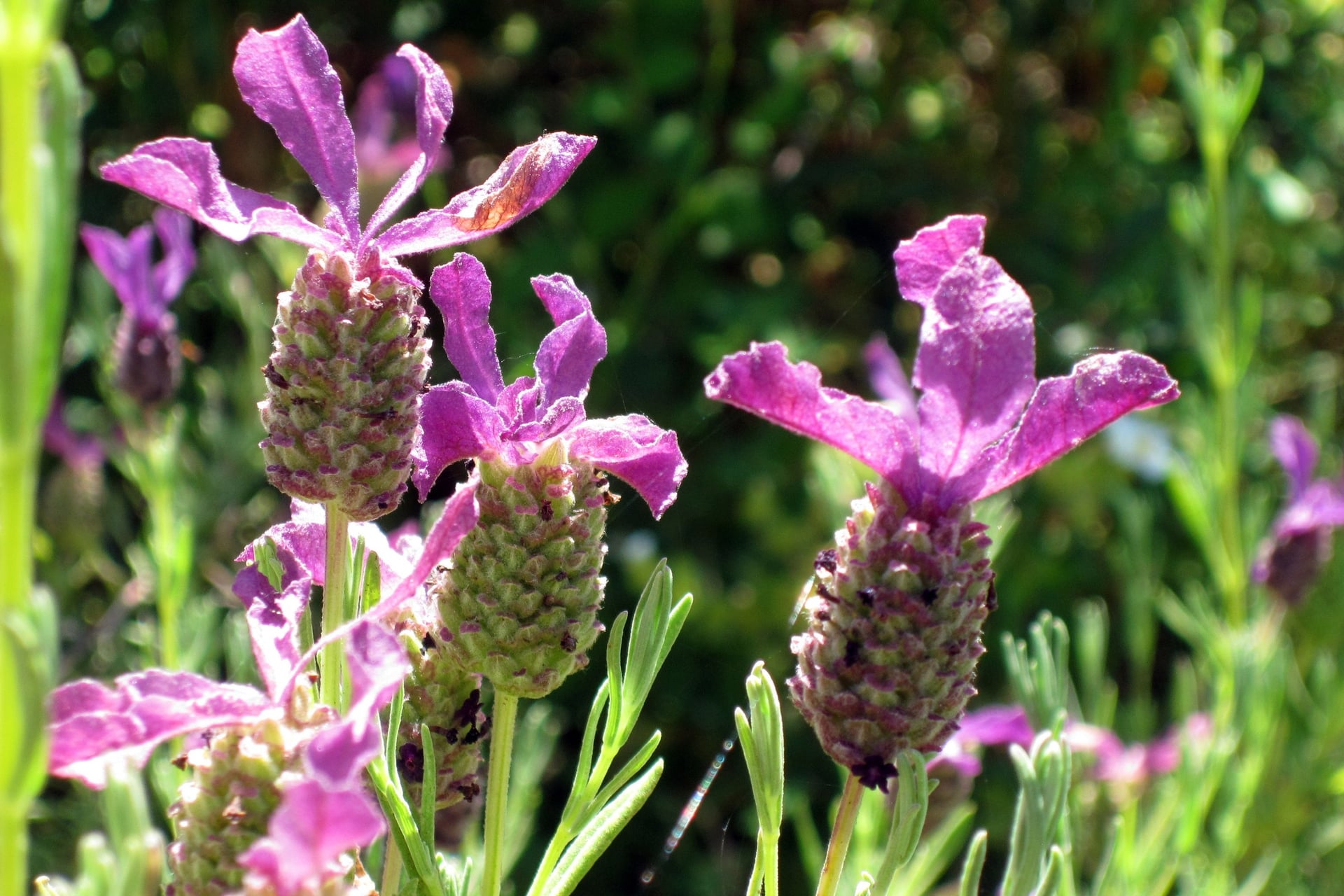
Spring and autumn are the best seasons, and in May the maquis is in flower, wild topped lavender among it. Visit Corsica suggests April to mid-July and September to October for the GT20, and France Vélo Tourisme advises against summer for its heat and crowds.
Average daily high and rain days in Ajaccio (Météo-France normals):
Month | High in Ajaccio | Rain days | On the roads |
April | 18.5 °C | 7.2 | Quiet roads; the highest cols can hold snow early in the month |
May | 22.1 °C | 5.0 | Maquis in flower; long days and little traffic |
June | 25.9 °C | 2.8 | Driest of the spring months; the best weeks in the mountains |
July | 28.6 °C | 1.2 | Heat on the coast and holiday traffic on the T20 and T10 |
August | 29.2 °C | 1.4 | The hottest month, with the busiest roads and ferries |
September | 26.1 °C | 5.1 | Warm sea and quieter roads after the school holidays |
October | 22.8 °C | 7.4 | Autumn storms begin and the days shorten |
Winter riding is possible on the coast, where Ajaccio averages 14 °C in January, but snow can close the Vergio and the Bavella. For most riders, late May, June and September are the best weeks.
Getting to Corsica With a Bike
Most riders arrive by sea, and an overnight ferry with the bike on the car deck is the simplest way to reach an island 170 km off the Côte d'Azur.
Ferries
Corsica Ferries, Corsica Linea and La Méridionale sail from Marseille, Toulon and Nice to Bastia, Ajaccio, L'Île-Rousse, Calvi, Propriano and Porto-Vecchio. Corsica Ferries also crosses from Savona and Livorno in Italy. Marseille to Ajaccio is an overnight crossing of about 12 hours, and Livorno to Bastia takes about 4 hours.
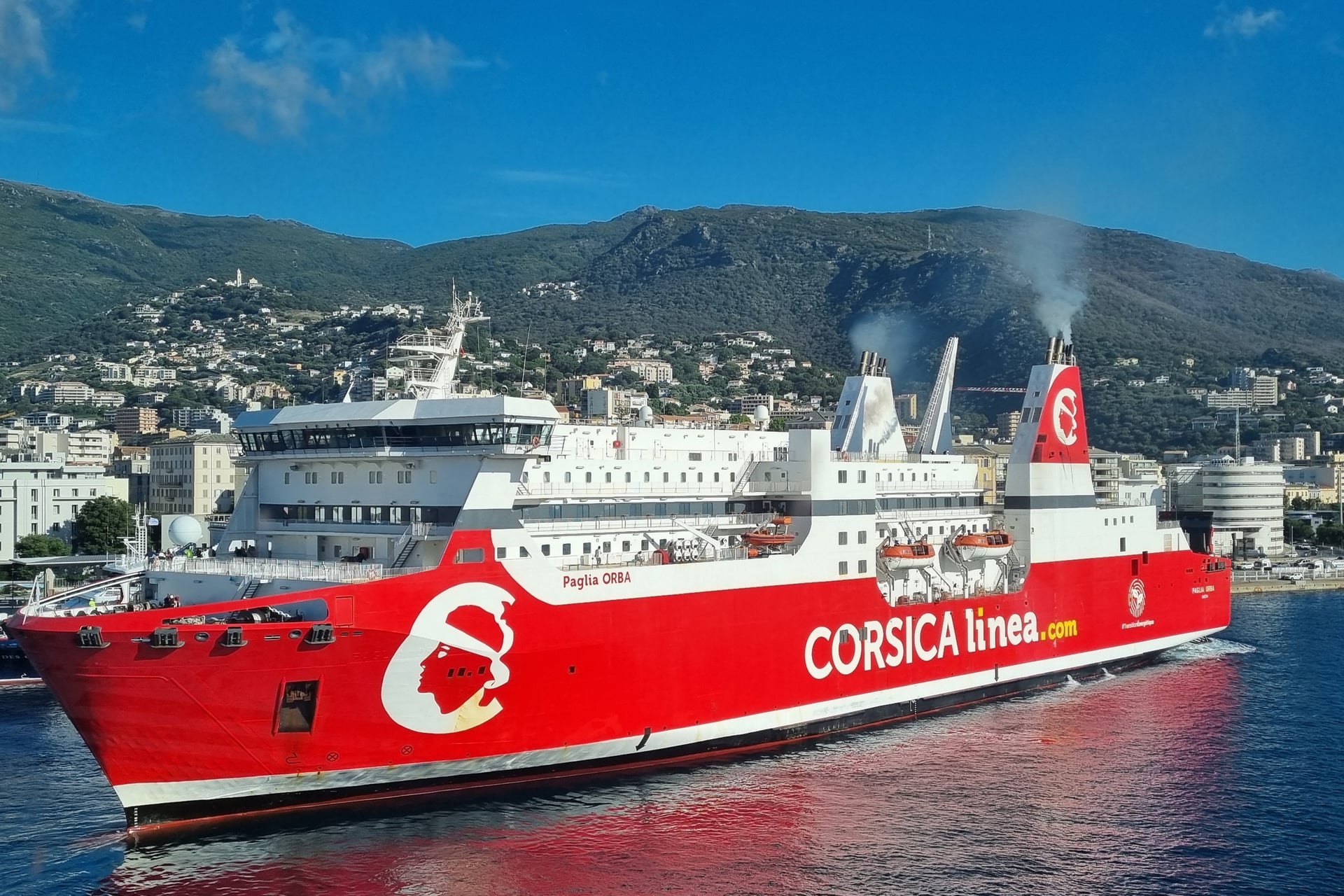
Corsica Ferries takes one vehicle per ticket, bicycles included, so each rider books their own bike with their ticket. At Corsica Linea you wheel the bike to the boarding gate, then check in with ID. Bastia is the easiest arrival for the GT20.
On the mainland, trains to Marseille, Toulon and Nice carry bikes under the SNCF rules set out in our France cycling guide.
Flights
Corsica has four airports: Bastia, Calvi, Ajaccio and Figari, about 25 km by road from Porto-Vecchio. Air Corsica flies from Paris-Orly to all four all year, and British Airways flies to Bastia and Figari from London in summer.
France Vélo Tourisme notes that a bike travels more easily by ferry than by plane, and Visit Corsica that flying with one costs more, so if you fly, book the bike box with the seat.
Trains on the Island
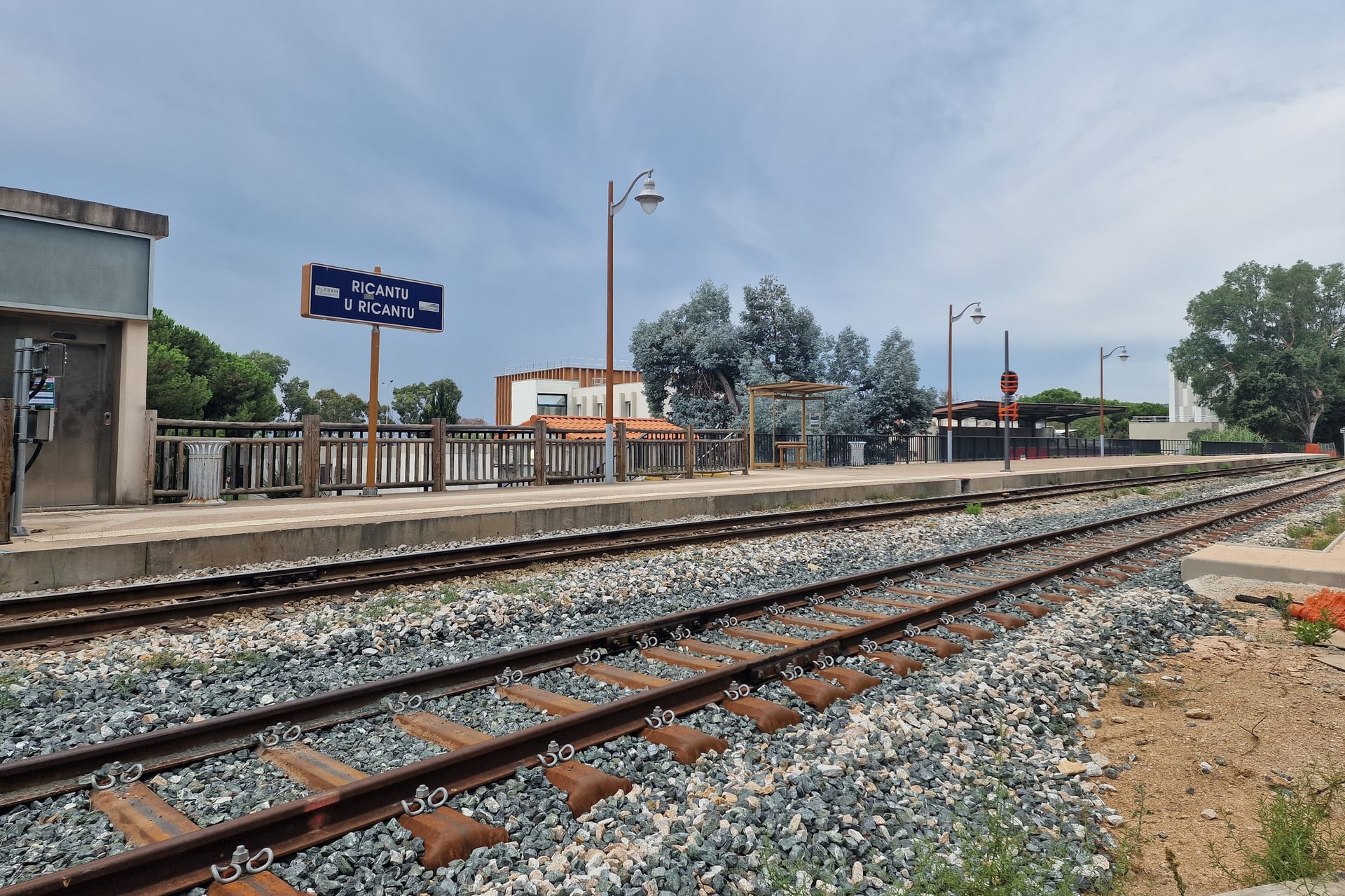
The Chemins de fer de la Corse run two lines: Bastia to Ajaccio, 158 km via Ponte-Leccia, Corte and Vivario, and Ponte-Leccia to Calvi, 73 km. A bike travels only dismantled in a bag of up to 120 × 90 cm, and connections with boats and planes are not guaranteed.
Know Before You Arrive
Corsica's larger towns are on the coast and the mountain villages between them are small, so where you sleep decides which rides you can reach.
Where to Stay
Base yourself in one town and ride day loops, or move along the GT20, where France Vélo Tourisme lists 12 Accueil Vélo stays. Bastia suits Cap Corse and the Agriates, L'Île-Rousse and Calvi the Balagne, Porto the Calanques and the Vergio, Corte the central cols, and Porto-Vecchio the Bavella and L'Ospedale.
Mountain villages such as Évisa, Ghisoni, Zicavo and Zonza have only a few hotels. Visit Corsica warns that beds are limited in some GT20 stopovers, Ghisoni in particular, so book nights from June to September early.
How Much Does It Cost?
The roads and the regional park cost nothing to ride, so the money goes on the crossing, beds and bike hire.
Riding: free; the Parc naturel régional de Corse charges no entry
Bike on the train: €15, paid with the ticket, for a bike dismantled and bagged
Bike on the ferry: booked as a vehicle on your own ticket; the fare depends on route and season
Bike hire: €75 for one day or €315 for a week for a carbon road bike from an Ajaccio firm that delivers across the island
Tourist tax: €0.50 to €1.70 per person per night in a three-star hotel under the 2026 national scale, set by each town
Food needs more planning than money: carry lunch on the Agriates road, where Casta is the only village.
What to Pack
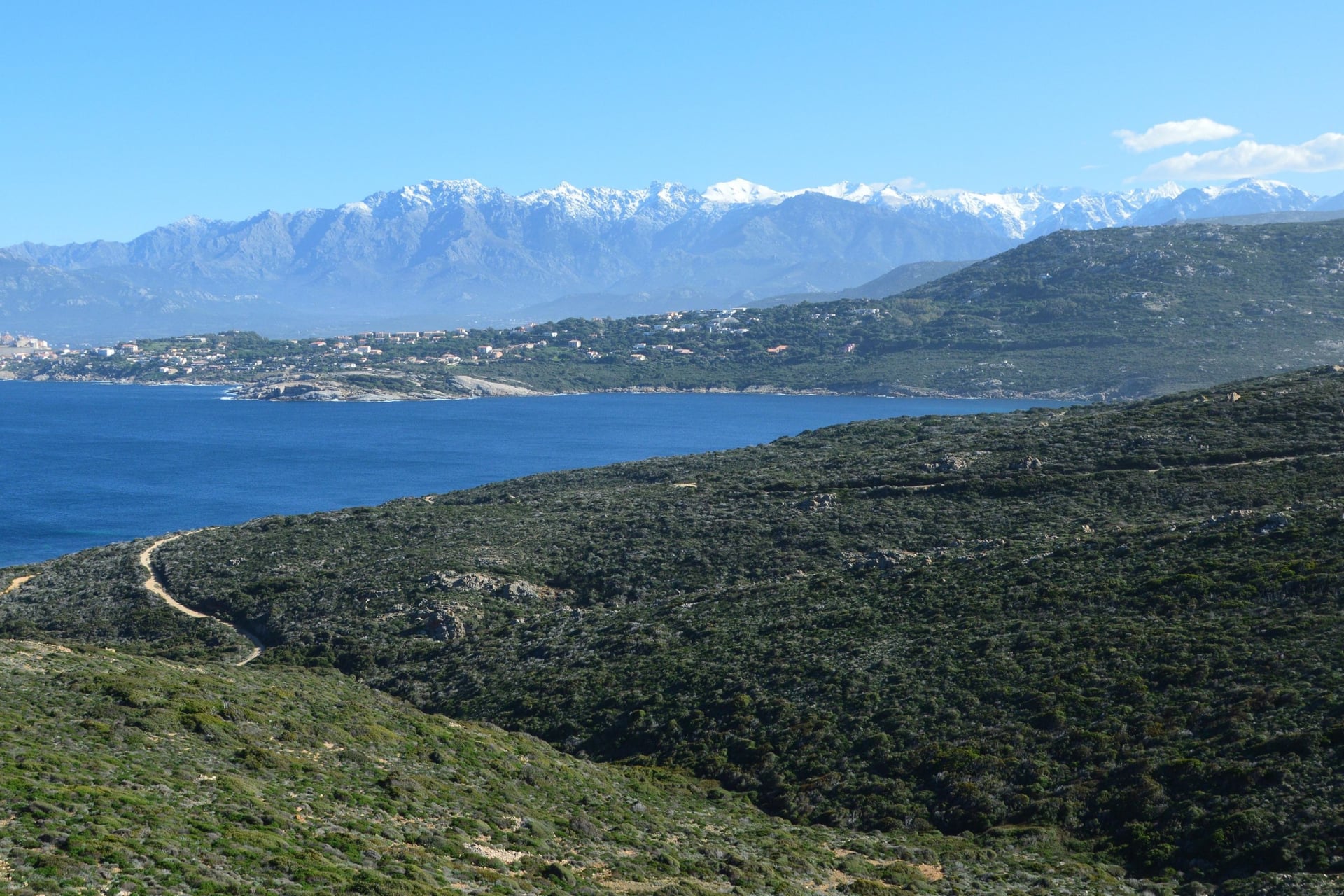
Pack for two climates: a col at 1,200 to 1,477 m can be cold at dawn in May or October, and snow can lie on the peaks into spring, while Ajaccio averages 29 °C in August.
For any ride:
A helmet, two bottles and a pump
Two spare tubes, a chain link and a multi-tool, as bike shops are only in the main towns
Lights, a bell and reflectors, which French law requires
A high-visibility vest for riding outside towns after dark, also required
Sun cream and a rain jacket for the spring showers
For Corsica:
A gilet, arm warmers and full-finger gloves for the descents from the Bavella and the Vergio
A third bottle on the Agriates and the Asco valley, where villages are few
Low gears, such as a 34-tooth chainring with a 32-tooth sprocket, for climbs of 30 km
The GT20 or a Loop From Porto-Vecchio?
The GT20 is the easiest way to cross Corsica on your own: it is signed both ways, and every stage has a GPX file. But it runs one way and misses the Bavella and the Calanques de Piana, so the island's best climbs need detours.
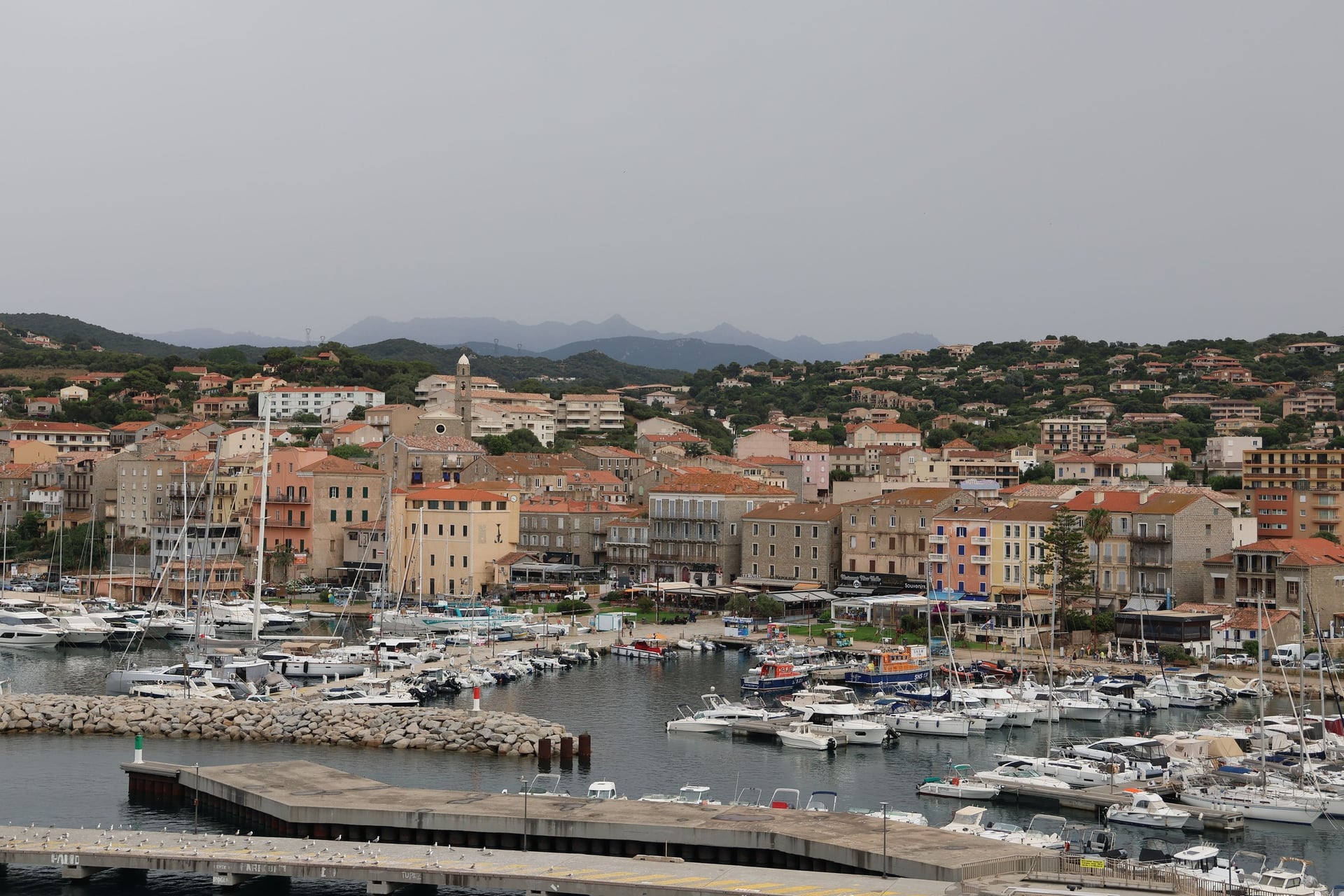
A loop over the best cols is harder to arrange. It means hotels in small towns far apart, such as Zonza, Porto and Sartène, bags to move every morning, and a GPS route of your own.
Our self-guided Ultimate Bike Tour of Corsica does that work for you. From Porto-Vecchio it climbs the Bavella from Solenzara, crosses the Verde and the Sorba to Corte, goes over the Vergio to Porto, rides the Calanques de Piana and comes home down from L'Ospedale.
Duration: 8 days / 7 nights, with 6 riding days, from April to October
Route: a loop from Porto-Vecchio via Zonza, Corte, Porto, Ajaccio and Sartène, 614 km in all
Daily rides: 83 to 123 km, with 1,500 to 2,700 m of climbing a day and 13,460 m over the week
Bikes: bring your own, or hire a road bike or an e-road bike
Included: 7 nights in 3-star hotels with breakfast, luggage transfers, a route booklet, a GPS app and support while you ride
To plan your week, ask us about dates for next season.
On a June evening the Aiguilles de Bavella turn orange above the col, and the last riders of the day roll down through the pines to the café terraces of Zonza.
Frequently Asked Questions
Plan with a cycling expert
Free advice from a team that knows these routes inside out - real people, not a bot

Hassle-Free
We take care of route planning, accommodations, luggage transfers, and all logistics, so you can focus purely on enjoying your ride.

Tried & Tested Adventures
Our cycling routes are hand-picked & tested, to ensure breathtaking landscapes, smooth roads, and maximum safety - giving you the perfect ride every day.

Unbeatable Support
Our 24/7 customer support is where we show our passion, ensuring your cycling holiday runs smoothly and your well-being is always our top priority.

Book with Confidence
We are a financially protected company, fully bonded and insured, keeping your money safe and allowing you to travel with confidence.